Geostrategic Media Political Commentary, Analysis, Security, Defense

The world is watching oil prices. Traders are watching tanker traffic. But inside global insurance companies right now, something else is quietly breaking.
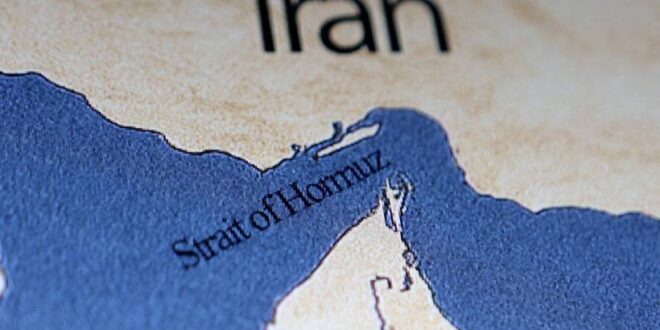
Brent crude has surged above $89 per barrel as geopolitical conflict disrupts shipping routes through the Strait of Hormuz – a chokepoint carrying roughly one-fifth of the world’s oil and gas. Major P&I clubs and insurers have cancelled or repriced war-risk coverage for vessels transiting the region, with premiums for large crude carriers climbing toward 3% of vessel value. That translates to as much as $7.5 million per voyage, compared to roughly $625,000 before the crisis began.
The headlines focus on premiums, reinsurance capacity, and oil prices. What they miss is the operational earthquake happening inside insurance organizations.
“Every geopolitical shock that hits insurance markets triggers a cascade of operational work that most outsiders never see.”
When the Market Surges, So Does the Back Office
War-risk endorsements need to be rewritten. Policies covering vessels and cargo in newly designated high-risk zones require urgent amendments. Sanctions and restricted-jurisdiction checks must be run against thousands of counterparties. Reinsurance exposure aggregations must be recalculated and reported. Claims from cargo damage, shipment delays, and trade disruptions begin flowing in simultaneously.
According to the Casualty Actuarial Society and Society of Actuaries, the risk most frequently cited by C-suite insurance executives as having the greatest impact in 2026 is financial volatility, followed closely by geoeconomic instability. Geopolitical events can affect multiple risk types simultaneously – increasing dependencies between underwriting, reserving, and market risk – and every one of those dependencies generates a paper trail that someone, somewhere, must process.
Insurance companies have invested heavily in digital underwriting platforms and predictive analytics. But the reality is that policy servicing, claims documentation, compliance verification, and reinsurance coordination still depend significantly on human workflows. Those workflows were designed for predictable, steady volumes – not for the sudden surge that a crisis like this creates.
A Structural Vulnerability the Industry Has Long Underestimated
The consequences of operational strain are more damaging than many executives realize. Slower claims settlement cycles erode policyholder trust. Delayed policy amendments expose carriers to coverage gaps. Compliance errors under sanctions pressure carry regulatory consequences. And operational fatigue within underwriting and claims teams compounds over weeks of sustained volume.
Marine and aviation insurers – especially those underwriting cargo and logistics exposures – must navigate the growing risks tied to rerouted shipping lanes, port congestion, and geopolitical volatility. According to industry analysts, persistent supply chain disruption, tariff uncertainty, and geopolitical tension are simultaneously driving demand for trade credit and political risk solutions: precisely the lines of business that carry the heaviest documentation and compliance burden when crises materialize.
The result is a structural mismatch. Underwriting appetite can expand quickly in response to market opportunity. Operational capacity cannot.
“Insurance volatility is rising faster than operational capacity. That gap is becoming a competitive liability.”
The Quiet Strategic Shift Already Underway
Forward-thinking insurers recognized this vulnerability before the current crisis. The global insurance business process outsourcing market – which encompasses policy servicing, claims processing, underwriting support, and compliance operations – was valued at approximately $7.5 billion in 2024 and is projected to surpass $10 billion by 2033. Several market forecasts are more aggressive, with some estimates projecting the market could approach $24 billion by the early 2030s as insurers increasingly seek scalable operational infrastructure that can flex with market conditions.
The logic driving this shift is straightforward. A specialty insurer cannot hire and train a marine claims documentation team in the two weeks following a geopolitical shock. But an insurer with scalable operational partnerships already in place can absorb surge volume without compromising turnaround times, settlement cycles, or compliance standards.
A growing ecosystem of specialized insurance operations providers has emerged to support this shift, helping carriers and managing general agents scale claims processing, policy servicing, and underwriting support without expanding permanent internal headcount. Firms such as BackOfficePro operate in this space, serving insurers who recognize that back-office capacity is no longer a support function – it is a strategic one.
What Executives Should Be Asking Right Now
The Strait of Hormuz crisis will eventually resolve. Shipping lanes will reopen. War-risk premiums will normalize. But the next geopolitical shock is already forming somewhere on the horizon – whether in the South China Sea, Central Asia, or the next energy corridor that becomes a flashpoint.
Underwriters must stay agile as broader geopolitical risks and economic trends increasingly bleed into the P&C insurance outlook. Agility, however, is not just an underwriting discipline. It is an operational one.
The insurers who emerge from this period with reputations intact will be those who settled claims quickly, amended policies accurately, and maintained compliance without error – even while the market was moving faster than their internal teams could follow. That outcome is not accidental. It is the result of operational infrastructure built before the crisis arrived.
When the next surge hits, does your back office have the capacity to keep pace with your underwriting ambition?