Geostrategic Media Political Commentary, Analysis, Security, Defense

Key points
-
The Democratic congressional victory could strengthen support for Ukraine, but does not guarantee new military assistance.
-
Washington is pursuing negotiations while the battlefield remains active.
-
Europe must have a stronger role in security guarantees and reconstruction.
-
Russia may seek to exploit differences between Washington and European capitals.
Europe cannot outsource its future
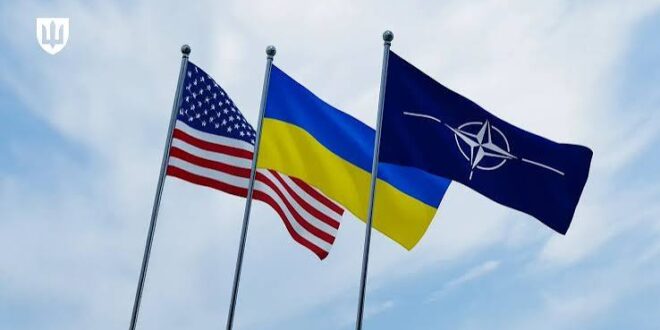
The war in Ukraine has become a test not only of Russian military power and Ukrainian resilience, but also of the durability of the Western alliance. America’s midterm elections have added another layer of uncertainty. Democrats now control Congress, potentially creating a more receptive environment for Ukraine’s supporters, while Donald Trump retains the presidency and the authority to shape American diplomacy.
The immediate challenge is that diplomacy and warfare are proceeding simultaneously. Washington is preparing further contacts involving Kyiv and Moscow, while Russian and Ukrainian forces continue exchanging large-scale attacks. European and NATO representatives are discussing security guarantees and reconstruction, but the central political questions remain unresolved: what would a ceasefire require, who would enforce it, and what protection would Ukraine receive against renewed aggression?
A Democratic Congress may favour continued assistance and stronger scrutiny of any settlement perceived as rewarding territorial conquest. But it cannot independently dictate the president’s negotiating position. Nor can Europe assume that a change in congressional control will resolve its long-standing dependence on American military capabilities.
Russia’s calculations are equally complicated. Moscow may hope that political divisions in Washington weaken the Western position. Yet a divided American government could also make it harder for Trump to secure congressional acceptance of an agreement that European governments and Ukrainian leaders reject.
The European Union therefore faces a strategic choice, though not a simple one. It must increase defence production, coordinate procurement, strengthen air and missile defence, and develop credible plans for Ukraine’s long-term security. Reconstruction will require more than financial pledges: it will need predictable funding, institutional reform and protection for critical infrastructure.
The transatlantic alliance is not disappearing. But its old division of labour—American hard power and European economic weight—is under pressure. Europe must become more capable of defending itself, not because America is certain to abandon it, but because no responsible strategy can depend on an assumption that Washington will always be available.
Ukraine’s future will be decided on the battlefield and at the negotiating table. Europe’s future will be decided by whether it is prepared to shape both.