Geostrategic Media Political Commentary, Analysis, Security, Defense

Taylor Green
Key Points
- The November 3 midterm elections are a major test of President Donald Trump’s second-term leadership and the Republican Party’s congressional majority.
- Arab and Muslim American candidates are seeking greater representation in Congress, reflecting the growing political engagement of communities that have often felt marginalised in Washington.
- Michigan Democrat Abdul El-Sayed is seeking a historic breakthrough: election to the US Senate as its first Muslim member.
- Incumbents Rashida Tlaib, Ilhan Omar and André Carson, alongside candidates including Adam Hamawy, Aisha Wahab and Lateefah Simon, illustrate the diversity of this political movement.
- The growing influence of Arab and Muslim voters could shape debates on Gaza, Israel, Iran, immigration, civil rights and American foreign policy.
Beyond the Midterms: A Changing American Political Landscape
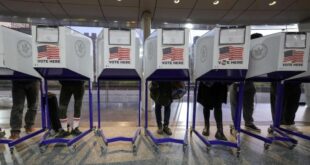
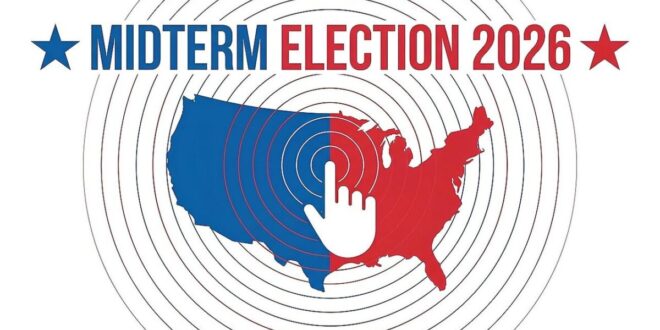
The United States midterm elections, held on November 3, 2026, are more than a contest over control of Congress. They are a test of President Donald Trump’s political standing during the second half of his presidency, a measure of public confidence in the Republican administration, and an indication of how effectively American institutions can balance presidential authority. Yet this year’s elections carry another significance that deserves greater attention: the growing presence of Arab and Muslim Americans in the country’s political life.
For communities whose voices have often been marginalised in national debates, the election represents an opportunity to translate demographic presence, civic engagement and political organisation into institutional influence. Arab and Muslim candidates are contesting congressional seats across the country, while established lawmakers are seeking renewed mandates. Their campaigns reflect a broader transformation in American politics, in which communities once regarded primarily as electoral constituencies are increasingly seeking to shape the policies that affect their lives and the country’s international position.
Midterm elections take place halfway through a president’s four-year term. All 435 voting seats in the House of Representatives are contested, while approximately one-third of the Senate is renewed. This year, 35 Senate seats are being contested, including two special elections. Voters are also choosing governors, state legislators, mayors and other local officials. The results will determine which party controls Congress for the next two years and, consequently, how much legislative and political room the president will have to pursue his programme.
The institutional stakes are substantial. Republicans entered the election with a narrow majority in the House and a 53–47 advantage in the Senate, including two independents who caucus with Democrats. Democrats therefore need only a limited number of gains to change the balance of power in the House, while a net gain of four Senate seats would give them a majority. A Democratic victory in either chamber would strengthen congressional oversight of the Trump administration, although the extent of its influence would depend on the final composition of Congress.
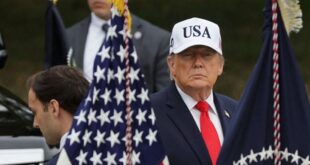
For Trump, the elections come amid public concerns over inflation, the cost of living, housing, healthcare and the economic consequences of the war with Iran. Higher energy prices and anxieties about a prolonged American military engagement in the Middle East have added to the political pressure. Midterm elections frequently become a referendum on the party occupying the White House, and the administration’s ability to persuade voters that its policies are improving their economic circumstances will be central to the Republican effort to retain control of Congress.
But the significance of this election cannot be measured solely by the number of seats won by either party. The growing participation of Arab and Muslim Americans introduces another dimension: the question of who has a voice in shaping American domestic and foreign policy.
Abdul El-Sayed and the Possibility of a Historic Senate Breakthrough
Among the most closely watched candidates is Abdulrahman Mohamed El-Sayed, the Egyptian American physician and former public health official running as a Democrat for the US Senate in Michigan against Republican Mike Rogers. Known as Abdul, El-Sayed has become a prominent figure in a campaign that extends beyond the traditional boundaries of party politics. If elected, he would become the first Muslim to serve in the United States Senate.
His candidacy has attracted national attention, not least because Michigan is home to one of the country’s largest Arab American communities. The state has also become a politically sensitive battleground over American policy towards Israel and the war in Gaza. El-Sayed has criticised Israel’s military campaign and American military assistance to Israel, positions that have placed him at the centre of contentious debates within the Democratic Party.
The campaign has also exposed divisions among Democrats. Former Democratic primary opponent Haley Stevens, who lost to El-Sayed, subsequently endorsed Rogers, reflecting disagreements over Israel and the direction of the party. The dispute illustrates the political difficulties facing candidates who challenge established positions on American Middle East policy, particularly in a state where Arab American, Jewish American and other communities play an important electoral role.
El-Sayed’s prospects have made the Michigan race particularly consequential for both parties. A victory would not simply produce a historic first in the Senate; it would demonstrate that a Muslim American candidate can build a broad statewide coalition around healthcare, economic issues, foreign policy and political accountability.
Established Voices and a New Generation of Representation
The congressional contests also include several prominent Muslim and Arab American lawmakers seeking to retain or expand their influence.
Rashida Tlaib, the Palestinian American Democratic representative from Michigan’s 12th Congressional District, is seeking re-election. Since entering Congress in 2019, Tlaib has become one of the most visible advocates for Palestinian rights in American politics. Her criticism of Israeli government policy and the war in Gaza has made her a prominent voice in debates over US military assistance, human rights and Washington’s relationship with Israel.
Ilhan Omar, the Somali American representative from Minnesota’s 5th Congressional District, is also seeking another term. Since joining Congress in 2019, Omar has played an influential role in debates on immigration, minority rights, economic inequality and American foreign policy. Together with Tlaib, she has helped establish a more visible Muslim presence in the House of Representatives.
André Carson of Indiana, one of the longest-serving Muslim members of Congress, is another important figure in this political landscape. His continued presence demonstrates that Muslim representation in Washington is not limited to a single political generation or a particular ethnic background.
A new generation of candidates is also seeking congressional office. Adam Hamawy, an Egyptian American surgeon and former military physician, is running as a Democrat in New Jersey’s 12th Congressional District. His professional background and medical humanitarian work, including missions connected to Gaza, have helped shape his political profile. His campaign reflects the growing willingness of professionals and community figures to enter electoral politics rather than rely exclusively on advocacy organisations and public campaigning.
Aisha Wahab, whose family background is Afghan, is another prominent Muslim American political figure contesting a House seat in California’s 4th Congressional District. Her political career has brought greater attention to the participation of Afghan Americans and Muslim women in American public life.
Lateefah Simon, a Democratic representative from California’s 12th Congressional District, is also seeking re-election. Her political work has focused on civil rights, social justice and the interests of underrepresented communities. Her presence, alongside that of Omar and Tlaib, illustrates the diversity of Muslim political representation in the United States.
On the Republican side, Zuhdi Jasser, a Syrian American physician and political activist, is running in Arizona’s 4th Congressional District. His conservative political outlook offers a reminder that Muslim American voters and candidates do not constitute a single ideological bloc. Their political positions, priorities and party affiliations vary, just as they do across the wider American electorate.
This diversity is politically significant. Arab and Muslim Americans should not be understood as a unified voting constituency with identical views on foreign policy, social issues or domestic priorities. Their political preferences are shaped by geography, generation, economic circumstances, religious outlook and individual political convictions. The emergence of candidates from different parties and ideological traditions is evidence of a maturing political community rather than a single-issue movement.
The Arab American Vote: From Community Concern to Political Influence
The growing political participation of Arab Americans is particularly important. For decades, many Arab American communities focused on preserving cultural identity, building local institutions and defending their interests through civic organisations. Over time, however, political engagement has become more direct, with increasing numbers of citizens registering to vote, organising campaigns, supporting candidates and seeking elected office.
Recent polling has suggested that Democratic candidates enjoy a substantial advantage among Arab American voters in the current electoral cycle. Yet the relationship between these communities and the Democratic Party should not be taken for granted. Disagreements over Gaza, US support for Israel and the broader direction of American foreign policy have generated frustration among voters who previously regarded the party as their natural political home.
The war in Gaza has been particularly consequential. It has intensified political debate within Arab and Muslim communities, encouraged grassroots mobilisation and increased scrutiny of congressional candidates’ positions on military assistance and human rights. For many voters, the question is no longer simply which party offers the most attractive domestic programme, but whether elected representatives are prepared to challenge policies they believe contradict American democratic principles and international legal obligations.
At the same time, economic concerns remain central. Housing costs, healthcare, employment, education and inflation affect Arab and Muslim families in much the same way as they affect other Americans. Candidates who focus exclusively on international affairs risk overlooking the domestic issues that determine voting behaviour. The most successful campaigns will likely be those capable of connecting foreign-policy accountability with practical solutions to everyday economic and social concerns.
What These Elections Could Mean for American Foreign Policy
The growing presence of Arab and Muslim lawmakers could gradually influence the debate over the Middle East, but it would be unrealistic to assume that their election would immediately transform American foreign policy. The president retains considerable authority over diplomacy, military operations and relations with foreign governments. Congress, however, has significant powers over appropriations, arms sales, foreign assistance, oversight hearings and legislation.
A larger group of lawmakers willing to challenge existing policy towards Israel, Iran or the Gulf could increase scrutiny of military assistance and American involvement in regional conflicts. It could also create greater political space for discussions about civilian protection, international law and diplomatic alternatives to military escalation.
The impact would extend beyond the Middle East. Arab and Muslim American lawmakers are also positioned to contribute to debates on immigration, religious freedom, racial discrimination, civil liberties and the treatment of minority communities. Their ability to build coalitions with other members of Congress will be as important as their individual electoral victories.
The central challenge is therefore not simply to secure more seats, but to translate representation into influence. Congressional politics requires negotiation, coalition-building and the ability to work across party lines. Candidates who enter Washington with strong community support must also demonstrate that they can shape legislation, participate in committees and engage with colleagues whose political priorities may differ from their own.
A Political Milestone, Not the End of the Journey
The 2026 midterms could mark an important moment in the evolution of Arab and Muslim American political representation. Abdul El-Sayed’s Senate campaign, the efforts of Tlaib and Omar to retain their seats, and the emergence of candidates such as Hamawy, Wahab and Simon reflect a broader determination to participate more directly in the institutions that shape American policy.
Yet electoral victories alone will not resolve the deeper challenges facing these communities. Political representation must be accompanied by institutional influence, sustained civic participation and the ability to address the economic and social concerns of constituents. It must also transcend the assumption that Arab and Muslim Americans are defined exclusively by the Middle East or by their positions on Israel and Palestine.
For the Trump administration, the elections will determine the degree of congressional resistance it faces during the remaining years of its term. For Democrats, they will provide an opportunity to demonstrate that they can offer more than opposition to the president. For Arab and Muslim Americans, however, the stakes are broader: they concern the right to participate fully in the political life of the country, to influence decisions affecting their communities and to help shape America’s place in the world.
The significance of these elections will ultimately be measured not only by which party controls Congress, but also by whether a more diverse generation of political leaders can turn representation into lasting influence. In that sense, November 3 is not merely another midterm election. It is part of a wider struggle over the meaning of political inclusion and the future character of American democracy.