Geostrategic Media Political Commentary, Analysis, Security, Defense

The November elections will test more than the domestic standing of the American president. They will reveal how far the United States can reconcile its international responsibilities with a changing political environment and an increasingly multipolar world.
The international system is undergoing a period of strategic transformation in which American power remains considerable but its exercise has become more contested. The United States continues to possess unparalleled military capabilities, a central position in international finance and extensive diplomatic relationships. Yet the political conditions under which Washington exercises its influence are changing. Domestic divisions, economic pressures, competition with China and conflicts in the Middle East have complicated the traditional foundations of American international leadership.
The November 2026 midterm elections are an important moment in this transformation. Although they will not directly elect a new president, they will determine the composition of Congress during the final two years of Donald Trump’s second term. Their consequences will extend beyond the legislative agenda because congressional control influences defence spending, foreign assistance, sanctions, trade policy and the administration’s ability to sustain international commitments.
The Iran conflict provides the clearest illustration of this relationship. The confrontation has placed the United States at the centre of a regional security crisis involving nuclear questions, maritime access, energy infrastructure and the security of its partners. It has also demonstrated that military superiority does not necessarily translate into political control over the final outcome of a conflict.
Washington may possess the capacity to conduct sophisticated military operations, but a durable regional settlement requires political arrangements that address the interests and security concerns of multiple actors. Iran cannot simply be understood through its military infrastructure. Israel cannot be separated from its security requirements. The Gulf states cannot be treated as passive geographical extensions of American military policy. Each has its own strategic priorities, economic ambitions and diplomatic relationships.
This reality creates opportunities for other international powers. China, in particular, has an interest in preserving energy supplies and maintaining commercial relationships across the Gulf. Its economic relationships with regional governments give it diplomatic access, while its international position allows it to engage with actors that have difficult relationships with Washington. Beijing may seek to use the current crisis to demonstrate the advantages of diplomatic engagement and economic interdependence.
However, China’s influence has limitations. Its commercial presence does not automatically translate into an ability or willingness to provide the kind of military security guarantees offered by the United States. Gulf governments understand this distinction. They may diversify their strategic relationships without abandoning the American security architecture that has underpinned much of the region’s defence arrangements.
Russia also has an interest in the changing regional balance. Moscow’s relationships with Iran, its diplomatic connections across the Gulf and its position in international energy markets provide opportunities for influence. Yet Russia’s own military and economic commitments impose constraints on its ability to become a comprehensive alternative security provider in the region.
Türkiye occupies another important position. Its NATO membership, regional military capabilities and relationships with both Western and Middle Eastern governments allow Ankara to pursue a foreign policy that is not entirely dependent on Washington or any other major power. Türkiye’s ability to combine diplomatic engagement with regional security interests could become increasingly relevant if Gulf governments seek greater strategic autonomy.
The European Union faces a different challenge. European countries have significant economic interests in the Gulf and are exposed to disruptions in energy markets, shipping routes and international trade. Nevertheless, differences among European governments over defence policy, relations with Israel, engagement with Iran and the use of military force can complicate the emergence of a unified regional strategy.
The American electoral process may reinforce these international trends if allies and partners perceive that Washington’s foreign policy is increasingly influenced by short-term domestic political calculations. This perception could encourage governments to expand their diplomatic options and develop alternative defence and economic partnerships. Strategic diversification, however, should not be confused with the disappearance of American influence.
The deeper transformation concerns the relationship between power and credibility. International leadership depends not only on military strength but also on the ability to establish predictable commitments, coordinate with partners and provide a framework within which other governments can plan their policies. When international partners become uncertain about the duration or consistency of American commitments, they have stronger incentives to pursue independent strategies.
This is particularly important for Saudi Arabia and the UAE. Both countries have invested heavily in economic diversification and international partnerships. Their development strategies require access to global capital, technology, trade networks and reliable energy markets. Their diplomatic choices will increasingly reflect the need to balance relationships with Washington, Beijing, Moscow, European capitals and regional powers.
The same applies to Qatar, whose international influence is closely connected to energy exports and diplomatic mediation. Kuwait and Bahrain also have significant interests in maintaining regional stability and protecting the security of the Gulf’s commercial and maritime infrastructure.
The question of strategic autonomy is therefore becoming central to the future of the Middle East. Regional governments are unlikely to replace one external patron with another. Instead, they may seek a more diversified network of relationships that reduces their exposure to the decisions of any single international power.
For Washington, this presents both a challenge and an opportunity. A more autonomous Gulf does not necessarily mean a less cooperative Gulf. Governments that possess stronger economic and diplomatic options may become more capable partners in regional security initiatives. However, American influence will depend on whether Washington can accommodate their interests rather than expect automatic alignment with every element of its regional strategy.
The future of global power will also be shaped by the interaction between military confrontation and economic interdependence. The Iran conflict has demonstrated that the security of maritime routes, the stability of energy supplies and the functioning of international financial markets are inseparable from the wider geopolitical environment. No major economy can completely insulate itself from these developments.
The November elections will therefore provide an indication of the domestic political constraints under which American foreign policy will operate. They will not settle the competition between Washington and Beijing, determine the future of Iran or resolve the differences between Israel and its regional adversaries. But they will influence the political environment in which these challenges are managed.
A central question for the next phase of international politics is whether the United States will adapt its international leadership to a world in which other powers and regional actors possess greater diplomatic and economic room for manoeuvre. The alternative is not necessarily the immediate disappearance of American influence, but a gradual adjustment in the way governments calculate their dependence on Washington.
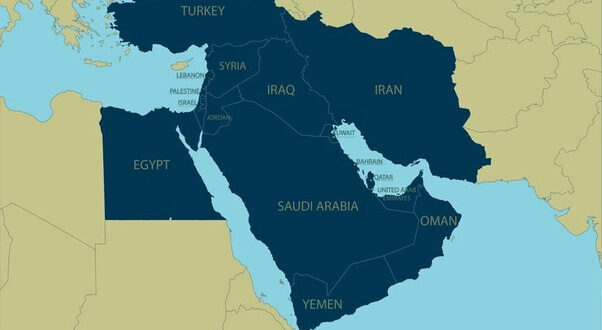
The Middle East will be one of the principal arenas in which this adjustment becomes visible. The future regional order will be shaped by the interaction of American military power, Iranian strategic calculations, Israeli security priorities, Gulf economic ambitions and the growing diplomatic presence of other international actors.
The ballots cast in America will not determine the next international order. They will, however, influence the capacity of the United States to shape it. And in a world where geopolitical power is increasingly distributed across multiple centres, the most consequential question may no longer be whether Washington remains influential, but how it intends to exercise that influence in an increasingly complex international system.