 Geostrategic Media Political Commentary, Analysis, Security, Defense
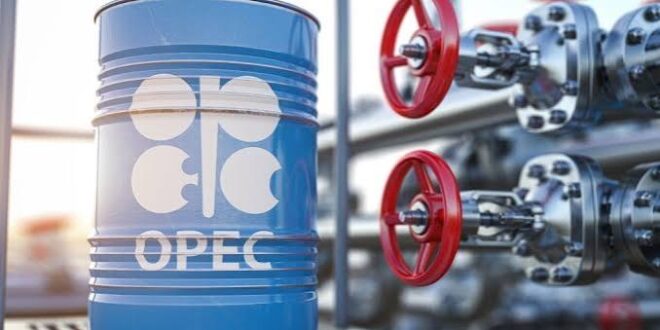

The Iran conflict has demonstrated that the security of the world’s energy markets remains deeply connected to political decisions in Washington and military developments around the Strait of Hormuz.
For decades, international energy security has been discussed primarily in terms of production capacity, investment, technological innovation and the transition towards renewable sources. The conflict involving Iran, Israel and the United States has brought an older reality back into focus: the global energy system remains vulnerable to geopolitical disruption. Oil wells, refineries, LNG terminals, shipping lanes and insurance markets form an interconnected network in which a military confrontation in one geographical area can generate economic consequences across continents.
The American midterm elections are taking place against this background. Energy prices have become an important domestic political issue because the consequences of the conflict are increasingly visible to American consumers and businesses. Higher fuel costs affect transportation, agriculture, manufacturing and household purchasing power. They also complicate the administration’s efforts to demonstrate that its economic policies are delivering stability. Foreign policy has consequently become inseparable from the domestic cost-of-living debate.
The Strait of Hormuz occupies the centre of this energy equation. Its importance extends beyond the quantity of oil passing through it. The waterway also connects major Gulf producers to Asian markets and provides a critical route for liquefied natural gas exports. The Council on Foreign Relations estimates that approximately one-quarter of global maritime oil trade and 19 percent of LNG trade passed through the strait in 2025. These figures illustrate why the waterway’s security has consequences for countries that have no direct involvement in the conflict.
A disruption of Hormuz creates several simultaneous economic pressures. The first is the immediate concern about physical supply. The second is the increase in shipping and insurance costs. The third is the possibility that producers, refiners and consumers begin accumulating precautionary inventories. These developments can intensify market volatility even before the full extent of an actual supply interruption becomes clear.
Oil markets do not respond only to barrels that disappear from production. They also respond to expectations, uncertainty and the possibility of future disruption. Traders must assess whether the confrontation will remain geographically contained, whether infrastructure will be targeted, whether maritime traffic will recover and whether governments will release strategic reserves. The resulting risk premium can become an important component of international crude prices.
The American political dimension is equally consequential. If voters express dissatisfaction with the economic costs of the conflict, the administration could face stronger incentives to pursue de-escalation. A diplomatic arrangement that restores maritime traffic would help reduce pressure on energy markets and improve the outlook for global trade. However, an agreement would need to address more than the immediate reopening of shipping routes. Questions concerning sanctions, nuclear activities, maritime security and the status of military deployments would remain difficult.
A congressional shift could also affect energy policy through appropriations, oversight and legislation. Congress has substantial influence over federal spending and can shape the broader regulatory and investment environment. Yet the president retains important executive authorities in foreign policy and national security. The result would likely be a more complicated policy process rather than an automatic reversal of American strategy.
The consequences extend to the major energy producers of the Gulf. Saudi Arabia has an interest in maintaining the reliability of its exports and preserving its position as a central participant in international energy markets. The UAE must protect its production, export infrastructure and commercial reputation. Qatar’s position is particularly important in the global LNG market, where reliability of supply is a strategic asset and long-term contracts are central to commercial relationships.
For these countries, the issue is not simply whether energy prices rise or fall. High prices may temporarily increase export revenues for producers whose shipments remain uninterrupted. But a prolonged conflict can damage infrastructure, undermine investment confidence, increase operational costs and weaken the long-term reliability of supply. The distinction between a short-term price windfall and sustainable energy security is therefore essential.
The implications for Europe are also significant. European governments have spent recent years attempting to diversify their energy supplies and reduce dependence on vulnerable external routes. A disruption in Gulf LNG shipments could intensify competition for alternative supplies, particularly among European and Asian importers. This would place additional pressure on industrial consumers and potentially complicate efforts to control inflation.
Asian economies face an even more direct exposure because of their dependence on imported Gulf hydrocarbons. China, India, Japan and South Korea must consider the possibility that a regional confrontation could affect the availability and price of energy needed to sustain industrial production. Their diplomatic calculations will consequently be shaped not only by their relationships with Washington and Tehran but also by the need to maintain reliable access to energy supplies.
The United States itself occupies an unusual position. Its domestic energy production provides a degree of insulation from some external supply disruptions, but it does not make the American economy immune to international price movements. Oil is traded in a global market. Higher international crude prices can influence American gasoline prices even when domestic production remains substantial. American consumers therefore remain exposed to geopolitical developments in the Gulf.
There is also a longer-term consequence. The conflict could encourage governments to accelerate investment in alternative transportation routes, strategic reserves, renewable energy, nuclear power and domestic production capacity. Such investments may strengthen energy resilience, but they cannot quickly replace the existing infrastructure connecting Gulf producers with international markets.
The elections may therefore become an indirect referendum on the relationship between American military power and international economic stability. Voters are not necessarily deciding the technical details of Gulf maritime security, but they are experiencing its consequences through prices and inflation. Their political response could influence the administration’s willingness to sustain military operations or pursue a negotiated settlement.
Yet a rapid diplomatic breakthrough cannot be assumed. The security concerns that underpin the confrontation are deeply rooted, and the parties disagree over the conditions required for a durable settlement. Any arrangement that temporarily restores shipping without addressing the underlying military and political disputes could leave the energy system exposed to renewed disruption.
The international energy system is entering a period in which resilience will matter as much as production capacity. The central question is no longer simply how much oil and gas the world can produce, but whether the infrastructure transporting those resources can remain operational during geopolitical crises.
The American elections will not determine the future of global energy on their own. But they will influence the political calculations of the country whose military presence and diplomatic weight remain central to Gulf security. For energy-importing economies, the outcome will be measured not only in political terms but also in the reliability of supply, the cost of transportation and the stability of household and industrial energy bills.