 Geostrategic Media Political Commentary, Analysis, Security, Defense

Dr. Yashwant Singh
The Board of Peace did not emerge as an abstract proposal for the world to weigh at leisure. It is a functioning body, chartered, staffed, and already dividing its own invitees. It originates in point nine of Trump’s twenty-point Gaza plan of September 2025, was given Security Council cover by Resolution 2803 in November 2025 (adopted 13-0, with Russia and China abstaining), and was formally launched at Davos in January 2026, with its inaugural meeting held in Washington the following month.
Three structural facts, once known, change the entire character of the analysis. First, permanent membership reportedly carries a one billion dollar fee. Second, the chairman, Trump, for life, holds veto power not just over resolutions but over who is admitted to the Board at all. Third, that admission power is not theoretical: Canada’s invitation was reportedly withdrawn after a public dispute between Trump and Prime Minister Mark Carney over tariffs at Davos itself. An institution that sells permanent seats, vests admission and expulsion in one man, and has already used that power punitively within weeks of its founding is not a multilateral security body with unusual governance quirks. It is a club good with a proprietor, and the price of entry is not merely financial, it is submission to the proprietor’s discretion over who stays and who is put out.
The Right Historical Parallel Is Uncomfortable, Not Reassuring
The comparison with the League of Nations mandate system would be too gentle. The mandates were paternalistic and often self-serving, but they were collectively supervised through a Permanent Mandates Commission answerable to the League Council, a body of many, however imperfect. The closer analogue, once the entry fee and personal veto over membership are on the table, is the Congo Free State: a territory placed under the personal sovereignty of a single ruler, nominally for civilizing purposes, in practice organized around extraction and loyalty to the sovereign himself. That comparison sounds extreme until one notices that the Board’s founding facts, which are private capital mobilization built into its executive (a World Bank president, a private-equity chief executive, and the president’s son-in-law all sit on it), a fee-for-membership structure, and personal control over who belongs, are not incidental features. They are the design.
A fairer, more recent parallel worth naming is Bosnia’s Office of the High Representative, which did vest sweeping “Bonn powers,” the ability to dismiss officials and impose laws, in a single international administrator. But the High Representative was appointed by a Peace Implementation Council of many states, served fixed terms, and was removable by that same collective body. The Board of Peace inverts every one of those safeguards: the chairman is self-perpetuating, chooses his own successor, and answers to no collective body that can remove him. What Bosnia shows is that personalist international administration is not unprecedented, but also that its legitimacy has always depended on exactly the constraints the Board of Peace’s charter appears to have discarded.
Reading This as Regime Competition, Not Reform
In international-relations terms, the Board of Peace is best understood through what scholars call a “regime complex,” a set of overlapping, non-hierarchical institutions that let powerful states forum-shop between whichever body offers them the most favourable rules for a given problem. What makes this instance distinctive is that the new regime is explicitly a club good rather than a public good: access is priced, membership is discretionary, and loyalty is enforceable through exclusion, as Canada discovered. This is a different animal from ordinary institutional proliferation. NATO enlargementwas slow and treaty-bound; the G20 absorbed new members through consensus. A body that can strip a founding-tier ally of its seat over a tariff dispute is not building durable order, it is testing how much of the old multilateral vocabulary can be repurposed around a single transactional relationship with Washington.
That the launch nonetheless fractured its own coalition is the important corrective. France, Belgium, Sweden, Norway, and Slovenia all declined on record, and their stated reasoning converged: the charter’s mandate is not confined to Gaza, and adopting it as written would mean endorsing a body that could rival or supersede the UN Charter framework itself. This is not reflexive European caution; it is a considered legal objection, delivered in near-identical language by five governments independently. The Board of Peace, in other words, has already failed its first legitimacy test among the very allies whose assent would have made it something more than an American-led directorate with paying guests.
Where India Sits, and Why Pakistan’s Choice Sharpens the Question
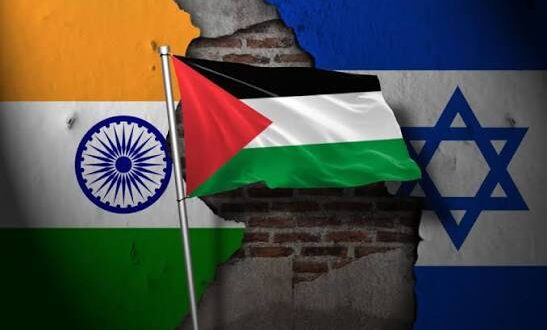
India’s position needs to be read against this fuller picture. Trump personally invited India’s Prime Minister Narendra Modi in January 2026. India neither signed at Davos nor sent a principal to the founding ceremony; its Ministry of External Affairs confined its public support to the Gaza plan “pursuant to” Resolution 2803: support for a UN-authorized process, not for the Board as a free-standing club. India attended the Washington meeting only as an observer.
What sharpens this considerably is that Pakistan has already joined, alongside Egypt, Turkey, Qatar, Jordan, Saudi Arabia, Indonesia, and a scattering of others largely from the Gulf, Central Asia, and the Western Balkans. This is not a roster built around traditional US treaty allies: the UK, France, Germany, Canada, and most of Scandinavia are conspicuously outside it. India therefore faces two live risks simultaneously, not one: the risk of over-committing to a personalist club whose governing logic conflicts with the sovereign-equality principle at the core of Indian diplomacy, and the narrower regional risk of being read as absent from a table where Islamabad has already taken a seat. The first risk should dominate the second. Presence in a badly designed institution to avoid Pakistan being present without India is a status anxiety, not a strategy; the states whose absence actually matters for the Board’s legitimacy are the ones that declined on principle, not the ones chasing proximity to the chair.
What “Conditional Support” Must Actually Mean
Given the entry-fee structure, India’s calibration needs to be more precise than a general posture of hedging.
Refuse to purchase proximity. A billion-dollar admission price converts membership from an act of institutional design into an act of patronage. India’s diplomatic capital should never be spent buying access to a body whose governing document places a market price on standing beside its founder.
Keep support anchored to the Resolution, not the Board. India’s existing formula (backing the Gaza plan “pursuant to” UNSCR 2803), should be stated explicitly as a legal position: the Board’s legitimate authority extends only as far as the Council resolution that created it, and any claim to a broader, Gaza-unbound mandate exceeds what New Delhi has endorsed.
Offer capability without accepting the charter’s terms. India’s peacekeeping depth, medical and reconstruction capacity, and non-interventionist credibility are exactly what Gaza’s rebuilding needs, and can be offered bilaterally or through the UN-authorized channel without accession to a charter built around a self-perpetuating, fee-collecting chairmanship.
Watch the defectors, not the joiners. The signal that should move India is not which Gulf or Central Asian states have joined, but whether France, the UK, or the Nordic states eventually extract governance changes, with provisions like collective votes, removable leadership, and fixed terms, as the price of their own participation. If that reform occurs, the Board becomes a genuinely different institution, and re-engagement would be warranted. Until then, the coalition of the still-outside is the more instructive one to watch.
The Test Is the Charter, Not the Cause
The Gaza reconstruction effort is a genuine humanitarian and diplomatic necessity, and no serious analysis should treat India’s caution as indifference to it. But the Board of Peace as chartered is not simply an efficient vehicle for that necessity. It is a test of whether a body that prices membership, vests admission and removal in one man, and has already used that power punitively can be absorbed into the vocabulary of collective security without collective security’s actual constraints. France, Belgium, Sweden, Norway, and Slovenia answered that test by declining. India has answered it, so far, by supporting the underlying UN-authorized plan while withholding its name from the charter itself. That is the correct posture. What remains is to state it as a considered principle: India will contribute to peace, but it will not purchase proximity to whoever happens to chair it. This should be presented as a deliberate policy rather than a cautious silence that risks being mistaken for indecision.
Author’s Bio:
Dr. Yashwant Singh is a sociologist, recently served as an Assistant Professor in the Department of Sociology at GITAM (Deemed to be) University, Bengaluru, India. He holds an M.Phil. in Sociology from the University of Delhi and a Ph.D. in Sociology from the University of Hyderabad, India. His research interests include urban sociology, the sociology of development and geopolitics. His writings have appeared on several digital platforms, including Across Voices, Modern Diplomacy, Geostrategic Media, South Asia Journal, World Geostrategic Insights and IA-Forum.