 Geostrategic Media Political Commentary, Analysis, Security, Defense
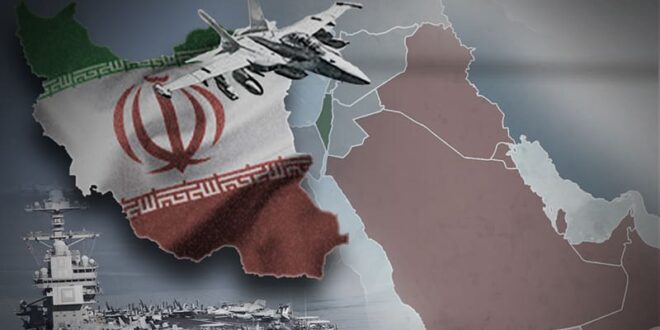

Neither courting Washington, diversifying security partnerships nor maintaining discreet channels with Tehran can fully shield the Gulf from the consequences of war. As the conflict with Iran continues, the six Gulf Cooperation Council states—Bahrain, Kuwait, Oman, Qatar, Saudi Arabia and the United Arab Emirates—find themselves facing an increasingly uncomfortable paradox. They remain dependent on the United States as their principal security partner against Iranian threats, yet the limits of that protection have become more visible during the war, even as close alignment with Washington can make them targets in Tehran’s calculations. The result is a delicate balancing act in which Gulf governments continue to rely on American military power while simultaneously searching for other security partners, maintaining diplomatic channels with Iran and attempting to prevent the war from becoming a permanent feature of the regional order.
This balancing act should not necessarily be interpreted as strategic inconsistency. For the Gulf states, it is increasingly a form of risk management in an environment where neither American protection nor diplomatic engagement with Iran can guarantee safety. They cannot simply abandon Washington while missiles and drones remain a threat, but neither can they assume that American military intervention will always coincide with their own interests. The longer the war lasts, the stronger the incentive becomes to develop alternatives—diplomatic, military and economic—that reduce their exposure to decisions made in either Washington or Tehran.
The war is therefore producing a profound strategic dilemma for the Gulf. The states that have spent decades building security relationships with the United States are now confronting a question they have largely avoided: what happens when the protection they depend upon is no longer sufficient to make them feel secure? Their response has been neither a clean break with Washington nor a wholesale accommodation with Tehran, but an increasingly sophisticated attempt to diversify their options. In practice, the Gulf is moving toward a model in which strategic hedging becomes as important as traditional alliance politics.
The American Security Umbrella Has Limits
The frustration is becoming increasingly visible. As the economic, military and human costs of the war accumulate, Gulf governments have growing reasons to question whether Washington’s strategy adequately reflects their interests. Reports in recent months have described private Gulf concerns about the direction of the war and the possibility that regional states could end up paying the price for decisions over which they have limited control.
Yet the Gulf monarchies have few attractive alternatives. Their armed forces remain deeply integrated with American weapons systems, intelligence networks, training structures and air-defence architecture, while American bases and military infrastructure remain central to the regional security system. Even governments increasingly interested in strategic autonomy still need Washington, making any rapid move away from the United States unrealistic. The central contradiction is therefore becoming clearer: the Gulf states want greater independence from Washington without losing the American security umbrella.
They also face a second dilemma. They want channels to Tehran without appearing to abandon the United States, stronger regional defence arrangements without provoking a wider arms race, and deterrence against Iran without becoming unwilling participants in an American-Iranian war. These objectives do not always fit comfortably together, particularly when military escalation forces Gulf governments to choose between strategic alignment and immediate self-preservation. The result is a foreign-policy model increasingly based on diversification rather than exclusive alignment.
Saudi Arabia: From Dependence to Strategic Diversification
Saudi Arabia, the largest and most influential GCC state, provides the clearest example of this evolution. Before the war, Riyadh sought to deepen its formal defence relationship with Washington, including stronger security guarantees, advanced weapons, intelligence cooperation and military-basing arrangements. The strategic defence agreements concluded in November 2025 further institutionalised the relationship, while Washington approved future deliveries of advanced defence equipment, including F-35 aircraft.
But the war has exposed the limits of even an exceptionally close partnership. Saudi Arabia has had to contend with a conflict whose consequences can reach its territory, energy infrastructure and maritime interests regardless of whether Riyadh wants to participate directly. The kingdom has consequently continued working with Washington while simultaneously expanding other security relationships and attempting to influence the course of American policy.
This is a significant shift in Saudi strategic thinking. Riyadh is no longer behaving as though its security can be guaranteed through a single external patron; instead, it is building layers of deterrence around the American relationship. The deployment of additional Pakistani forces and military assets, the development of wider maritime-security arrangements in the Red Sea, and the expansion of defence cooperation with Turkey and Pakistan all point in the same direction: a gradual effort to construct a broader security network around the kingdom.
The Makkah Joint Defence Agreement signed by Saudi Arabia, Türkiye and Pakistan in August is particularly significant. The agreement provides a framework for collective defence and deeper military cooperation, while establishing mechanisms intended to institutionalise the relationship. It does not mean Saudi Arabia is abandoning the United States; the American relationship remains fundamental. Rather, Riyadh appears increasingly determined to ensure that American power is one pillar of its security architecture rather than the only pillar.
Riyadh’s Other Message to Washington
Saudi Arabia has also demonstrated that strategic partnership does not mean automatic agreement with every American military decision. During the war, Riyadh has sought to discourage actions that could widen the conflict or expose the kingdom to additional retaliation. This reflects a calculation increasingly shared across the Gulf: American military power may be necessary for deterrence, but an uncontrolled American-Iranian confrontation can impose costs on the very countries Washington is trying to protect.
For Riyadh, the distinction is crucial. The kingdom wants Iran deterred, but it does not necessarily want Iran destroyed at any cost; it wants freedom of navigation in the Gulf and Red Sea, but does not necessarily want those waterways turned into permanent battlefields. It wants American security guarantees, but does not want those guarantees to become a mechanism through which Saudi territory becomes a launchpad for an open-ended war. This helps explain why Saudi diplomacy increasingly moves in two directions at once: closer security coordination with Washington and greater political autonomy from Washington.
That is less a contradiction than a form of strategic hedging. Saudi Arabia is attempting to preserve the benefits of the American relationship while building additional options that could reduce its vulnerability if Washington’s priorities diverge from Riyadh’s. The broader objective is not to replace the United States overnight, but to make Saudi security less dependent on any single external actor. In a region where wars can quickly cross borders, diversification itself becomes a form of deterrence.
Oman: The Small State That Cannot Afford to Choose Sides
If Saudi Arabia represents the Gulf’s attempt to build strategic depth, Oman represents something different: the survival strategy of a small state living next to a much larger and more powerful neighbour. With a population of roughly 5.4 million compared with Iran’s much larger population and military capabilities, Oman has long pursued pragmatic coexistence with Tehran. Its geography makes confrontation particularly dangerous, while its diplomatic tradition has given it a distinctive role as an intermediary between Iran, the Gulf states and the United States.
That role has become even more important during the war. Muscat has sought to preserve strategic ambiguity by maintaining relations with Iran without abandoning its Gulf partners, while keeping channels open to Washington. Its value lies precisely in its ability to communicate with parties that increasingly struggle to communicate directly. For Oman, diplomacy is not merely a foreign-policy preference; it is part of the country’s security strategy.
But the war has also demonstrated the limits of diplomacy. Oman’s diplomatic position has not made it immune from the consequences of military escalation, while reports concerning maritime mines and threats around the Strait of Hormuz have underscored how quickly the conflict can reach a country that has tried to remain outside it. At the same time, Oman’s engagement with Tehran has occasionally generated frustration in Washington, demonstrating how difficult it is for a small state to maintain neutrality when larger powers are at war.
For Muscat, however, diplomacy remains the least dangerous option available. A small state cannot assume that military power will protect it from every consequence of regional conflict, particularly when its geography places it close to one of the world’s most strategically important waterways. Its best defence may instead be to remain useful to every side, preserve channels of communication and ensure that all major actors have an interest in its stability.
The UAE: Security Hardening and Quiet Diplomacy
The United Arab Emirates has followed a somewhat different path. Abu Dhabi has adopted a harder posture toward Iran than Oman, while simultaneously maintaining channels with Tehran designed to protect its economic and strategic interests. That dual approach reflects the complicated history between the two countries and the importance of trade, particularly through Dubai, which has long served as a major commercial gateway for Iranian business.
Yet economic interdependence has not insulated the UAE from strategic confrontation. The country’s relationship with Israel following the 2020 Abraham Accords, its role in regional security arrangements and its involvement in conflicts involving Iran-aligned groups have all contributed to a more difficult relationship with Tehran. The attacks on Abu Dhabi in January 2022 demonstrated that the UAE’s commercial openness could not shield it from the wider strategic consequences of regional conflict.
The current war has reinforced that lesson. Reports have described significant Iranian attacks affecting Emirati infrastructure, while the UAE has strengthened its air-defence posture and maintained close security coordination with the United States and other partners. Reports of secret military and diplomatic contacts should therefore be understood within a broader Emirati strategy: deter Iran publicly while keeping enough communication open to reduce the possibility of uncontrolled escalation.
This is the essence of Gulf hedging. The same state can strengthen its military relationship with Washington, improve its air defences, maintain commercial channels with Tehran and simultaneously seek diplomatic arrangements designed to keep its infrastructure out of the war. None of these policies can guarantee security on its own, but together they represent an attempt to survive between two competing powers.
Qatar: Diplomacy as Strategic Insurance
Qatar faces an especially complicated equation. It hosts Al Udeid Air Base, one of the most important American military facilities in the Middle East, while maintaining substantial political and economic relations with Iran. The two countries also share the enormous North Field/South Pars gas reservoir, giving Doha a direct economic interest in maintaining stability with Tehran.
Qatar has therefore repeatedly emphasised diplomacy and mediation. During the conflict, Doha has sought to preserve its channels to Tehran while maintaining its relationship with Washington, and its role as a mediator has given it a strategic asset that few other Gulf states possess. Qatar can sometimes communicate with parties that are unwilling or unable to speak directly to one another, giving Doha influence disproportionate to its size.
But mediation cannot eliminate vulnerability. Attacks affecting Qatar’s energy infrastructure have demonstrated the extraordinary cost of allowing a regional conflict to reach critical energy facilities, while damage to LNG infrastructure can reverberate far beyond the Gulf. For Doha, diplomacy is therefore more than a foreign-policy preference; it is a form of strategic insurance intended to create channels through which escalation can be managed before it becomes irreversible.
Kuwait: Neutrality Under Pressure
Kuwait faces a different set of constraints. Like the other GCC states, it has sought to maintain a position of neutrality, but its geographic proximity to Iran and its deep historical relationship with the United States leave it with less room for manoeuvre than Oman or Qatar. The legacy of Iraq’s 1990 invasion and the subsequent American-led liberation of Kuwait remains central to Kuwaiti strategic thinking.
That history makes Kuwait more reluctant to move too far away from Washington. The United States is not simply another military partner; for many Kuwaitis, it is associated with the restoration of national sovereignty and the security architecture that followed. At the same time, Kuwait cannot ignore Tehran, given its proximity to Iran and the possibility that a wider war could expose its territory and infrastructure.
Kuwait has therefore attempted to maintain its declared neutrality while resisting being drawn into offensive operations. This balancing act may become increasingly difficult as the war continues, because neutrality can protect a country only so long as the belligerents are willing to respect it. The longer the conflict lasts, the harder it becomes for any Gulf state to remain completely outside its consequences.
Bahrain: The Gulf’s Most Exposed Fault Line
Bahrain occupies another sensitive position. Its close security relationship with Saudi Arabia and the United States makes it an important part of the Gulf’s wider defence architecture, but its geographic proximity to Iran and its own domestic political sensitivities create additional vulnerabilities. For Manama, the Iranian question is therefore not simply about missiles, drones or naval power; it is also connected to domestic security and the kingdom’s position within the broader Gulf order.
This makes Bahrain particularly dependent on the regional security system constructed around Saudi Arabia and the United States. The problem is that a system designed primarily around deterrence can also make smaller states more exposed during a major war. The closer Bahrain is identified with American and Saudi military strategy, the greater the possibility that Tehran could regard it as part of the opposing strategic camp.
Bahrain consequently has fewer options for independent hedging than Oman or Qatar. Its security is deeply embedded in the wider Gulf architecture, leaving it dependent on the ability of larger partners to prevent the war from expanding. That dependence is unlikely to disappear even as the Gulf states seek greater strategic autonomy.
Six States, One Strategic Dilemma
Despite their different approaches, the six GCC states share several fundamental assumptions. None appears ready to abandon the American security relationship, given the military infrastructure, intelligence cooperation, weapons systems and defence networks built over decades. Yet none can assume that American protection is sufficient, which is why all six have incentives to develop additional regional partnerships while maintaining some form of communication with Tehran.
This is producing what might be described as a multi-layered Gulf security strategy. The United States remains the principal military guarantor, while regional partnerships provide additional deterrence, European powers offer selective support, Turkey and Pakistan are becoming more significant security partners, China retains economic and diplomatic influence, and direct communication with Iran remains an essential instrument of crisis management. The Gulf states are not necessarily choosing between these relationships; increasingly, they are trying to maintain all of them simultaneously.
This marks a significant departure from the traditional logic of Gulf alignment. Rather than asking which major power the region should follow, governments are increasingly asking how many strategic relationships they can maintain without becoming dependent on any one of them. The answer remains uncertain, but the direction is becoming clearer: diversification is no longer simply an economic principle; it is becoming a central element of Gulf security policy.
The Limits of Hedging
Yet hedging has limits. Quiet diplomacy cannot guarantee that Iran will refrain from attacking Gulf infrastructure, while security partnerships cannot guarantee that the United States will intervene every time a Gulf state is threatened. Military diversification is expensive, and competing relationships can themselves create tensions between partners.
The experiences of Qatar and the UAE illustrate the problem. Maintaining channels to Tehran may reduce some risks, but it cannot eliminate them, while Saudi Arabia’s experience demonstrates that even an exceptionally close relationship with Washington does not guarantee that American and Saudi calculations will always coincide. Gulf governments are therefore discovering an uncomfortable truth: there is no perfect position in a war between the United States and Iran.
Alignment with Washington carries risks. Distance from Washington carries risks. Engagement with Tehran carries risks, and confrontation with Tehran carries risks. The challenge for the Gulf states is therefore not to eliminate strategic risk altogether, but to distribute it across several relationships, capabilities and diplomatic channels.
The Beginning of a New Gulf Security Order?
This may ultimately prove to be one of the most important strategic consequences of the war. The Gulf states are beginning to behave less like passive members of an American security system and more like actors attempting to shape their own regional order. Saudi Arabia’s defence cooperation with Türkiye and Pakistan, the growing emphasis on Red Sea security, Qatar’s continued mediation and Oman’s diplomatic role all point toward a broader shift in thinking.
This does not mean that the American role is disappearing. Washington is likely to remain indispensable to Gulf security for the foreseeable future because of its military capabilities, intelligence networks, advanced weapons systems and regional infrastructure. What is changing is the way Gulf governments appear to view that role: increasingly as one component of a broader security architecture rather than the sole foundation of regional stability.
The emerging system could eventually involve American military power, Saudi-led regional initiatives, Turkish and Pakistani capabilities, European deployments, Omani and Qatari diplomacy, and economic relationships extending to China and other major powers. Such an arrangement would represent a substantial departure from the traditional Gulf security model, even if the United States remains its most powerful external actor.
The Price of the War
But there is a darker side to this transition. The Gulf states are being forced to spend enormous political, military and economic resources managing a war they did not initiate and do not necessarily control. Energy infrastructure remains vulnerable, maritime trade is exposed, defence systems are under pressure, and governments must prepare for attacks while simultaneously reassuring investors and markets that their economies remain stable.
The longer the war continues, the greater the danger that temporary security measures become permanent features of the region. Gulf governments cannot simply build enough missile interceptors to solve the political problem, nor can they construct enough alternative pipelines and ports to eliminate their vulnerability to maritime disruption. Military deterrence can reduce risk, but it cannot substitute for a regional political settlement.
That is the fundamental lesson of the conflict. The Gulf states can diversify their weapons, partnerships and diplomatic channels, but they cannot fully escape the strategic geography that places them between Washington and Tehran. So long as the confrontation continues, the region will remain exposed to decisions made by powers whose strategic calculations do not always coincide with those of the states living closest to the battlefield.
Beyond Washington and Tehran
The Gulf states are now confronting a strategic reality that has been developing for years but has become impossible to ignore during the war: their security cannot depend entirely on the intentions of either Washington or Tehran. They will continue to need the United States, remain wary of Iranian military power, maintain economic relationships with global powers, strengthen their own defence capabilities and preserve diplomatic channels whenever possible.
The result is unlikely to be a simple Gulf bloc against Iran or a wholesale realignment away from the United States. It is more likely to be something considerably more complicated: a region in which states hedge, diversify and negotiate simultaneously. The Gulf’s emerging strategic autonomy will therefore not necessarily mean independence from Washington, but greater freedom to pursue national interests even when those interests do not perfectly coincide with those of its principal security partner.
For decades, Gulf security rested heavily on the assumption that American power could ultimately manage the region’s worst crises. The war with Iran has exposed the limits of that assumption without making the United States irrelevant. Instead, it is encouraging Gulf governments to ask a different question—not simply who will protect them, but how they can build enough political, military and diplomatic capacity that their survival does not depend entirely on the decisions of someone else.
The war may eventually end, but the strategic lesson it has imposed on the Gulf is unlikely to disappear with it. The region is moving toward a more diversified and increasingly autonomous security architecture in which Washington remains essential, Tehran remains unavoidable, and Gulf states themselves seek greater control over the risks that surround them. The old security formula may survive, but it is unlikely to remain unchanged.