Geostrategic Media Political Commentary, Analysis, Security, Defense

Dr. Shehab Al-Makahleh
The U.S.–Iran confrontation has entered a phase in which military power alone is no longer sufficient to determine the course—or the end—of the war. After months of strikes, economic pressure, and disruption to shipping in the Gulf, the conflict is increasingly revolving around a different question: who can impose the terms of a settlement before the cost of war imposes itself on everyone? The United States possesses overwhelming military and economic advantages, while Iran is relying on a fundamentally different strategy—prolonging the confrontation, distributing its costs, and exploiting its geography and military and regional capabilities to prevent Washington from turning its superiority into a complete political victory. Between these two approaches, time itself has become a bargaining weapon, with each side betting that the coming days and weeks will force the other to reconsider its calculations.
The dispute is no longer confined to Iran’s nuclear program, even though the nuclear issue will remain at the heart of any future agreement. The war has reopened broader questions involving Gulf security, freedom of navigation, the future of the Strait of Hormuz, sanctions on Iranian oil, Iran’s regional role, and the future of the American military presence in the Middle East. Any serious negotiation, therefore, will not simply return to a table focused on centrifuges or enrichment levels. It will be a negotiation over the broader relationship between Washington and Tehran and over the rules governing regional security after the war. That is precisely what makes reaching an agreement far more difficult than simply declaring a ceasefire.
Washington Wants to Negotiate From a Position of Pressure
The American strategy appears to rest on a straightforward premise: serious negotiations will not begin until the cost of rejecting them becomes sufficiently high for Iran. Washington has therefore combined military operations with economic pressure, sanctions, and maritime restrictions while keeping the door open to indirect contacts. This approach allows the administration to argue that diplomacy remains possible while simultaneously seeking to prevent Tehran from using negotiations simply to buy time or ease pressure without making substantive concessions. From Washington’s perspective, early concessions could weaken some of the leverage accumulated during months of conflict.
This logic was evident in Washington’s response to Iran’s latest initiative. On September 26, President Donald Trump rejected an Iranian proposal that Tehran said included a seven-day plan to reopen the Strait of Hormuz and return to negotiations in exchange for measures including an end to the maritime blockade, sanctions relief, the release of frozen Iranian assets, and a cessation of hostilities. Yet the rejection did not close the diplomatic channel. Trump subsequently indicated that he expected talks to resume, while Tehran said it was awaiting a final response through intermediaries.
This dual-track approach has become one of the defining characteristics of the current phase. Washington wants to preserve the military option, but it does not necessarily want a war without an end, particularly as the economic and political costs of the conflict increase and its effects spread through energy markets. The administration is therefore attempting to navigate a difficult balance: maintain enough pressure to push Iran toward negotiations without allowing that pressure to become the very factor that produces a wider escalation or a conflict that becomes increasingly difficult to control. That is why every diplomatic initiative now appears simultaneously to be an opportunity and another confrontation at the negotiating table.
Iran Is Fighting to Prevent an American Political Victory
Tehran, meanwhile, is approaching the enormous imbalance in military capabilities differently. Iran understands that it cannot fight an open conventional war with the United States on Washington’s terms. Its strategy is therefore aimed at making American military superiority less capable of producing a decisive political outcome. That means transforming the conflict from a confrontation between two militaries into a wider network of pressures involving missiles, maritime routes, energy, regional security, the economy, and international intermediaries. The objective is not necessarily to prevent the United States from inflicting substantial damage on Iran, but to prevent Washington from declaring that such damage has ended Tehran’s ability to resist or negotiate on its own terms.
This is where the Strait of Hormuz becomes particularly important in Tehran’s calculations. For Iran, Hormuz is not simply a waterway; it is a geographic, economic, and political instrument that can influence the calculations of the United States and its allies. Tehran understands that prolonged disruption to energy flows through the Gulf would not hurt its adversaries alone. It would also increase costs for the global economy, Asian and European energy importers, and the Gulf states themselves. Iran is therefore attempting to transform Hormuz from a purely military theater into a negotiating instrument, making its reopening part of a broader bargain rather than a unilateral concession.
The seven-day Iranian proposal reflects this logic. According to Tehran, reopening the Strait was linked to a series of conditions, including a ceasefire, an end to the maritime blockade, the easing of oil sanctions, the release of frozen Iranian assets, and the resumption of negotiations over the nuclear issue. Iran was therefore attempting to convert its most significant source of leverage into an entry point for a reciprocal settlement rather than reopen the Strait first and wait to see what Washington might offer afterward.
Hormuz: The Waterway That Became a Negotiating Table
Few issues capture the nature of the current conflict more clearly than the Strait of Hormuz. The waterway brings geography, strategy, energy, trade, and international security together at a single point, and any prolonged disruption to shipping can quickly affect oil prices, freight costs, insurance rates, and energy-importing economies. For Washington, freedom of navigation through Hormuz has therefore become more than an economic concern; it is a test of the United States’ ability to protect one of the world’s most strategically important maritime corridors. Tehran, meanwhile, sees its ability to influence the conditions of navigation as a means of partially offsetting America’s overwhelming military superiority.
But turning Hormuz into a bargaining instrument carries significant risks for Iran itself. The longer shipping remains disrupted, the greater the economic pressure on Iran and neighboring states, and the stronger the incentive to develop alternative transportation and energy arrangements that could reduce the strategic importance of the Strait over time. At the same time, the continuation of the American maritime blockade places increasing pressure on the Iranian economy, particularly on oil revenues, currency markets, and domestic economic activity. Current reports indicate that the Iranian economy is already under severe strain, including a sharp decline in the value of its currency amid continuing sanctions and maritime restrictions.
This reveals the limits of using Hormuz as a negotiating weapon. Iran can use geography to generate substantial pressure, but it cannot ignore the possibility that such pressure could encourage the United States and its allies to pursue long-term strategic alternatives. Nor are the Gulf states marginal actors in this equation. Their economies depend heavily on stable energy and trade flows, and they may face increasing pressure when maritime navigation becomes an extension of the war. The future of Hormuz, therefore, will not be merely an American-Iranian issue. It will be a broader regional and international question.
Diplomacy Has Not Disappeared Despite the Escalation
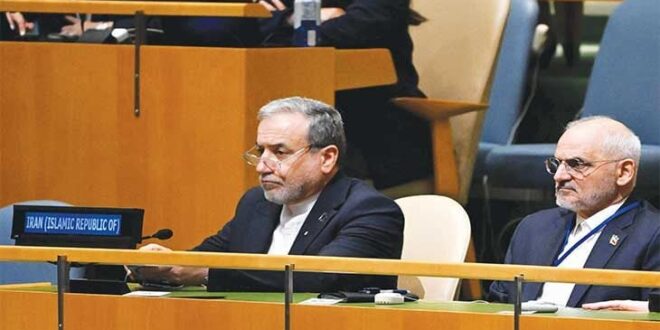
The striking paradox is that military escalation has not eliminated diplomacy. Indirect contacts have continued through regional intermediaries, while the United Nations General Assembly meetings in New York have provided another setting for diplomatic activity between the two sides. Iranian Foreign Minister Abbas Araghchi has remained involved in these contacts, while U.S. envoy Steve Witkoff has participated from the American side, with intermediaries continuing to carry proposals and responses between Washington and Tehran.
The difficulty, however, is that Washington and Tehran are not entering negotiations from the same starting point. The United States wants negotiations to be the result of pressure, while Iran wants negotiations to become a mechanism for ending that pressure before making major concessions. This difference in priorities turns every diplomatic move into a contest over timing rather than a conventional negotiation. Even when both sides speak about peace, the underlying question remains the same: what should come first—the end of the war or the concessions?
The Battle for Time
This is why time has become one of the most important weapons in the conflict. Washington is betting that continued sanctions and economic pressure will eventually make the cost of war greater than Tehran can sustain. Iran, meanwhile, is betting that prolonging the confrontation will drive up energy prices, increase pressure on the global economy, and make the war increasingly costly for the United States and its allies. Each side wants to demonstrate that it has greater endurance and that the other will be the first to request negotiations. But this strategy carries a shared danger: miscalculating the opponent’s ability to endure may prolong the war rather than bring it to an end.
The American political calendar adds another dimension, particularly with the congressional midterm elections approaching in November. The costs of war, energy prices, and domestic security have become part of the political environment in which the administration operates, while Tehran is also watching the election cycle as a potential factor in Washington’s calculations. Recent reports have indicated that Iranian officials question whether a final agreement can be reached before the November elections, amid concerns that the possibility of renewed escalation could return afterward if the current diplomatic efforts fail.
But betting on the elections alone would be risky. Even if political calculations inside the United States change, the issues that triggered the war will not disappear automatically. The nuclear question will remain, Gulf security will remain complicated, sanctions will require legal and economic arrangements, and trust between the two sides has deteriorated significantly compared with the period before the war. Any future agreement will therefore require more sophisticated implementation mechanisms and guarantees than a political declaration alone.
Three Possible Paths for the War
Against this backdrop, the conflict appears to be moving toward three broad possibilities.
The first is continued attrition, with repeated rounds of military escalation, economic pressure, and disruption to maritime and energy flows, without either side being able to convert its advantages into a decisive political outcome. This would likely be the most prolonged and costly scenario, keeping the region in a state of persistent tension and making every maritime incident or missile strike capable of developing into another crisis.
The second is a return to phased negotiations beginning with the most urgent issues. Such an arrangement could include a temporary ceasefire, an agreement guaranteeing freedom of navigation through Hormuz, reciprocal easing of certain restrictions, and then movement toward the nuclear issue, sanctions, and broader security questions. This approach may be more practical than attempting to resolve every issue in a single agreement, particularly given the dramatic deterioration in trust between the two sides. Yet it would remain vulnerable to collapse if either side concluded that the initial phase was merely a way for the other to rebuild its capabilities and prepare for another round of confrontation.
The third—and most complicated—possibility would be a broader agreement that redefines the security architecture of the Gulf itself. In such a scenario, negotiations would no longer be exclusively American-Iranian. Gulf states would need to participate in arrangements concerning security, navigation, non-aggression, and de-escalation. The wider regional picture would also have to be addressed, including security in the Red Sea and Bab al-Mandab, Iran’s relations with its Arab neighbors, and the future role of the American military presence in the region.
What Comes After the War May Matter More Than the War Itself
The central problem is that simply returning to the situation that existed before the war may no longer be sufficient. Iranian, American, and regional calculations have changed during months of confrontation, and each side now has a clearer understanding of the other’s vulnerabilities than it did before the war began. Gulf states have also become more aware that a direct confrontation between Washington and Tehran can rapidly reach their territory, ports, infrastructure, and oil facilities. Any new regional arrangement will therefore have to address the concerns of the states surrounding the conflict rather than relying exclusively on a bilateral agreement between Washington and Tehran.
From this perspective, the war exposes the limits of relying on military power alone to manage the Middle East. The United States can destroy military facilities, impose economic pressure, and inflict strategic losses, but translating those capabilities into a stable security order requires something entirely different: political understandings, clear rules, monitoring mechanisms, and reciprocal guarantees. Iran, for its part, can use its geography, missile capabilities, and regional networks to raise the cost of war, but it cannot create a sustainable regional security order by pressuring maritime corridors or keeping the region in a permanent state of tension.
The Battle Over the Terms of Settlement
The confrontation therefore increasingly resembles a struggle over the terms of the war’s ending rather than a conventional war in search of a military victory. Washington wants Iran to enter any agreement under substantial pressure, while Tehran wants to enter an agreement without appearing to its domestic audience to have surrendered to American demands. Between these positions lies a narrow but still existing diplomatic space. The continued existence of communication channels—even after Trump rejected the Iranian proposal—suggests that neither side has completely abandoned the possibility of a political outcome.
The real question in the next phase will not simply be whether Washington can continue applying pressure or whether Tehran can continue resisting. It will be whether the two sides can convert pressure and endurance into a sustainable political formula. If Washington remains convinced that additional pressure will inevitably produce greater Iranian concessions, while Tehran remains convinced that additional attrition will eventually force the United States to retreat, the war could last considerably longer than either side expects. But if both sides conclude that achieving their maximum demands is impossible without reaching an accommodation with the other, an entirely different phase could begin.
Ultimately, the United States and Iran do not appear to lack the tools of war. What they lack is a mutually acceptable formula for ending it. American military power can alter the battlefield balance, while Iran’s capacity for attrition can complicate Washington’s calculations, but neither side can build a new Gulf security order on its own. The Strait of Hormuz, which has become one of the central arenas of confrontation, could ultimately become a test of whether the two sides can move from a logic of pressure toward a logic of negotiation. Until then, the region will remain suspended between two contradictory tracks: a war for which both sides continue to prepare, and a diplomacy that neither side is willing to admit it needs.