Geostrategic Media Political Commentary, Analysis, Security, Defense

Marta Rehnman
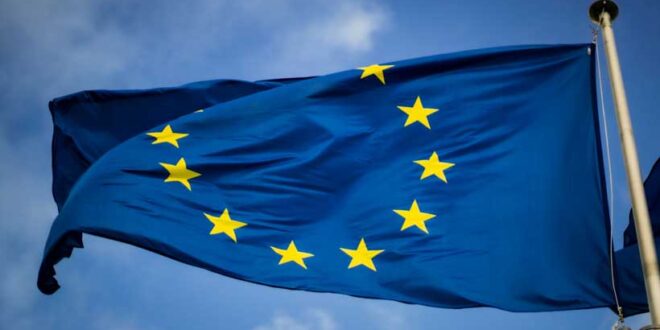
European security has long relied on guarantees of the United States (US), under the umbrella of the North Atlantic Treaty Organisation (NATO), dating back to the Cold War. However, this era seems to be coming to an end. Europe has been quietly rearming in recent years, with defence expenditure increasing by 150% between 2020 and 2025 to unprecedented levels. In 2024, the European Union (EU) launched the European Defence Industrial Strategy—the first of its kind—to build a European industrial base for defence technology, and deepen partnerships with actors like Ukraine and NATO. This followed the launch of the European Defence Fund in 2021, allocating €7.3 billion to European research and development projects to enhance joint military capability until 2027. Furthermore, the European Council and EU parliament pledged €1.5 billion in grants between 2025 and 2027 to bolster the European defence industry under the European Defence Industry Programme of 2025, and €150 billion in loans through the scheme Security Action for Europe to boost Europe’s munitions production, joint defence procurement and military mobility. All of these initiatives form part of the Rearmament Europe Readiness 2030 Plan adopted by the EU last spring, aiming to lead Europe to ‘full defence readiness’ by 2030.
The never-ending story of Europe’s military
These efforts are rooted in the relatively obscure mutual defence clause of article 42.7 of the Treaty of the EU, stipulating that all member states are obliged to come to the assistance of a member state falling victim to armed aggression ‘by all means in their power’ that are consistent with NATO and UN commitments. Why then has it taken the EU so long to move toward a strong, joint defence? Already when the precursor of the EU was formed after World War II, the US advocated for European integration based on military cooperation and a common army. This was prevented by resistance from key members like France. Similar efforts to deepen military cooperation within the framework of the EU in the 1990s were thwarted, this time by the US, fearing that such an arrangement would undermine NATO.
Trump and Putin are fuelling European rearmament
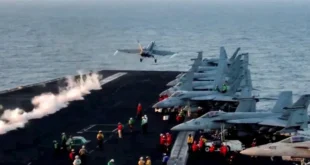
The crumbling of the existing world order in recent years with the Russian invasion of Ukraine in 2022, and the isolationist foreign policy of US President Donald Trump disrupting the historically close military, economic and political alignment between Europe and the US has fueled European defence efforts. President Trump’s threats to withdraw the US from NATO in protest against alleged European free riding, and more recent threats of suspending NATO members like Spain for refusing to support Trump’s war efforts in the Middle East, coupled with the return of war to European soil after 2022, and the growing threat of Russian hybrid warfare against Europe with several countries exposed to cyber and physical attacks on critical infrastructure including water, energy and transport systems in recent years, has convinced Europe that it can no longer depend on the US for its defence and security.
Hurdles on the horizon
However, Europe’s defence initiatives face internal as well as external hurdles. Internally, the EU has struggled with ambivalent attitudes toward Trump, with countries like Italy, Poland and, until recently, Hungary endorsing Trump in opposition to France, Germany and Spain. In addition, there is the issue of how the EU can reconcile its plans of extensive European military integration with the neutrality of member states like Malta and Ireland. This crystallizes the key issue of state sovereignty in matters of national security within the EU, actualizing the perpetual tension caused by the unique, hybrid nature of the EU as an international organization. Externally, post-Brexit relations with the United Kingdom (UK) pose another challenge. While rapprochement efforts can be seen between the EU and the UK, the complex question remains what role the UK—the second strongest military in Europe—should play in a broader EU defence project as the UK, despite its historically ‘special relationship’with the US, is experiencing a similar deterioration in transatlantic relations as the EU.
The dawn of a new era?
Yet, recent developments suggest that these initiatives may be more likely to succeed now than ever before. The outbreak of war in Iran has turned several sympathetic member states against Trump, such far-right Italian leader Giorgia Meloni, in effect alleviating Europe’s internal political divisions. Furthermore, the accession of Finland and Sweden to NATO in 2022—despite these countries’ tradition of military non-alignement—reinforces that even entrenched positions are being remoulded by the altering geopolitical landscape. Similarly, France—once opposedto European military integration—is now, under the leadership of Emanuel Macron, one of the principal proponents of an EU army.
A bold balancing act
Even so, the EU cannot in the near future afford to entirely cut the cords with the US by treading its own defence path. For example, the EU remains dependent on US-based data centers, and imports of liquid natural gas to maintain its embargo on Russia imposed in the wake of its invasion of Ukraine. Thus, the EU’s rearmament will have to maintain a complex balancing act against internal and external forces.