Geostrategic Media Political Commentary, Analysis, Security, Defense
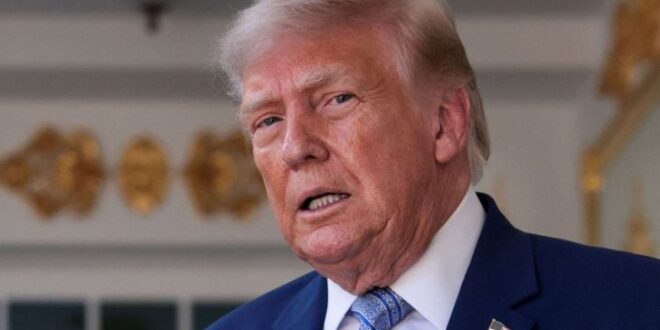

The visit of Iraqi Prime Minister Ali al-Zeidi to Turkey on Tuesday, July 28, cannot be viewed as another routine diplomatic engagement or a ceremonial stop on the Iraqi government’s foreign policy agenda. It represents a significant moment in the evolving relationship between Baghdad and Ankara, arriving at a time when regional geopolitics are undergoing profound transformation and when both countries face mounting pressure to redefine their strategic priorities.
The importance of the visit lies not only in its timing but also in the difficult circumstances surrounding Iraqi–Turkish relations. Despite years of dialogue, economic cooperation, and institutional mechanisms, many of the core disputes between the two neighbors remain unresolved. Water security, energy cooperation, Iraq’s Kurdistan Region, and security concerns related to armed groups continue to weigh heavily on bilateral ties.
Yet the visit also reflects a broader strategic reality: both Baghdad and Ankara increasingly recognize that their future interests are deeply interconnected. Iraq is seeking to diversify its external partnerships and escape dependence on any single regional actor, while Turkey is pursuing a more flexible foreign policy approach designed to expand its regional influence and strengthen economic connectivity.
The central question, therefore, is whether this moment marks the beginning of a genuine strategic partnership or merely another chapter of diplomatic optimism without meaningful implementation.
A Changing Middle East and Iraq’s Search for Strategic Balance
The visit comes at a moment when the Middle East is experiencing one of its most significant geopolitical shifts in decades. Regional conflicts, changing alliances, and competition among major powers have forced countries to reconsider their foreign policy calculations.
Since receiving parliamentary approval to form the government on May 14, Prime Minister Ali al-Zeidi has attempted to reposition Iraq’s foreign policy away from exclusive alignment with one regional axis, particularly Iran, toward a more balanced approach based on broader regional and international partnerships.
Baghdad’s recent diplomatic movements reflect this strategy. Iraq has engaged with Tehran, Washington, and Ankara, while also signaling its intention to strengthen relations with Riyadh. This approach represents an attempt to maximize Iraq’s strategic autonomy by transforming the country from a battlefield for competing influences into a bridge connecting regional powers.
Turkey occupies a unique position in this strategy. For Iraq, Turkey is not only a neighboring country but also a critical economic gateway toward Europe and Western markets. Ankara remains one of Iraq’s largest trading partners, a major supplier of goods and services, and a central player in energy, transportation, and water issues.
For Turkey, meanwhile, Iraq represents both a security priority and a strategic corridor linking Ankara to the Gulf, the Arab world, and global markets.
This mutual dependence explains why President Recep Tayyip Erdoğan invited the Iraqi prime minister to Ankara at a moment when both countries are reassessing their regional roles.
From Diplomatic Engagement to Strategic Partnership
Iraq and Turkey have never lacked dialogue. Over the years, the two countries have established numerous diplomatic channels, joint committees, and cooperation frameworks. However, despite frequent meetings and agreements, relations have often remained trapped in a cycle of cooperation and confrontation.
The challenge has been clear: signing agreements has proven easier than implementing them.
A turning point came in 2024 when President Erdoğan’s visit to Baghdad resulted in the signing of approximately 26 agreements and memoranda of understanding covering areas including water management, economic cooperation, transportation, and strategic partnership. Additional agreements followed in 2025, particularly in security coordination, infrastructure development, and economic cooperation.
However, many of these agreements remained largely institutional frameworks rather than transformative projects. The latest visit was therefore expected to move bilateral relations beyond paperwork and toward practical implementation.
The real measure of success will not be the number of agreements announced but the ability of both governments to create mechanisms that translate political commitments into tangible results.
Water, Security, Energy: The Three Defining Challenges
Among all bilateral issues, water remains perhaps the most sensitive.
Iraq depends heavily on the Tigris and Euphrates rivers, whose upstream sources are located largely in Turkey. Years of declining water levels, climate change, drought, and weak domestic water management have turned water security into a national priority for Baghdad.
Turkey argues that the crisis cannot be attributed solely to upstream policies and highlights Iraq’s outdated infrastructure and inefficient water management systems. Iraq, however, continues to demand greater guarantees regarding water flows.
The challenge is finding a sustainable formula that recognizes Turkey’s development needs while protecting Iraq’s long-term water security.
The security file remains equally complex.
Turkey views the presence of the Kurdistan Workers’ Party (PKK) in northern Iraq as a direct threat to its national security and has conducted military operations against the group inside Iraqi territory. Baghdad has repeatedly expressed concerns regarding violations of sovereignty, creating a persistent source of tension.
However, recent developments, including discussions surrounding the PKK’s future and the possibility of ending armed activity, could provide an opportunity for a broader security understanding between Ankara and Baghdad.
Energy represents the third pillar of the relationship.
The Kirkuk–Ceyhan oil pipeline remains strategically important for Iraq because it provides an alternative export route beyond southern ports and reduces dependence on maritime routes through the Gulf.
For Turkey, increasing energy flows through its territory supports its ambition to become a regional energy hub connecting producers and consumers across Eurasia.
A stronger energy partnership could therefore become one of the foundations of a broader strategic relationship.
The Development Road: Iraq’s Gateway Between East and West
Perhaps the most ambitious element of Iraqi–Turkish cooperation is the Development Road project.
The initiative aims to connect Iraq’s Grand Faw Port in Basra to Turkey through a network of railways and highways stretching approximately 1,200 kilometers, eventually linking Iraq to European markets.
For Baghdad, the project represents an opportunity to transform Iraq from a conflict-affected country into a regional transportation hub.
For Ankara, it strengthens Turkey’s role as a bridge between Asia, the Middle East, and Europe.
The Iraqi prime minister described the project as a “third river” for Iraq alongside the Tigris and Euphrates, reflecting its potential economic significance.
If successfully implemented, the Development Road could become one of the most important geopolitical infrastructure projects in the region, reshaping trade routes and reducing dependence on traditional corridors.
Economic Integration: A Partnership Still Below Its Potential
Economic relations between Iraq and Turkey have expanded significantly. Bilateral trade reached approximately $16.8 billion in 2025, with both sides aiming to increase it toward $30 billion.
Turkish companies have also played a major role in Iraq’s construction sector, implementing thousands of projects across infrastructure, housing, transportation, and energy.
Yet the economic relationship remains largely unbalanced. Turkey exports significant volumes of goods to Iraq, while Iraqi exports remain limited.
The next phase should focus on creating a more reciprocal economic partnership involving industrial cooperation, technology transfer, infrastructure investment, and joint ventures.
Without this transformation, economic ties risk remaining dependent on trade flows rather than developing into a genuine strategic economic partnership.
A New Beginning — But Implementation Will Decide Everything
The agreements announced during the visit represent an important political signal: both Baghdad and Ankara appear willing to move beyond previous tensions and build a more pragmatic relationship based on shared interests.
However, history offers a warning.
Iraq and Turkey have signed many agreements before. The difficulty has always been implementation.
The future of bilateral relations will depend on whether both governments can address the difficult issues directly rather than simply managing disagreements through temporary compromises.
A successful partnership requires more than diplomatic declarations. It requires measurable progress on water cooperation, security coordination, energy integration, and economic connectivity.
Ultimately, Ali al-Zeidi’s visit may represent the beginning of a new chapter in Iraqi–Turkish relations. But whether this chapter becomes a strategic transformation or another missed opportunity will depend on one factor above all others:
the ability of Baghdad and Ankara to replace promises with action.
The future of this relationship will not be determined by the number of agreements signed in Ankara, but by the political will to implement them when the cameras are gone.