Geostrategic Media Political Commentary, Analysis, Security, Defense

Dr. Nadya Helmi
China’s entry into the tensions surrounding the Strait of Hormuz in April 2026 was no longer merely cautious diplomacy or statements of condemnation but rather a direct strategic intervention to protect its vital economic interests. This signals the beginning of a larger, but risky, political and economic role for China and represents a real test of influence with the United States under an American administration imposing a naval blockade. Here, we see a shift in the nature of China’s current role regarding the Strait of Hormuz, from mediation to protecting interests, especially after the crisis escalated following US President Donald Trump’s announcement of a naval blockade. China changed its tone to become more assertive, adopting a position of rejecting the blockade and clinging to Iranian oil. Beijing, through its defense minister, affirmed that its ships would pass without restrictions and considered its trade agreements with Iran (a 25-year partnership) sovereign and non-negotiable, thus directly challenging the American blockade. With China’s commitment to energy security, given that over 40% of its oil imports pass through the Strait of Hormuz, ensuring the strait remains open is a matter of Chinese national security. Here, China adopts a soft power and diplomacy approach, attempting to portray itself as a responsible alternative to US military intervention, calling for peaceful solutions, and leveraging its economic influence to pressure Iran to de-escalate tensions while guaranteeing the continued flow of oil.
However, despite China’s assertiveness, its role is constrained by realistic limitations, including the lack of equivalent military capability. China lacks the necessary naval bases and deployment (Blue Water Navy) to directly confront the US Fifth Fleet in the region, relying instead on limited maritime diplomacy. China avoids direct engagement, keen to prevent being drawn into a full-scale war that could deplete its economy, and seeks to balance its relations with Iran and its Gulf partners. With China pursuing a diversification strategy, it recognizes the risks of engaging in conflict over the Strait of Hormuz. China has a long-term strategy to diversify its energy sources, including those from Russia and Central Asia, to reduce its complete dependence on the strait in emergencies.
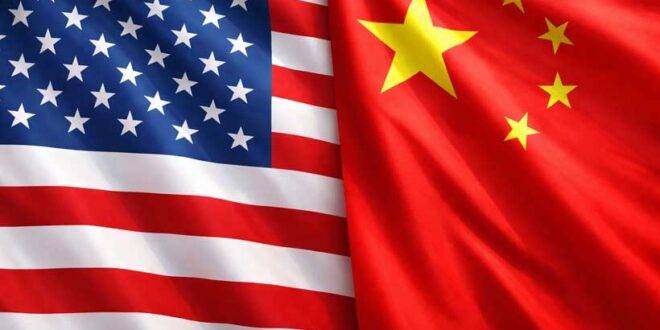
Consequently, China’s current role has transformed into a test of influence with the United States. The current tension surrounding the Strait of Hormuz is a true test of the will of the two superpowers, reflecting a clash of interests. The American blockade of the Strait of Hormuz aims to economically strangle Iran, while China’s efforts to circumvent this blockade aim to ensure Tehran’s survival, making a potential Sino-American naval confrontation possible. Beijing is attempting to exploit the American vacuum and America’s preoccupation with other issues to solidify its role as an arbiter or mediator in the region, which undermines traditional American hegemony. The next diplomatic test will come with the anticipated Xi-Trump summit. China’s current stance places immense pressure on the upcoming meeting between the two presidents in May 2026, as the outcome of the Strait of Hormuz crisis will determine the shape of their future economic partnership or confrontation. China is playing the role of a concerned power, intervening to protect its commercial interests through high-stakes diplomacy. While not a full-scale military engagement, China has moved beyond a mere spectator role. Its role will remain contingent on its ability to avoid direct confrontation with the United States, relying on a quiet expansionist policy rather than direct military dominance.
Based on geopolitical developments up to April 2026, the Strait of Hormuz crisis is witnessing cautious Chinese action that combines active diplomacy with pragmatic economic interests, indicating a gradual shift in China’s role rather than simply a passing diplomatic concern. Here, we analyze China’s current stance as a shift towards a more pragmatic role. China is no longer content with diplomatic appeals but has moved to exert effective pressure to ensure the continued flow of Iranian oil through the Strait of Hormuz. China is pursuing a policy of active neutrality, adopting a balanced position. It emphasizes the necessity of keeping the strait open (in its own interests) while maintaining a special relationship with Iran and avoiding direct confrontation with Washington. China has expressed its rejection of the US embargo on Iranian-related shipping, deeming it dangerous and irresponsible, indicating its readiness to challenge Washington diplomatically and economically to protect its interests.
However, it is highly unlikely that China will intervene militarily directly or participate in US-led naval coalitions, as Chinese policy is based on a zero-problems approach to military engagement. On the economic and diplomatic front, however, China is actively working to secure its supply chains by leveraging existing agreements. This includes utilizing the 25-year agreement with Iran to exempt its ships from Iranian sanctions. China is also acting as a mediator, attempting to provide guarantees for an agreement between Tehran and Washington to secure maritime navigation. Furthermore, China is utilizing its oil reserves by authorizing its refineries to access strategic petroleum reserves to avert an energy crisis.
On the other hand, Washington is working to contain China’s role by coordinating with its Asian allies (Japan and South Korea). The US is also employing economic pressure on China, accusing it of hoarding oil and deeming it an unreliable partner. Washington is considering imposing restrictions to reduce reliance on Chinese supply chains. Trump’s upcoming visit to China is seen as a pivotal event in an attempt to manage the competition and compel Beijing to provide energy security guarantees. We are in the midst of an indirect conflict between Beijing and Washington, as the Strait of Hormuz has become an arena of competition (an American blockade versus Chinese interests). This is compounded by a struggle over the global financial system, where China is exploiting the current crisis to increase the use of the Chinese yuan in purchasing Iranian oil, aiming to undermine the dollar’s dominance. Here, the Gulf states find themselves in a delicate balancing act between China and the United States, coordinating security with Washington and economically and technologically with China, attempting to balance relations without fully siding with either party at the expense of the other.
Therefore, we understand that China is pursuing a policy of balancing diplomacy in the Strait of Hormuz, moving towards a more active regional role, but rejecting militarization, thus leaving the field open for a sharp economic and political power struggle with the United States.
About the Author:
Nadya is Associate Professor of Political Science, Faculty of Politics and Economics / Beni Suef University- Egypt. An Expert in Chinese Politics, Sino-Israeli relationships, and Asian affairs- Visiting Senior Researcher at the Centre for Middle Eastern Studies (CMES)/ Lund University, Sweden- Director of the South and East Asia Studies Unit