Geostrategic Media Political Commentary, Analysis, Security, Defense
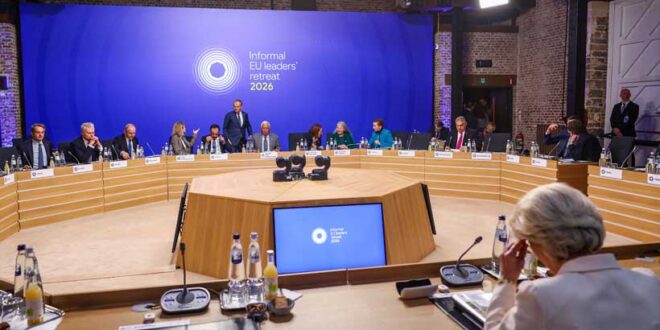

European governments are coming under renewed pressure to shield households and businesses from soaring energy costs as the war triggered by U.S. and Israeli strikes on Iran pushes oil and gas prices higher.
However, fiscal constraints across the region mean governments may not be able to repeat the massive financial support packages rolled out during the energy crisis that followed the Russian invasion of Ukraine.
At that time, European countries spent hundreds of billions of euros on subsidies, tax cuts and price caps to soften the blow of surging energy costs. But years of pandemic spending, slower economic growth and rising borrowing costs have left many governments with less room to act.
Early policy responses
Several European governments have begun taking steps to curb the immediate impact of rising energy prices.
France, Greece and Poland have introduced measures such as oil price caps, restrictions on profit margins and fuel discounts. These policies are designed to lower consumer costs without requiring major public spending.
Germany is also considering regulating petrol pump prices, while other countries are debating potential fiscal responses.
Governments are wary of moving too quickly with costly support measures because the duration and severity of the current energy shock remain uncertain.
Britain has said it is too early to freeze fuel duties, while the French government has resisted calls from opposition parties to cut value added tax on petrol. Italy is exploring whether higher tax revenues generated by rising fuel prices could help finance a reduction in fuel excise duties.
A different situation from 2022
Despite the surge in oil prices, Europe’s energy situation today differs from the crisis three years ago.
Oil briefly approached 120 dollars per barrel this week, close to levels seen in 2022. However, natural gas prices remain far below the extreme levels recorded during that crisis.
Gas prices in Europe have risen more than 50 percent since the war began but are still only about one sixth of the peak levels above 300 euros per megawatt hour reached in 2022.
Another difference is that Europe is not scrambling to replace a single dominant supplier as it did when Russian gas flows collapsed after the invasion of Ukraine.
Even so, a prolonged disruption to energy supplies from the Gulf region could force governments to intervene more aggressively.
Fiscal pressures build
The biggest constraint facing Europe today is fiscal.
Budget deficits across European economies remain significantly higher than they were before the pandemic, according to analysts at S&P Global Ratings. At the same time, economic growth has slowed and interest costs have increased.
Governments are also increasing defence spending as geopolitical tensions rise, further straining public finances.
Countries such as France and Britain already run relatively large budget deficits, meaning additional subsidies could worsen fiscal pressures. Analysts at Fitch Ratings warn that prolonged energy support measures could weigh heavily on public finances in those economies.
In Central Europe, concerns are also growing about Hungary’s fiscal position ahead of upcoming elections, as existing support measures have already stretched the budget.
Limited room for subsidies
During the previous energy crisis, many governments adopted broad measures such as universal subsidies and price caps.
This time, economists say any support will likely be more limited and targeted at vulnerable households or critical industries.
Analysts at Morgan Stanley estimate that euro zone governments spent about 3.6 percent of economic output on energy support during 2022 and 2023.
Under current fiscal rules, they may only be able to spend around 0.3 percent of output per year without breaching European Union deficit limits.
If the crisis deepens, the European Union could allow temporary flexibility in its fiscal rules, particularly if the Strait of Hormuz remains closed and economic growth weakens.
Even then, analysts estimate governments might only spend about 0.6 percent of economic output annually on targeted measures.
Market pressure on governments
Another factor limiting government action is the reaction of financial markets.
Bond investors have become increasingly sensitive to rising government debt and fiscal slippage in recent years. Countries such as France and Britain have already faced scrutiny from investors over their budget deficits.
According to analysts at Amundi, this market pressure makes governments cautious about announcing large spending packages that could trigger higher borrowing costs.
Germany, which maintains relatively low debt levels, and Spain, where economic growth remains comparatively strong, have somewhat greater room to respond if the crisis worsens.
Alternative options
One potential tool governments may consider again is windfall taxes on energy companies.
Several European countries imposed such taxes during the previous crisis to help finance subsidies for consumers. Italy has already signalled that it may revisit this approach.
However, analysts note that windfall tax revenues during the last crisis fell far short of covering the full cost of government support measures.
Another strategy under discussion focuses on reducing energy demand rather than subsidising consumption. Energy economists argue that encouraging conservation and efficiency could help ease pressure on prices without adding to public debt.
Analysis
Europe now faces a delicate balancing act between protecting consumers from rising energy costs and maintaining fiscal credibility.
The war linked to tensions with Iran has already pushed oil prices sharply higher and increased volatility in global energy markets. If disruptions to Gulf energy supplies continue, the pressure on European economies could intensify quickly.
Yet the political and financial landscape has changed since the last crisis. Governments are already burdened by higher debt and are under scrutiny from financial markets.
As a result, the response to this energy shock is likely to be more cautious and targeted than the sweeping support packages seen in 2022.
For European leaders, the challenge will be to contain public anger over rising living costs while avoiding policies that could destabilise already fragile public finances.