Geostrategic Media Political Commentary, Analysis, Security, Defense

Key points
The gap between Europe’s economic strength and its military and strategic capabilities.
The future of transatlantic relations and the American security commitment.
The war in Ukraine and the redefinition of European security.
Energy independence, defence industries and technological sovereignty.
Domestic political divisions and their impact on a unified European foreign policy.
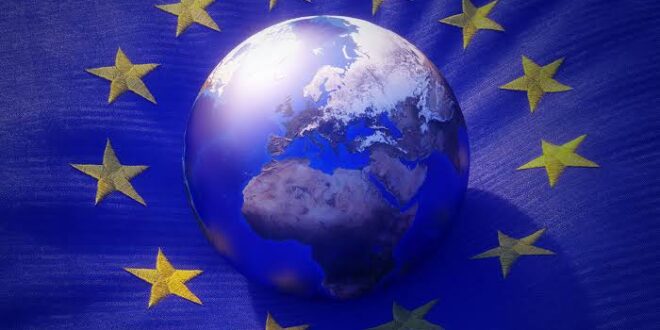
Europe is facing a strategic test that extends far beyond increasing defence spending or reorganising its relationship with the United States. The fundamental question is whether the European Union can move from being a major economic and commercial power to becoming a geopolitical actor capable of protecting its interests and defining its security priorities with greater independence.
The war in Ukraine exposed the limitations of Europe’s existing security model. Despite possessing an advanced economic and industrial base, the European Union remains heavily dependent on NATO and American capabilities in intelligence, surveillance, early warning, missile defence, strategic transportation and command and control.
This does not mean that Europe lacks military or industrial potential. The problem lies in fragmented capabilities and the absence of unified political will. European countries possess sophisticated armed forces and advanced defence industries, but they do not always operate according to a common strategic vision. Diverging threat perceptions and national priorities continue to complicate the development of an integrated defence system.
These challenges have become more significant as American foreign policy evolves. Washington increasingly expects its European allies to assume greater responsibility for the continent’s security, while the United States faces growing strategic challenges in the Indo-Pacific. Europe must therefore reconsider the extent of its dependence on the American security umbrella without necessarily abandoning NATO.
European strategic autonomy should not be interpreted as a project designed to confront the United States. Rather, it could strengthen the transatlantic alliance by reducing capability gaps and creating a more balanced distribution of responsibilities. A partnership in which one side carries a disproportionate share of the security burden cannot remain politically sustainable without recurring tensions.
Energy security represents one of the clearest illustrations of the vulnerabilities of Europe’s previous strategic model. The Ukraine crisis forced European governments to restructure their energy supplies, diversify gas imports and expand investment in renewable energy and infrastructure. Yet this transformation also demonstrated that political independence cannot be achieved without a degree of autonomy in energy, critical raw materials and technology.
Europe faces a parallel challenge in industrial and technological competition. Competing with the United States and China in artificial intelligence, semiconductors, batteries and defence technology requires long-term investment and coordinated industrial policies. The continent cannot preserve its international influence if it becomes primarily a consumer market dependent on external producers for strategically essential technologies.
Politically, the development of a unified European strategy remains complicated by competing national interests, the rise of populist and nationalist movements, and differences between larger and smaller member states in assessing security and economic risks. These divisions represent some of the most significant obstacles to transforming European ambitions into a coherent foreign policy.
Europe must also reassess its relationships with the Middle East, Africa and the Gulf. These regions are not merely neighbouring territories or sources of energy and migration. They are important arenas of competition over trade, investment, security and technology. More balanced partnerships with these regions could strengthen Europe’s ability to protect its interests beyond its borders.
Europe possesses the economic and institutional resources necessary to become a more influential geopolitical pole. What it needs is a political decision that connects defence, technology, economic policy and diplomacy within a common strategic framework. Strategic autonomy is not a political slogan; it is the practical ability to make decisions and bear the consequences.
Ultimately, Europe’s challenge will not be to choose between Washington and Beijing, or between the Atlantic alliance and independence. It will be to build a geopolitical power capable of engaging both from a position of confidence and partnership rather than waiting for others to determine its future.