Geostrategic Media Political Commentary, Analysis, Security, Defense

Key points
- The declining ability of major powers to impose a stable regional order.
- The emergence of regional powers as independent strategic actors.
- The future of American, Russian and Chinese influence.
- The growing competition over energy, maritime routes and security arrangements.
- The need for a new regional framework based on collective security and political cooperation.
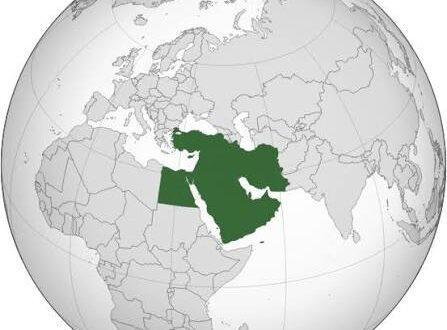
The Middle East is no longer operating within the international order that emerged after the end of the Cold War. The rules that governed international relations for decades—including the centrality of American leadership, reliance on traditional alliances and the assumption that major powers could contain regional crises—are increasingly being challenged. The central question is no longer simply which power possesses the greatest influence in the region, but which actor can translate its influence into a sustainable political and security order.
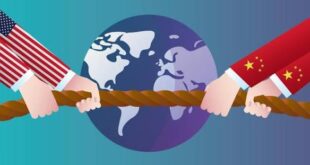
The United States appears increasingly reluctant to shoulder the traditional burdens of managing the Middle East, despite maintaining a substantial military, political and economic presence. Washington faces competing strategic priorities across the Indo-Pacific and Europe, alongside domestic challenges associated with economic pressures and political polarisation. This does not necessarily signal a complete American withdrawal. Rather, it reflects a transition towards a more selective approach, one that relies increasingly on regional partners and burden-sharing instead of unilateral responsibility.
Russia, meanwhile, continues to view the Middle East as an important arena for preserving its international standing, strengthening its military and diplomatic presence, and expanding relations with energy-producing countries. However, its ability to transform this presence into regional leadership is constrained by its military and economic priorities and by the complexity of its relationships with competing regional powers. China offers a different model, built primarily around trade, investment, infrastructure and economic diplomacy, while generally avoiding direct involvement in the region’s military confrontations.
Yet the most significant transformation is not occurring solely within the policies of major powers. It is also taking place within the strategic calculations of regional states themselves. Saudi Arabia, Türkiye, Egypt, the United Arab Emirates, Qatar, Iran and Israel are increasingly seeking to shape their own security and economic arrangements rather than simply adapting to decisions made in Washington, Moscow or Beijing. Their objectives differ considerably, but they increasingly recognise that exclusive dependence on a single international power is no longer a sufficient guarantee of national security.
This transformation presents a strategic paradox. As the major powers lose their exclusive ability to manage the region, regional actors gain greater influence. However, the redistribution of power does not automatically produce greater stability. Without agreement on the rules governing regional security, competition over ports, maritime corridors, energy resources, advanced technology and military partnerships could intensify. Multiple centres of power may create opportunities for new arrangements, but they can also generate conflicting calculations and dangerous misperceptions.
The Palestinian question, Israeli security, Gulf-Iranian relations, and the futures of Syria, Iraq, Yemen and Lebanon will all help determine the character of the emerging regional order. These are not isolated crises. They are interconnected components of a broader struggle over the distribution of power, political legitimacy and strategic influence. A stable regional system will remain elusive as long as these issues are treated as instruments of narrow security calculations or temporary arrangements between external powers.
The Middle East does not necessarily need another dominant power. It needs common rules for managing disagreements and preventing conflicts. Sustainable stability cannot rest exclusively on military deterrence or economic agreements detached from political realities. It requires a framework of diplomatic, economic and security understandings capable of accommodating competing national interests.
Ultimately, the defining question will not be who fills the power vacuum in the Middle East, but who possesses the capacity to construct a regional order in which such a vacuum no longer exists. That will be the real strategic competition shaping the region over the coming decade.