Geostrategic Media Political Commentary, Analysis, Security, Defense

Key points
- Continuing tensions between Washington and Tehran place Gulf security and maritime routes at the centre of international calculations.
- Threats of renewed military action do not eliminate the need for a political settlement.
- Energy security, trade and global supply chains are directly affected by regional escalation.
- Gulf states need a strategy combining deterrence, diplomacy and protection of critical infrastructure.
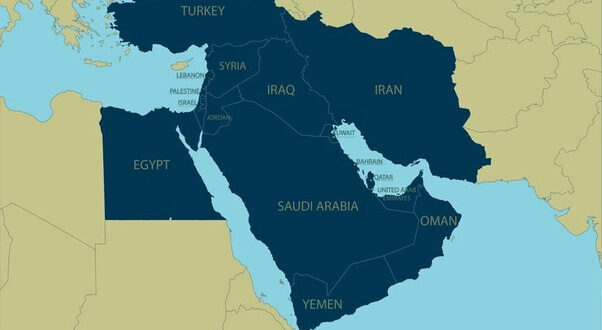
The confrontation between the United States and Iran is no longer simply a dispute between two regional and international powers. It has become a broader test of the international system’s ability to protect maritime routes, energy markets and global trade networks from the consequences of war. The Middle East occupies a position that cannot be bypassed in the global economy. Any escalation in the Gulf therefore extends far beyond its geographical boundaries, rapidly affecting energy prices, maritime insurance, supply chains and financial markets.
Recent American statements suggesting that the war could soon be brought to an end, alongside warnings that military force could be used again if necessary, reveal a strategy combining military pressure with the possibility of negotiations. President Donald Trump has expressed confidence that the conflict could soon be left behind, while declining to rule out renewed military action.
However, combining threats with diplomatic engagement does not automatically guarantee a stable outcome. Deterrence may prevent an adversary from expanding its operations, but it does not necessarily resolve the issues that produced the confrontation. Similarly, military strikes, regardless of their ability to damage military infrastructure, cannot independently establish a new regional security order or provide lasting guarantees for maritime navigation and energy supplies.
For the Gulf Cooperation Council states, the issue extends beyond their bilateral relationships with Washington or Tehran. These countries sit at the centre of an economic network dependent on the stability of ports, airports, oil and gas facilities, electricity grids and desalination plants. Any threat to maritime routes or critical infrastructure could therefore generate consequences far beyond immediate physical damage, affecting investor confidence, insurance costs and the ability of businesses to fulfil their commercial obligations.
This security environment requires a more comprehensive approach. Strengthening air and missile defence systems, developing early-warning capabilities, protecting critical infrastructure and improving maritime coordination are all essential. Yet none of these measures can replace diplomacy. Regional mechanisms for exchanging information on cross-border threats should also be developed, alongside clear rules to prevent miscalculation, particularly in areas where military operations intersect with civilian maritime traffic.
The economic dimension cannot be ignored. Prolonged tensions increase transportation and insurance costs, forcing governments and corporations to reconsider trade routes and investment decisions. Energy security, maritime protection and technology supply chains have become interconnected elements of international competition. This makes Gulf stability an interest extending beyond the states bordering the region to major industrial powers in Asia, Europe and North America.
Yet lasting stability cannot be built on a balance of fear alone. Each side may believe that escalation will compel the other to retreat, while reciprocal responses create a cycle that becomes increasingly difficult to control. This is why a negotiating framework is essential. It must address security concerns, establish rules for managing missile and maritime threats, and create principles protecting civilian and economic infrastructure from attack.
Gulf states should not be forced to choose between deterrence and diplomacy. They need both. Military capability protects national interests when it forms part of a coherent political strategy, while diplomacy becomes more effective when supported by credible defensive capabilities.
One round of confrontation may eventually end, but the greater challenge will remain: how can a ceasefire be transformed into a more secure regional order? The answer will not come from military strikes alone. It requires political, economic and security arrangements that make escalation increasingly costly and stability a shared interest.