Geostrategic Media Political Commentary, Analysis, Security, Defense

Key points
- The shift in international competition towards economics, technology and infrastructure.
- The use of investment, financing and trade to expand political influence.
- China’s infrastructure and connectivity model.
- The expanding international investment role of Gulf states.
- American competition over supply chains, technology and strategic resources.
- The risks of economic dependence and the erosion of national decision-making.
International power is no longer measured exclusively by the size of national armies, the number of military bases or the sophistication of missile arsenals. In an economically interconnected world, investment, trade, debt, infrastructure and technology have become powerful instruments for shaping the international balance of power. Economic diplomacy has consequently emerged as a central component of foreign policy, with governments increasingly seeking not only commercial returns but also long-term political and strategic influence.
This transformation reflects the changing nature of international competition. A country financing a strategic port, railway network or energy facility may acquire influence that extends far beyond the financial value of the project itself. Similarly, investments in telecommunications, critical minerals, energy infrastructure and semiconductor industries can create leverage over economic and security decisions affecting the national interests of host countries.
China provides one of the clearest examples of this approach. Through its Belt and Road Initiative, Beijing has expanded infrastructure and connectivity networks across Asia, Africa, Europe and the Middle East. Associated projects range from ports and railways to roads, energy facilities, telecommunications and industrial zones. Their importance extends beyond immediate commercial returns to strengthening China’s position in global trade networks and expanding its diplomatic presence.
Nevertheless, Chinese investment should not automatically be equated with political control, nor should every project be assumed to produce identical outcomes. Experiences differ according to financing conditions, repayment capacity, transparency and economic viability. However, excessive dependence on a single source of financing can create strategic vulnerabilities, particularly when long-term contracts involve critical assets that are difficult to replace.
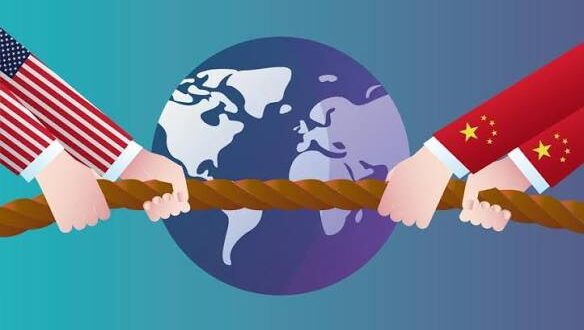
The United States approaches economic diplomacy from a somewhat different perspective, placing greater emphasis on protecting strategic supply chains, strengthening domestic industries, restricting the transfer of sensitive technologies and expanding commercial partnerships with allied countries. Semiconductors, artificial intelligence, critical minerals, batteries and energy resources have become central components of American competition with China.
Gulf states, meanwhile, have moved beyond their traditional role as destinations for foreign capital to become increasingly influential international investors. Saudi Arabia, the United Arab Emirates and Qatar possess sovereign wealth funds and investment institutions capable of entering sectors such as technology, energy, infrastructure, financial services and advanced manufacturing. These investments enable Gulf governments to build partnerships with major economies while strengthening their positions within global value chains.
The importance of this role extends beyond immediate financial returns. Investments in ports, airports, data centres, renewable energy and artificial intelligence can reinforce a country’s position as an economic and strategic hub. Diversifying investment partners also provides Gulf states with greater diplomatic flexibility in an increasingly polarised international environment.
Yet economic diplomacy carries risks that are no less significant than its opportunities. Unsustainable debt, inadequate transparency, dependence on a single supplier and the transfer of control over critical infrastructure can undermine economic sovereignty and political independence. Competition between major powers may also place smaller countries under pressure to choose between rival partners.
This is where the concept of economic sovereignty becomes essential. Countries receiving foreign investment need clear national strategies defining the sectors open to international capital, the protection of sensitive data, ownership of critical assets, dispute-resolution mechanisms and safeguards against the use of external financing as an instrument of political pressure.
Successful economic diplomacy does not require rejecting foreign investment. It requires the ability to use it in pursuit of long-term national objectives. Governments should diversify financing sources, link investment to technology transfer and domestic skills development, and preserve balanced relationships with international powers.
In a world where the boundaries between economics, security and politics are increasingly blurred, commercial contracts have become part of strategic calculations, while ports, energy networks and data centres have emerged as instruments of international power. The central question is no longer who possesses the greatest amount of capital, but who has the strategic vision to transform capital into influence without sacrificing national independence.
Power in the twenty-first century is not built through investment alone. It depends on the ability to determine the terms of investment, manage its risks and transform it into the foundation of balanced and sustainable partnerships.