Geostrategic Media Political Commentary, Analysis, Security, Defense

Key points
- The geopolitical importance of the Bab el-Mandeb Strait, the Suez Canal and the Gulf of Aden.
- International competition over ports and military installations.
- The interconnected security interests of the Gulf, the Horn of Africa and the Mediterranean.
- The strategic roles of Ethiopia, Somalia, Djibouti, Eritrea and Sudan.
- The transformation of maritime routes into instruments of political and economic leverage.
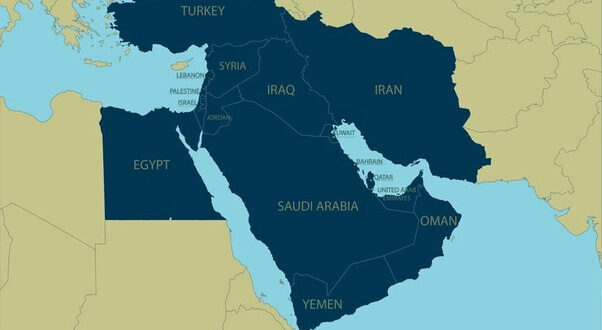
The Red Sea is no longer simply a maritime corridor connecting the Indian Ocean to the Mediterranean. It has become one of the world’s most important geopolitical theatres. From the Suez Canal in the north to the Bab el-Mandeb Strait in the south, the interests of major economic and military powers intersect with the ambitions of regional states in an area where control over ports and maritime routes has become a central component of international power.
The Red Sea’s importance derives from its position at the heart of global trade networks. It connects Asian and European markets and provides access to the Suez Canal, one of the most important arteries of international maritime commerce. Consequently, any security disruption in the Bab el-Mandeb Strait or the Gulf of Aden extends far beyond the immediate region, affecting shipping costs, insurance premiums, energy markets and global supply chains.
Attacks against commercial vessels and rising maritime insecurity have demonstrated just how vulnerable this corridor can be. Shipping companies assess risks not only in military terms but also through the costs of rerouting vessels, longer journeys, increased fuel consumption and higher insurance premiums. When ships are forced to navigate around the Cape of Good Hope, a regional security crisis becomes a global economic burden.
Yet competition in the Red Sea extends well beyond maritime navigation. Ports, military installations and logistics centres have become essential instruments for expanding strategic influence. Djibouti illustrates this competition particularly clearly. It hosts military facilities operated by several major international powers, including the United States, China, France and Japan, alongside other international military and security presences.
The Horn of Africa has consequently become a direct extension of this geopolitical competition. Ethiopia, as a major landlocked country, seeks to expand its options for accessing maritime facilities. Somalia views maritime sovereignty as a fundamental national and security issue. Meanwhile, Gulf states, Türkiye, China and the United States are all seeking to expand their economic and security relationships across the region.
This strategic equation carries particular significance for Saudi Arabia, Egypt and the United Arab Emirates. Saudi Arabia views the Red Sea as an extension of its national security and its coastal economic ambitions. Egypt’s strategic interests are directly tied to the stability of maritime traffic through the Suez Canal. The UAE, meanwhile, has developed an extensive network of commercial and logistical interests across several strategically important locations in the wider region.
The Red Sea also cannot be separated from security developments in the Gulf and the Eastern Mediterranean. Tensions across these interconnected maritime spaces can affect energy flows, international trade and military deployments. Escalation in one theatre can therefore generate new strategic calculations for countries operating across the others.
The central danger is that competition over ports and military installations could evolve into a struggle for influence that exceeds the economic and security needs of host countries. Military facilities can provide protection, training and logistical support, but they can also draw smaller states into conflicts beyond their capacity to manage. Similarly, maritime agreements that lack broad political and legal consensus can generate prolonged diplomatic disputes.
The priority, therefore, should not be limited to expanding naval capabilities. It should also involve establishing a regional framework for maritime security cooperation, combating piracy and smuggling, and protecting critical maritime infrastructure. Such an arrangement should include coastal states and major trading powers while respecting the sovereignty of countries bordering the Red Sea and the Horn of Africa.
Control over maritime routes cannot be achieved through military presence alone. Genuine strategic influence requires effective ports, sustainable economies, credible political partnerships and the ability to prevent international commerce from becoming hostage to regional conflicts.
In a world where supply chains have become an integral component of national security, the Red Sea may emerge as one of the principal arenas reshaping the geography of international influence over the coming years.