Geostrategic Media Political Commentary, Analysis, Security, Defense

Dr. Shehab Al-Makahleh
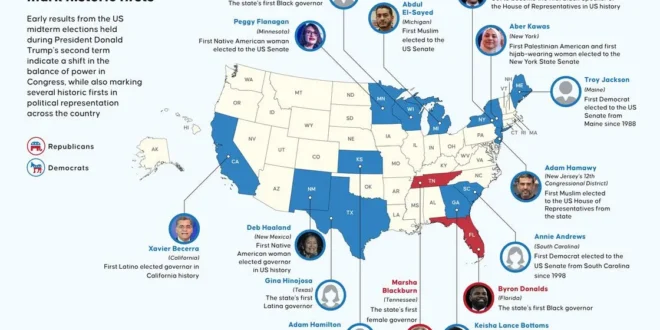
The US midterm elections of 3 November 2026 were more than a routine contest to renew seats in Congress. They became a political test of President Donald Trump’s ability to continue implementing his domestic and foreign policy agenda in the face of growing institutional opposition. The preliminary and publicly announced results indicated sweeping Democratic victories and the party’s control of both chambers of Congress, opening a new chapter in the relationship between the White House and the legislative branch.
The central question is no longer whether Trump will change his political rhetoric, but how far his ability to translate that rhetoric into actionable policy will be constrained. Congress possesses significant powers over budgets, government spending, oversight, investigations and legislation. An opposition majority can make it considerably harder to advance presidential initiatives while forcing broader scrutiny of decisions involving military operations, trade policy and defence expenditure.
The consequences for US foreign policy are likely to be more complicated. The war with Iran, which has increasingly consumed political, military and economic resources, is likely to face mounting domestic pressure over its objectives, costs and limits. Initial assessments of the election results suggest that pressure on the administration to pursue a negotiated settlement could intensify. Tehran, meanwhile, may interpret Washington’s domestic political distractions as an opportunity to strengthen its negotiating position.
Israel, too, may face a more contentious debate in Washington over military assistance and the broader strategic relationship with the United States. This does not necessarily signal a fundamental shift in American policy. Security partnerships and international alliances do not automatically change when congressional majorities change, and Congress itself remains divided over the Middle East. Nevertheless, a stronger Democratic presence could increase scrutiny of US support for Israeli military operations and place greater emphasis on the political and strategic consequences of that support.
In Ukraine, military and financial assistance could once again become a central issue in congressional debate, particularly if Democrats seek to reshape Washington’s approach to Russia. Any significant policy shift, however, will depend on the balance of power within Congress, the administration’s position and the outcome of ongoing negotiations.
More importantly, the elections have exposed the institutional limits of presidential power within the American political system. A president can launch initiatives and redefine the national political narrative, but cannot always impose his will on the country’s institutions. As Washington enters a more deeply divided political phase, the administration’s ability to manoeuvre internationally will increasingly depend on its domestic political calculations.
The elections may not bring Trump’s political agenda to an end, but they have placed it before a new test: Can the president continue to manage the world on his own terms when his domestic political front has become considerably more complicated?