Geostrategic Media Political Commentary, Analysis, Security, Defense

Pranjal Saraswat
Key Features:
- Israel’s 27 October election may reshape the country’s political leadership, but the strategic consensus surrounding Iran could prove far harder to change.
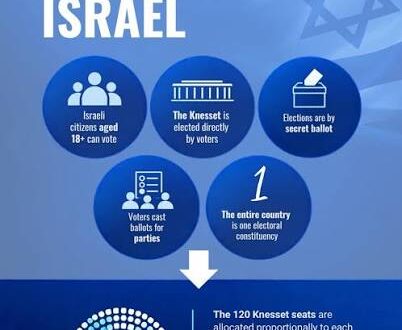
- Israel’s parliamentary election, scheduled for 27 October 2026, comes at a moment of profound uncertainty. The country is still grappling with the consequences of Hamas’s 7 October 2023 attack, the wars that followed, escalating tensions with Iran, economic pressures and deep divisions over religion, military service and citizenship. Benjamin Netanyahu’s leadership faces intense scrutiny, but the central question extends beyond whether he can remain in office. It is whether a change of government would fundamentally alter Israel’s approach to Tehran—or merely change the political leadership directing it.
- The distinction matters. Netanyahu has made the Iranian threat a defining feature of his political identity and security doctrine. Yet Israel’s concerns about Iran’s nuclear ambitions, missile capabilities and regional network of armed partners are not exclusive to his government. They are embedded in the country’s security establishment and shared, to varying degrees, across much of the political spectrum. A new government might reconsider the timing, scope and diplomatic management of confrontation with Tehran without abandoning the underlying objective of preventing Iran from becoming a more powerful strategic adversary.
- That is the central paradox of Israel’s election: Netanyahu may be politically vulnerable, but the strategic assumptions underpinning his Iran policy could survive him.
Israel’s 2026 Election: A Change of Government, but Not Necessarily of Iran Policy
Israel’s parliamentary election, scheduled for 27 October 2026, comes at a time when the country is still dealing with the aftermath of the 7 October 2023 Hamas attack, rising tensions with Iran, economic pressure and deep divisions over religion and citizenship. Although Benjamin Netanyahu’s leadership is under scrutiny, the real question goes beyond whether he will remain in power. The bigger issue is whether a change in government would actually change Israel’s approach towards Tehran. A closer look suggests that, despite differences in leadership and strategy, a new government would not necessarily reduce pressure on Iran. In fact, some opposition leaders have supported objectives that could make the confrontation even more intense.
An Election Shaped by More Than Netanyahu
The election is a contest between competing visions of Israeli leadership, but it is also a dispute over the country’s social contract. Netanyahu’s Likud leads the governing right-wing and religious coalition, which includes Religious Zionism, Otzma Yehudit, Shas and United Torah Judaism. The opposition is divided among Gadi Eisenkot’s Yashar, the Together list led by Naftali Bennett and Yair Lapid, Yair Golan’s Democrats and Avigdor Lieberman’s Yisrael Beiteinu. These parties differ on domestic governance, religious policy and diplomacy, even where their security priorities overlap.
The first defining issue is accountability for 7 October. The attack exposed catastrophic failures in Israel’s security preparedness and challenged public confidence in the leadership. Netanyahu’s opponents demand a state commission of inquiry, while the dispute over responsibility remains politically consequential. An October 2026 survey found that 71% of Jewish Israeli respondents supported establishing such a commission. For opposition leaders, the issue is not merely retrospective accountability: it is also an argument that Israel requires different political leadership without abandoning the country’s security objectives.
Military Service and Israel’s Internal Social Divide
The second major issue is the exemption of many ultra-Orthodox, or Haredi, men from compulsory military service. As the war has placed extraordinary demands on active-duty personnel and reservists, the exemptions have become a question of distributive justice: who bears the risks, obligations and economic costs of national security?
For many secular and national-religious Israelis, military service represents a central expression of citizenship and shared sacrifice. The Haredi community, however, contains religious institutions and families that regard full-time Torah study as a foundational obligation. The conflict is therefore not simply between religious and secular voters; it concerns competing understandings of national identity and collective responsibility.
The issue also has direct political consequences. Netanyahu’s coalition depends on religious parties, while Shas has demanded legislation securing the status of yeshiva students as a condition for supporting the next government. Most major opposition parties have promised stronger enforcement of conscription. An October survey found that 72% of Jewish Israeli respondents supported an egalitarian draft law. The resulting tension could weaken the political space available for compromise, including within a new government.
Economic Anxiety and a Fractured Society
Economic pressures form the third dimension. Although annual inflation moderated to 1.6% in September 2026, the cost of living remains a major concern. High household expenses, housing costs, wartime spending and the uneven distribution of military and economic burdens have made security inseparable from everyday economic stability. In an Israel Democracy Institute survey, 38% of Jewish respondents identified the economy and cost of living as one of their two most important considerations when choosing a party; foreign affairs and security ranked slightly higher, at 39%.
These concerns reveal an important sociological dynamic. Israelis are divided not only over ideology but also over who receives state resources, who serves in uniform and who bears the consequences of prolonged conflict. Research on Israeli political polarisation has highlighted the relationship between military service, civic identity and disagreements over the country’s democratic and national character. The 2026 election therefore concerns the distribution of responsibility within Israeli society as much as the identity of its next prime minister.
Why Iran Remains Central
Despite these domestic disputes, the leading candidates broadly agree that preventing Iran from acquiring a nuclear weapon is a fundamental Israeli security objective. Their differences concern the means, the desired political outcome in Tehran and the circumstances that would justify renewed military action.
Netanyahu has continued to describe the overthrow of Iran’s government as a strategic objective, arguing that Israel’s post-October 7 security doctrine requires pre-emptive offensive action. Bennett has similarly declared that overthrowing the Iranian regime (Octopus Doctrine) should become an Israeli strategic goal before Iran acquires a nuclear weapon. Lapid has advocated much greater economic and military pressure, including strikes against Iranian energy infrastructure as a means of forcing regime change. These positions indicate that a Netanyahu defeat would not automatically produce a more conciliatory Israeli policy towards Iran.
There are, however, meaningful differences. Eisenkot has described the Islamic Republic’s downfall as desirable but not achievable through military action alone. He has argued that renewed operations should depend on credible evidence that Iran is moving towards a nuclear weapon. Lapid has also criticised Netanyahu’s handling of security threats and warned against using the possibility of war to shape the election agenda. Such distinctions matter: replacing one government with another could change the timing, coordination and limits of military action, even if the underlying strategic objective persists.
The wider strategic danger is that each side interprets the other’s military preparations as evidence of hostile intentions. Research on the Iran–Israel rivalry describes an escalation cycle in which both states use force to secure strategic depth while failing to resolve the underlying conflict. An Israeli government that combines military pressure with better diplomatic coordination could sustain that pressure more effectively; one committed to regime change could also create incentives for Tehran to harden its deterrent posture. Neither outcome is inevitable, but both remain plausible.
Conclusion
Israel’s 2026 election could have major consequences for the country’s domestic politics, democratic institutions and the way military and economic responsibilities are shared among its citizens. It could also influence how Israel deals with Iran. However, the main opposition leaders have not clearly indicated that they would abandon Israel’s goal of preventing Iran from developing nuclear weapons. Some have even called for a more far-reaching outcome, including the removal of Iran’s current government.
For Tehran, this means that a change in Israel’s leadership would not necessarily bring relief from pressure. The real question is not just who becomes prime minister, but whether the next government continues to rely on military force or uses it as a way to push Iran towards a verifiable diplomatic agreement. Without a clear path towards resolving the conflict, a new leader might change how Israel confronts Iran without addressing the underlying reasons for the confrontation.
Author’s Bio:
Pranjal Saraswat is a PhD Research Scholar in Gandhian Thought and Peace Studies at the Central University of Gujarat, India. His research explores Middle Eastern politics, Israel–Iran relations, cyber politics, Israeli and Iranian sociology, cybersecurity, artificial intelligence, and emerging technologies, with a focus on geopolitics, societal dynamics, and international peace and security. He can be reached on LinkedIn: www.linkedin.com/in/pranjal-saraswat-2a0b43186.