Geostrategic Media Political Commentary, Analysis, Security, Defense

James Lunt
As tensions rise between Iran, Israel and the United States, Gulf states are scrambling to prevent a regional confrontation from becoming an economic and security catastrophe.
The most dangerous moment in a geopolitical crisis is not always when the first missile is launched. Sometimes it comes earlier, when governments begin preparing for a war they insist they do not want, diplomacy becomes harder to distinguish from strategic manoeuvring, and every military movement is interpreted as evidence that the other side has already made its decision.
That is the uncertainty now surrounding Iran, Israel and the United States.
A potential US-Israeli attack on Iran could occur in the weeks following the American midterm elections on November 3, according to one assessment of the evolving regional situation. The argument is that the political consequences of the elections could influence Washington’s calculations and create pressure to act before domestic constraints become more restrictive. Others question whether the United States has sufficient missile inventories to sustain a prolonged campaign.
Neither scenario should be mistaken for established fact. There is no independently confirmed timetable for an attack, and the available information does not establish that a final decision to initiate hostilities has been made. But the disagreement over timing reveals a deeper problem: the region is increasingly being shaped by competing expectations of war, and those expectations can influence decisions even before hostilities begin.
A government that believes an attack is imminent may disperse its forces, raise its readiness and threaten retaliation. Its adversary may interpret those steps as preparation for an offensive and respond with further deployments. What begins as deterrence can become a cycle in which each side’s efforts to appear prepared make the other feel less secure.
The danger behind the military signals
Reports of additional American and Israeli forces, air-defence systems, drone activity and naval deployments have fuelled speculation that military preparations are accelerating. Some regional assessments interpret these developments as evidence that Washington and Jerusalem are preparing for war. Others question whether the United States could sustain a major campaign without encountering significant constraints on its weapons stocks.
The distinction between military capability and political intent is crucial. Reinforcements can support an offensive operation, but they can also protect existing forces, strengthen deterrence or prepare for the possibility that an adversary strikes first. A naval deployment can expand the range of military options without proving that any particular option has been selected.
The same caution applies to the timing of the American elections. Political calculations may influence the presentation and timing of foreign policy, but electoral outcomes do not automatically determine military decisions. The suggestion that Washington might act after November 3 remains a hypothesis, not a confirmed operational forecast.
The greater concern is that all three countries may be preparing for contingencies while underestimating how quickly those contingencies could become reality. Military planners can calculate the likely consequences of an initial strike. They have far less control over the decisions that follow it.
Iran could retaliate against Israeli targets or American military facilities in the region. Washington could respond with additional strikes. Israel could expand its operations. Regional governments could find themselves under pressure to provide logistical support, defend their airspace or prevent attacks against their territory. A campaign intended to remain limited could develop into a much broader confrontation.
The danger is not that every warning will prove accurate. It is that the consequences of one mistaken assumption could be difficult to reverse.
Why the Gulf states are looking toward Tehran
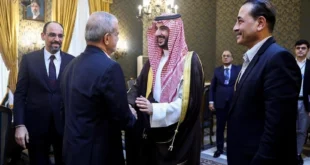
The diplomatic activity surrounding Iran offers another indication of the region’s unease. Gulf officials have been engaging Tehran at a moment when the consequences of a wider war would be especially difficult for their governments to contain.
The motives behind these visits remain open to interpretation. Some observers regard them as an encouraging sign that regional governments are seeking to reduce tensions. Others argue that Gulf leaders are attempting to protect themselves from a conflict they increasingly fear may be unavoidable. The available information does not establish that every diplomatic initiative has failed or that all parties have abandoned negotiations.
There is, however, a straightforward reason for Gulf governments to pursue dialogue. Their security partnerships with the United States do not eliminate their vulnerability to the consequences of American military action against Iran.
The Gulf states depend on the movement of energy, goods and people through a region in which military escalation could rapidly disrupt commercial activity. They also have substantial investments in infrastructure, transport, tourism and financial services. A prolonged confrontation could threaten the stability that these countries have worked for decades to establish.
For these governments, the issue is not simply whether Iran represents a security threat. It is whether a war intended to reduce that threat could create a more dangerous environment in which they themselves become targets.
Diplomacy with Tehran does not necessarily signal a strategic break with Washington. It may instead represent an attempt to preserve room for manoeuvre: maintaining American security relationships while communicating to Iran that neighbouring states do not want their territory or infrastructure drawn into an offensive campaign.
That is a difficult balance. Iran may demand assurances that Gulf facilities will not be used against it, while the United States may expect regional partners to cooperate in protecting American forces. Gulf governments could find that neither side is satisfied with their efforts to remain outside the conflict.
Iran’s strategy of making war expensive
Tehran’s public warnings appear designed to discourage an attack by emphasising that the consequences would extend well beyond Iranian territory. Iranian officials have reportedly warned that states facilitating military action could face retaliation and that American bases would not be the only possible targets.
The reported threats extend to naval forces and strategic infrastructure. Their purpose is clear enough: Iran wants Washington and its partners to consider the potential cost of escalation before deciding that a strike would be manageable.
But deterrence has a dangerous paradox. A threat intended to prevent war can also make a crisis harder to resolve if it leaves the other side believing that restraint will be interpreted as weakness. Threats against critical infrastructure or political leadership may encourage regional governments to seek accommodation, but they could also strengthen the case for military action among those who view Iran as an increasingly intolerable risk.
The technical questions surrounding Iran’s military capabilities are equally important. Iran is believed to have invested in systems intended to threaten naval forces and complicate operations near its coastline. However, the effectiveness of these systems against defended naval formations, and Iran’s capacity to sustain a prolonged exchange, cannot be established from the available information alone.
Those uncertainties cut both ways. Iran may be capable of imposing serious costs without being able to achieve all its military objectives. The United States may possess overwhelming advantages in some domains without being able to prevent every retaliatory strike or guarantee that a conflict remains geographically limited.
A war does not have to produce a military stalemate to become a strategic failure. If the immediate objectives of an operation are achieved but the result is a prolonged regional crisis, disrupted energy markets and weakened relations with neighbouring states, the political consequences could outweigh the initial gains.
The vulnerability of water, energy and communications
Much of the discussion about a possible war focuses on missiles, aircraft and naval forces. Yet some of the most consequential vulnerabilities lie in the systems that allow Gulf societies to function.
The Strait of Hormuz is central to the movement of regional energy exports. Even without a sustained closure, a credible threat to commercial shipping could raise insurance premiums, increase transport costs and inject volatility into oil markets. The economic effects would extend far beyond the countries directly involved.
Water security presents a different but equally serious concern. Several Gulf states rely heavily on desalination to meet their water needs. Damage to desalination plants, electricity supplies or distribution networks could create an immediate public-security challenge. The severity of such an emergency would depend on the extent of the damage, the availability of reserves and the speed with which essential services could be restored.
Telecommunications infrastructure is another potential point of vulnerability. Disruption to undersea cables and regional communications networks could complicate financial transactions, commercial operations and emergency coordination.
These risks should not be confused with evidence that such attacks are planned. They illustrate, instead, how a conflict involving military forces could expose the infrastructure on which civilian life and economic stability depend.
The Gulf states have spent years presenting themselves as centres of investment, connectivity and commercial opportunity. Their economic strategies depend on a perception of predictability. A prolonged confrontation could undermine that perception even if the physical damage remained limited.
The resulting shock would not necessarily resemble the Great Depression. Such a comparison goes beyond what the available evidence can support. But the possibility of simultaneous disruption to energy exports, maritime trade, infrastructure and investor confidence is serious enough without relying on the most extreme forecasts.
Israeli political calculations—and the risk of another front
Domestic politics may also influence how Israeli leaders assess the timing and consequences of military action. Political leaders can use security threats to strengthen domestic support, while concerns about retaliation may make an escalation less attractive before an election.
Neither outcome should be assumed. Leaders may exercise restraint when the political costs of conflict appear too high, but domestic pressures can also make a show of resolve more appealing.
The risk is that political calculations in Washington, Tehran and Jerusalem will interact in unpredictable ways. Each government may believe it can manage the domestic consequences of escalation, while underestimating how events will unfold once the first exchange of fire occurs.
The occupied West Bank adds another layer of uncertainty. A major escalation there could complicate regional diplomacy and place additional pressure on Iran and other regional actors to respond.
But a connection between developments in the West Bank and a wider war involving Iran should not be assumed to be automatic. Tehran’s choices would depend on the scale of Israeli operations, the state of its own military preparedness and the expected costs of becoming more directly involved.
The broader point is that the region contains several potential theatres of escalation. A confrontation that begins with one set of military objectives could become entangled with other conflicts, political pressures and competing security commitments.
Diplomacy still matters, even when it appears weak
It is tempting to regard diplomatic visits as little more than a prelude to war. In periods of acute tension, negotiations can be interpreted as attempts to buy time, conceal intentions or improve a party’s position before military action.
But the possibility that diplomacy may fail does not make it irrelevant. Communication can clarify red lines, reduce the risk of accidental escalation and create channels for addressing an emergency after a confrontation begins. Even a narrow agreement about the use of airspace, protection of commercial shipping or the avoidance of attacks on civilian infrastructure could reduce the danger to states that do not control the decisions of the principal combatants.
The Gulf states may be particularly important because they have relationships with both Washington and Tehran and direct exposure to the consequences of a conflict. Their ability to prevent a war may be limited, but they can still communicate the regional costs of escalation and seek assurances that their territories will not become battlefields.
For diplomacy to work, however, it must move beyond expressions of concern. It requires concrete proposals, credible channels of communication and a willingness by the principal parties to accept limits on their actions.
There is no guarantee that such efforts will succeed. Nor is there enough evidence to conclude that they have already failed.
The war that could begin with a miscalculation
The central question is not whether a US-Israeli attack will occur in mid-November. The available evidence is insufficient to establish that timetable, and predictions about the timing of a strike should not be mistaken for confirmed intelligence.
The more important question is whether Washington, Jerusalem and Tehran are approaching a point at which each believes that waiting has become more dangerous than acting.
If the United States and Israel believe Iran’s capabilities are growing or that a military opportunity may narrow, they could conclude that delay carries risks. If Iran believes an attack is imminent, it may intensify preparations and issue stronger threats. Gulf governments may then seek protection from a war that their own diplomatic efforts cannot prevent.
Each side could believe it is acting defensively. Yet the combined result could be a crisis in which military readiness, public threats and political pressures steadily narrow the space for compromise.
The Gulf states understand what is at stake. Their concern is not simply the possibility of a military exchange, but the prospect that a conflict between larger powers could destroy the economic and security assumptions on which their futures depend.
The most dangerous outcome would be a war that every participant expects to control—and that none can stop once it begins.
That is why the coming weeks should be judged not by the most dramatic predictions, but by the quality of the evidence, the choices made by governments and the willingness of regional powers to preserve diplomatic channels before a crisis becomes irreversible.