 Geostrategic Media Political Commentary, Analysis, Security, Defense
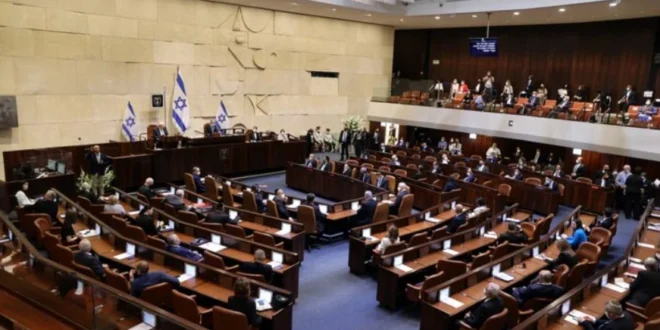

The core reason is straightforward: the ruling coalition wants to control the timing and narrative of its own collapse, rather than allow the opposition to claim it brought the government down.
What is unfolding inside Israel is not simply a parliamentary procedure. It is a calculated political maneuver by the camp of Benjamin Netanyahu to manage a controlled political reset on its own terms.


When the coalition itself submits a bill to dissolve the Knesset, it is effectively seizing the initiative. Rather than being toppled by the opposition in a humiliating no-confidence scenario, Netanyahu’s bloc can frame the move as a strategic decision to return to voters voluntarily.
Why now?
Several overlapping factors explain the move:
1. Preventing the opposition from claiming victory
If the opposition were to bring down the government through its own legislative initiative, it would be seen domestically as a direct political defeat for Netanyahu.
By initiating dissolution themselves, the coalition can argue:
“We chose to seek a renewed mandate from the public after leading the country through wartime challenges—not because the opposition defeated us.”
In Israeli politics, controlling the public narrative is often as important as controlling parliamentary votes.
2. Deepening conflict with ultra-Orthodox parties
The immediate internal trigger appears to be tensions with the ultra-Orthodox parties, especially:
- Shas
- United Torah Judaism
The dispute centers on military conscription for the Haredi population during wartime.
The Haredi parties want to show their voters that they were willing to bring down a right-wing government over the draft issue. Netanyahu, by contrast, wants to deny them sole ownership of that narrative and maintain his image as the central decision-maker.
3. Election timing is a strategic weapon
The date of the election is not a technical issue—it is a major strategic variable.
Each additional month gives Netanyahu:
- more time to shape the outcome of the war,
- a chance to improve his security credentials,
- potential leverage from any regional de-escalation involving Iran,
- and an opportunity to weaken opposition momentum.
That explains why some coalition factions reportedly prefer September elections, while Netanyahu is believed to favor late October.
4. Netanyahu’s corruption trial
A major personal factor is also in play: Netanyahu’s ongoing legal proceedings.
Benjamin Netanyahu continues to face corruption charges. During an election campaign, his legal team may request delays in court appearances on the grounds that he is engaged in national leadership during wartime and an active election period.
Politically, that gives him:
- more legal breathing room,
- an opportunity to rally supporters around claims of political persecution,
- and a way to merge his legal troubles with broader national-security messaging.
The deeper reading: Is this really Netanyahu’s downfall?
Not necessarily.
Paradoxically, this move may be designed to save Netanyahu, not remove him.
In political science terms, this resembles a strategy of:
Controlled Collapse
A governing coalition dissolves itself before opponents can force its collapse, allowing its leader to retain strategic agency.
The business analogy is useful:
A corporation facing insolvency may file for restructuring voluntarily, rather than waiting for creditors to force liquidation. The goal is not surrender—it is preserving maximum control over the terms of transition.
Strategic conclusion
The coalition is moving to dissolve the Knesset because it wants to:
- Seize the political initiative from the opposition.
- Control the election timetable.
- Prevent the Haredi parties from monopolizing the reason for the government’s collapse.
- Give Netanyahu political and legal maneuvering space.
- Reframe a coalition crisis as a deliberate sovereign decision.
In practical terms:
Netanyahu does not want history to record that his government was brought down by rivals. He wants it to record that he chose to dismantle it himself at the moment most advantageous to his political survival.
This makes the move less a sign of surrender and more a pre-emptive tactical retreat designed to preserve power under a different electoral configuration.