 Geostrategic Media Political Commentary, Analysis, Security, Defense

Dr. Nessrine Mesto-Assaad
On January 21, 2025, during his first press conference following the start of his second term as President of the United States, Donald Trump announced his support for the largest artificial intelligence (AI) infrastructure project to date—the Stargate Project—under Executive Order No. 14179. He was joined by OpenAI CEO Sam Altman, Oracle founder Larry Ellison, and SoftBank CEO Masayoshi Son. Stargate is the world’s most expensive and expansive AI initiative, with an initial budget of $500 billion.
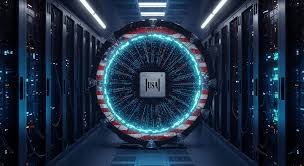
The Stargate Project aims to unite major corporate conglomerates in developing a world-class hyperscale AI data center infrastructure (HAIDCI). These facilities will be built and equipped around the world to archive data and develop next-generation AI, moving toward artificial general intelligence (AGI). This will open new frontiers and drive positive change in healthcare, banking, trade, finance, education, commerce, and the broader economy. It may also lead to medical breakthroughs and cures for currently incurable diseases. Most importantly, it will foster the next wave of AI development, strengthening global governance and creating new alliances shaped by technological capability and control over data. At the same time, it will increase the dominance of multinational corporations, complicate competition, and block startups from innovating. This will add new dimensions to trade and economic exchange, potentially paving the way for global digital economic dominance and supremacy.
The Counterpower
Trump’s announcement raised significant political, economic, and trade questions, as well as tensions. It directly contradicts the policy for the safe development and use of AI signed by President Joe Biden under Executive Order No. 14110 on October 30, 2023. While Biden established cautious, thoughtful frameworks for using and developing information technology and AI, Trump stressed that a national emergency exists and that the pace of digital innovation must accelerate to meet the nation’s needs. This competitive rhetoric was not merely the product of an election campaign or business alliances, but a response to international conflicts and a semi-public race to shift centers of power and control.
Stargate has laid bare a core driver of the current global crisis: access to natural gas to power HAIDCI, enabling digital economic dominance and global governance. It has also pulled back the curtain on the second Cold War—or what has been known as the microchip war—that has been raging since 2018. In practical terms, the trade restrictions imposed on China to block semiconductor imports, the customs duties on imported goods, and the Stargate Project have turned competition into a fierce, public struggle to develop digital technology and own data. Because whoever owns data, owns the future.
On the other side of the globe, China has been carefully and wisely building an integrated infrastructure through its “New Generation Artificial Intelligence Development Plan (2015–2030).” This plan is very similar to Stargate, but differs in funding, infrastructure, and scale of investment and business cooperation. China has 561 data centers, 367 of which are distributed nationwide, while the rest are located in other countries through global corporations like Alibaba and Huawei. China’s AI plan also aims to cultivate an AI ecosystem that reduces carbon emissions and protects the global environment.
The number of data centers in China is small compared to the United States, which has 4,088 centers within its borders alone, many affiliated with conglomerates such as Amazon, Google, and Microsoft. However, China excels at reducing costs in data archiving, development, power consumption, and digital computing infrastructure. This disparity stems from the restrictions imposed in 2018 on semiconductor imports, which limited China’s ability to develop digital technology. The technological blockade, in turn, prompted China to develop a domestic production strategy and rely more on self-sufficiency.
Competition Tools
The president’s announcement of the Stargate Project was carefully calculated to preserve leadership and control over advanced technology within the hands of the West, led by the United States, and to block China’s path in terms of economic and political alliances and coalitions. The project involves a joint venture with global AI giants OpenAI, SoftBank, Oracle, Nvidia, and MGX to compete directly against DeepSeek, Huawei, and ByteDance—China’s most powerful AI and technology companies. These coalitions and the resulting technological and economic confrontations have given rise to numerous direct and indirect challenges for both sides, including securing energy (including renewable energy) and managing carbon emission ecosystems.
The United States views China not only as a technological powerhouse and fierce competitor in the development of digital technology in terms of operational burdens, but also as a rival in matters of national security, cybersecurity, armaments, cryptocurrencies, global banking, the digital economy, cloud services, digital computing, and the acquisition and efficient use of energy resources. This competition—this struggle over the armament of data—requires a deeper dissection of the various tools and factors that influence this digital war.
The Global Arena: Other Players Joining the Race
These new technological-industrial conflicts have legitimized a strategic economic and digital war between the two superpowers—the U.S. and China. Meanwhile, a growing number of countries seek to impose digital hegemony or join economic and technological alliances for empowerment. The European Union and the United Kingdom are striving for digital dominance and building their own data centers. France is also trying to find its place among the digital economy powers. The United Arab Emirates has developed its own strategy to become a leader in AI by 2031, including by joining the Stargate Project and establishing HAIDCI on its territory.
About the Author:
Dr. Nessrine Mesto-Assaad is a Doctor of Business Administration (DBA – MBA). She is a researcher specializing in electronic government systems, electronic tax return filing, Generative Artificial Intelligence, ChatGPT applications, and digital technology armaments. Her work focuses on taxpayers’ behavioral intentions to use the electronic government, electronic file system, and the adoption of AI chatbots. She focuses on the intersection between digital technology and its influence on global supremacy.