Geostrategic Media Political Commentary, Analysis, Security, Defense
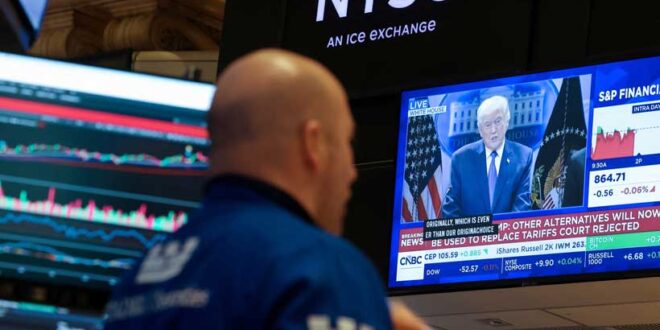

Global currency markets remained broadly stable on Monday despite escalating geopolitical tensions linked to the ongoing conflict involving the United States and Iran. The limited movement in the US dollar came after President Donald Trump rejected Iran’s response to a United States peace proposal, reinforcing concerns that the conflict in the Middle East may persist for an extended period.
At the center of global financial attention is the interaction between geopolitical risk, energy prices, and monetary policy expectations. Rising oil prices, driven by uncertainty in the Strait of Hormuz and broader regional instability, continue to shape inflation expectations across major economies. However, currency markets have shown relative restraint, suggesting that investors are balancing immediate geopolitical risks against expectations of eventual diplomatic stabilization.
The US dollar index, which measures the currency against a basket of major global currencies, remained largely unchanged. At the same time, oil prices rose sharply, reflecting renewed concerns about supply disruptions and prolonged conflict conditions.
Geopolitical Risk and Market Equilibrium
Financial markets are currently operating in a state of tension between short term geopolitical shocks and longer term expectations of resolution. The stability of the US dollar suggests that investors are not fully pricing in a sustained breakdown in global energy flows, despite elevated uncertainty in the Middle East.
The oil market, by contrast, continues to respond rapidly to political developments. The rise in crude prices reflects concerns that prolonged instability could restrict supply routes and tighten global energy availability. This divergence between currency stability and commodity volatility highlights the uneven transmission of geopolitical risk across financial systems.
Market analysts note that expectations of diplomatic engagement between the United States and China remain a key stabilizing factor. Investors increasingly view high level diplomatic meetings as potential mechanisms for de escalation, particularly given the influence both countries exert over global energy and trade systems.
The Role of the United States and China in Market Sentiment
A major factor influencing market behavior is the anticipated summit between President Trump and Chinese President Xi Jinping. The meeting is expected to cover a wide range of strategic issues including energy security, artificial intelligence, nuclear policy, and regional conflicts.
Markets are closely monitoring this engagement because both the United States and China possess significant leverage over geopolitical and economic developments in the Middle East. China’s role as a major energy importer and diplomatic stakeholder in the region gives it potential influence over Iranian policy, while the United States remains the dominant military and financial actor in global markets.
This dual influence creates expectations that broader geopolitical tensions may eventually be moderated through strategic dialogue. As a result, investors are partially pricing in the possibility of containment rather than escalation, which helps explain the relative stability of major currencies.
Inflation Expectations and Central Bank Positioning
Energy price movements remain central to global inflation dynamics. Rising oil prices directly influence transportation costs, production expenses, and consumer prices, creating upward pressure on inflation across both advanced and emerging economies.
In the United States, recent economic data has reinforced expectations that the Federal Reserve will maintain a cautious monetary stance. Strong employment figures combined with persistent inflation risks have reduced expectations of near term interest rate cuts. This has contributed to support for the US dollar, as higher interest rate expectations typically attract capital inflows into dollar denominated assets.
The interaction between monetary policy and geopolitical risk is becoming increasingly complex. Central banks are now required to respond not only to domestic economic indicators but also to external shocks originating from energy markets and international conflicts.
In this environment, currency movements reflect not just economic fundamentals but also expectations regarding central bank behavior under conditions of sustained uncertainty.
Diverging Currency Movements and Global Economic Signals
While the US dollar remained stable, other major currencies exhibited modest weakness. The euro, yen, and British pound all recorded slight declines, reflecting broader caution in global markets.
The movement of the Chinese yuan, which briefly strengthened to its highest level in several years, adds another dimension to the global currency landscape. This reflects both domestic economic data and broader expectations regarding China’s role in global trade and energy markets.
China’s economic performance, particularly in exports and industrial activity, continues to be closely linked to global energy prices and supply chain dynamics. Strong export growth suggests resilience in external demand, even amid geopolitical uncertainty and rising production costs.
These currency movements collectively indicate that global markets are navigating a period of uneven economic signals, where regional conditions and geopolitical developments interact in complex ways.
The Interplay Between Markets and Political Uncertainty
One of the defining characteristics of the current financial environment is the speed at which geopolitical developments translate into market expectations. Currency traders and investors are increasingly sensitive to political signals, particularly those involving energy producing regions and major global powers.
However, despite heightened volatility in oil markets, the US dollar’s stability suggests that investors still view the global financial system as structurally resilient. Rather than anticipating systemic disruption, markets appear to be pricing in cyclical instability followed by eventual stabilization.
This reflects a broader pattern in which financial markets absorb geopolitical shocks through short term volatility without fully abandoning long term confidence in global economic integration.
Analysis
The stability of the US dollar amid escalating geopolitical tensions highlights a critical feature of contemporary global markets. While energy prices and regional conflicts generate significant short term volatility, currency markets remain anchored by expectations of monetary policy stability and eventual diplomatic resolution.
The current environment is characterized by three overlapping dynamics. First, geopolitical risk is elevated due to sustained conflict in the Middle East and uncertainty surrounding diplomatic negotiations. Second, energy markets are highly sensitive to supply disruptions, producing rapid price fluctuations. Third, central bank policy expectations continue to play a stabilizing role in currency valuation.
The anticipated meeting between the United States and China represents a key focal point for market sentiment, as investors look for signals of broader strategic coordination or de escalation. However, the underlying structural tensions in the global system remain unresolved.
Ultimately, the current stability of the dollar should not be interpreted as a sign of reduced risk, but rather as evidence that markets are temporarily balancing competing expectations of conflict, diplomacy, and monetary policy. In such an environment, volatility in commodities and geopolitical headlines may continue, even as major currencies appear relatively stable on the surface.