Geostrategic Media Political Commentary, Analysis, Security, Defense

Alexandre Loerke
The latest energy crisis stemming from the war in Iran and the ensuing closure of the strait of Hormuz is shining a light on a major challenge to EU strategic autonomy: Europe remains largely dependent on fossil fuel imports for its energy. The full-scale invasion of Ukraine by Russia in 2022, like the 1973 oil crisis before it, represented a stark warning regarding the risks of over-reliance on a single supplier for fossil fuels (or a group of suppliers like OPEC in 1973). Four years on and Europe is still spending billions of euros buying Russian oil and gas, financing the Russian aggression that directly threatens it. The EU’s goals are unambitious to say the least, with a plan to implement a 2028 ban on all Russian gas and halt oil imports by late 2027.
Although the Commission’s ambitions regarding Russia are repeatedly thwarted by uncooperative Member States, there has been a clear recognition by most EU leaders that it is essential to diversify suppliers in oil and gas to avoid surges in energy prices. However, the latest crisis is different. While most of the fuels transiting through the Strait of Hormuz are going to Asia, fuel prices in Europe are spiking, leading to severe concerns by energy-intensive industries like the aviation sector regarding the economic viability of operations. The difference here is that a diversified supply base will not address the spike in prices: the market for oil and gas is a global one, and when supply is severely disrupted, the whole world is subject to higher prices.
The closure of the Strait of Hormuz, therefore, poses an entirely different challenge; diversifying suppliers is not the solution here; only reducing dependence on oil and gas can shield the bloc from massive energy price hikes that wreak havoc in its economy. The only way to address that challenge is a drastic increase in domestic energy production. The Council conclusions on EU energy and climate diplomacy of 21 April seem to provide a clear direction regarding how the bloc wishes to go about increasing this production. The text states, “Acknowledgingthe EU’s geopolitical and economic exposure due to a significant reliance on imported fossil fuels, the Council confirms that the energy transition based on clean, abundant, and homegrown energy remains the most effective strategy towards achieving Europe’s strategic autonomy.” The statement is particularly welcome at a time when Europeans are having to undergo yet another energy crisis while the institutions’ drive to simplify for the sake of competitiveness has often taken the form of toning down ambitions for sustainability.
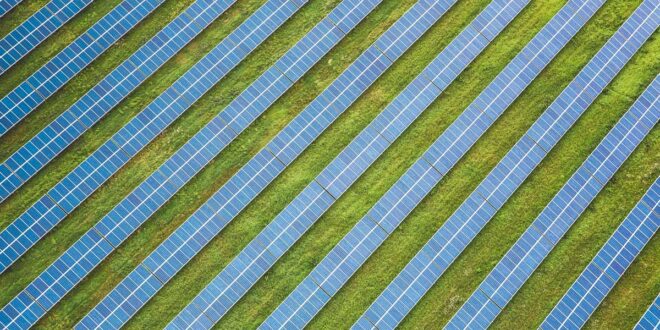
However, this quote, like much of the EU’s communication regarding energy sovereignty, fails to consider the elephant in the room: if 95% of solar panels are made in China, is solar energy really a source of independence for Europe? While the answer to that is obviously not, the point of this piece is not to advocate against the energy transition but to raise awareness regarding the fact that we are again heading down a road of dependence. The type of crisis we are living through now will not stop happening if we become overly reliant on China for our renewable energy infrastructure. Given our well-known divergences in interests with China, there is a real risk that this dependence could be weaponized. Considering solar power is the fastest-growing source of renewable energy, with a 24.6% increase in 2025, we are currently fast-tracking our way to a new form of dangerous dependence.
The only way Europe can avoid going down this road is to use its market weight to be more assertive with its trade policies, public procurement rules, and industrial policy, even if this means revisiting long-standing assumptions about open trade and competition. The EU should impose tariffs to make imports of Chinese-made renewable energy equipment less competitive in sectors like wind power where EU producers are still in business. In sectors like solar, where EU producers have been wiped out, the EU should impose mandatory manufacturing in the EU and technology transfer rules, just like the Chinese have imposed on EU companies for decades to allow them to operate in the country. This would allow for greater oversight regarding the security of the products and enable EU producers to gain the know-how to eventually allow them to come back onto the market. Finally, massive investment in research and development is needed to build technological dominance and overtake China as the leader in renewables.
The Industrial Accelerator Act proposal by the Commission is a step in the right direction but by no means a silver bullet. Major opposition from industry, Member States and even within the Commission already lowered the text’s level of ambition significantly before the text was even published. Whether key components of the proposal will survive the legislative process is anyone’s guess but regardless, the text lacks aspiration and fits within the broader gruellingly slow trend of the EU gradually attempting to assert itself. In this case, Europe does not have the luxury of staying the course; it needs to take drastic action now to ensure our energy system of the future is not built on dependence.
About the Author:
Alexandre Loerke is a Brussels based policy officer working on EU energy and industrial policy, with a focus on the electricity sector. The views expressed are his own.