Geostrategic Media Political Commentary, Analysis, Security, Defense
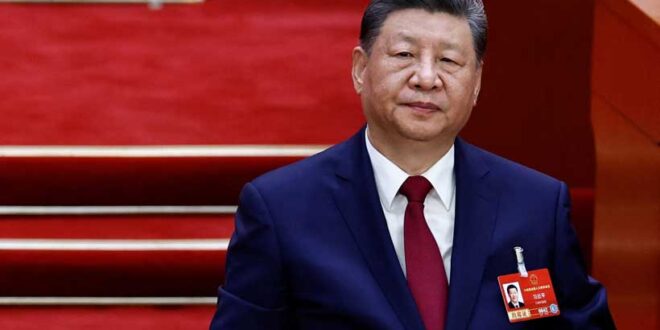

Xi Jinping has called for the international rule of law to be upheld in the Middle East, in a pointed critique of the ongoing Iran war involving the United States and Israel.
Speaking during a meeting in Beijing with Khaled bin Mohamed bin Zayed Al Nahyan, Xi warned against selective application of international law, stating it must not be used only when convenient.
Context of the statement
China has consistently criticised military actions against Iran as illegitimate, but Xi himself has largely avoided direct public commentary until now. His remarks come at a moment of rising tensions following failed diplomatic talks and escalating military and economic measures.
The conflict has disrupted the Strait of Hormuz, with Iran restricting shipping and the US imposing a naval blockade, significantly affecting global energy flows.
Economic and energy impact
China is already feeling the effects of the conflict. Recent data shows declines in natural gas and crude oil imports, partly due to disruptions in shipping routes and vessels being stranded.
As a major energy importer, China is particularly vulnerable to instability in the Gulf. Reduced flows through the Strait of Hormuz have implications not only for supply but also for global energy prices and inflation.
China UAE strategic alignment
Xi’s remarks coincided with efforts to deepen ties with the United Arab Emirates. The visit by the Abu Dhabi crown prince highlights a growing economic and strategic partnership between Beijing and Gulf states.
Discussions focused on expanding cooperation in energy, artificial intelligence, advanced manufacturing, and new technologies such as hydrogen and electric vehicles. Increased connectivity, including expanded airline routes, reflects a broader push to strengthen trade links.
Geopolitical implications
China’s emphasis on the rule of law positions it as a critic of Western military interventions while reinforcing its image as a proponent of multilateral stability. This messaging is particularly significant ahead of a planned meeting between Xi and Donald Trump.
At the same time, Beijing is deepening its engagement with Gulf nations, potentially reshaping influence in a region traditionally dominated by the United States.
Analysis
Xi’s statement serves both a diplomatic and strategic purpose. It allows China to criticise US actions without direct confrontation while strengthening ties with key energy partners.
By framing the conflict in terms of international law, China is also appealing to a broader global audience, especially developing nations wary of unilateral military actions.
However, China’s ability to influence outcomes remains limited. Its role is primarily economic and diplomatic, and it lacks the military presence in the region that the United States maintains.
Xi’s call for upholding the rule of law reflects China’s growing engagement in Middle Eastern geopolitics. As the conflict continues to disrupt energy markets and global trade, Beijing is positioning itself as both a critic of current actions and a potential partner for stability in the region.