Geostrategic Media Political Commentary, Analysis, Security, Defense
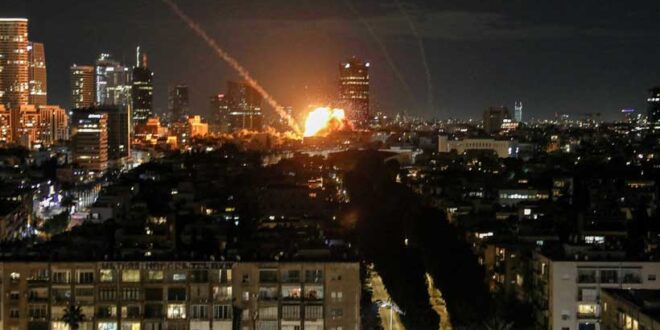

On February 28th, nearly 900 strikes in 12 hours by the United States and Israel hit Iran. By morning, the Supreme Leader was dead. Within days, the Strait of Hormuz was closed, oil surged past $120 a barrel, and Gulf skies filled with interceptors chasing drones that refused to remain symbolic. By mid-March, 70% of the region’s food imports were disrupted. Bahrain was scraping the bottom of its missile-defence reserves. Desalination plants—those quiet guarantors of life in the Gulf—became targets. A grocery crisis unfolded in some of the world’s richest states.
And yet, for all the scale and speed, the most striking feature of this war is how little of it appears to have been truly anticipated.
Forty days on, there is a ceasefire, of sorts. It began fraying within hours. Missiles flew as statements were issued; accusations preceded verification. This is less an end than a pause—an intermission in which the actors rearrange themselves, count what remains, and decide how much further they are willing to go. Wars in this region do not conclude; they sediment. They leave behind altered assumptions, exposed vulnerabilities and, most importantly, a reordered hierarchy of relevance.
Five such shifts now stand out.
The first is the quiet death of the proxy era. For decades, Iran’s regional posture relied on indirection: Hezbollah in Lebanon, Houthis in Yemen, militias in Iraq, and allies elsewhere. Influence without formal accountability was the design. It suited adversaries too, allowing Washington and Israel to respond without escalation to outright war. But when strikes came in February—reportedly under the banner of “Operation Epic Fury”—Iran did not respond through shadows. It responded in daylight. Drones and ballistic missiles targeted bases, oil infrastructure, desalination facilities and cities across multiple देशों. The proxies did not disappear; they were supplemented. The result was not controlled escalation but immediate sprawl: from the Gulf to the Levant, from Cyprus to Turkey, even brushing the Caucasus. The lesson is as simple as it is unsettling: proxy wars were containable. Direct wars are not.
The second is that wars now end where they used to begin—in ambiguity. On the eve of the strikes, diplomacy had seemed within reach; negotiations were scheduled to resume within days. Instead, bombs fell. Now the process has inverted. A ceasefire exists, but only in language. Tankers still negotiate passage. Insurance premiums have replaced missiles as instruments of pressure. Iran’s political class questions the very premise of the truce, while Israel continues operations on other fronts. What is called peace is, in effect, repositioning. The real negotiations—on enrichment, sanctions, regional security—remain exactly where they were before the war began: unresolved. If anything, they are now harder.
The third is the return of geography, with a vengeance. For years, globalisation encouraged the belief that chokepoints had been diluted by diversification and redundancy. Two weeks in March disproved that. A 21-mile-wide passage at the mouth of the Gulf brought vast segments of the global economy to a halt. Energy markets convulsed; supply chains fractured; food security became an immediate concern across the Gulf. Geography, it turns out, was not transcended. It was merely ignored. Iran’s position astride Hormuz is not a diplomatic variable. It is a physical fact—one that markets now price with brutal clarity.
The fourth is that small states, once again, bore the greatest burden. Gulf countries did not choose to be frontlines; they became them by hosting infrastructure designed for deterrence in peacetime. When war came, those installations became targets. Missile interceptors were depleted at alarming rates. Critical infrastructure burned. Food prices surged. Water systems—dependent on desalination—were threatened. Elsewhere, Lebanon, already hollowed out by years of crisis, was drawn into a conflict it could scarcely absorb. The pattern is old; the scale is new. In wars between larger powers, smaller states do not merely suffer collateral damage. They become the battlefield.
The fifth is that the diplomatic map has shifted in ways that would have seemed improbable not long ago. The ceasefire was not brokered in Washington or Geneva, but in Islamabad. Pakistan—long peripheral to such high diplomacy—found itself mediating between adversaries amid active conflict. Meanwhile, China urged restraint while safeguarding its energy interests, India watched carefully while balancing competing commitments, and countries such as Brazil and South Africa emphasised humanitarian concerns without choosing sides. The so-called “Global South” did not seek this role. It acquired it by necessity. Great-power wars are no longer settled solely by great powers.
Where does this leave the region? In a familiar but more dangerous place. The ceasefire is holding, technically. The disagreements that produced the war remain intact. Iran retains both capability and incentive to resume pressure. Israel continues to act on parallel fronts. The United States faces the perennial dilemma of escalation versus restraint, complicated now by a more sceptical domestic audience and a more fragmented international one.
The next phase, if it comes, will be faster. Markets have learned how quickly a chokepoint can close. Gulf states have fewer interceptors than they did before. Diplomatic channels, though expanded, are more crowded and less coherent. The war did not resolve these contradictions. It clarified them.
That may be its most enduring legacy.