Geostrategic Media Political Commentary, Analysis, Security, Defense
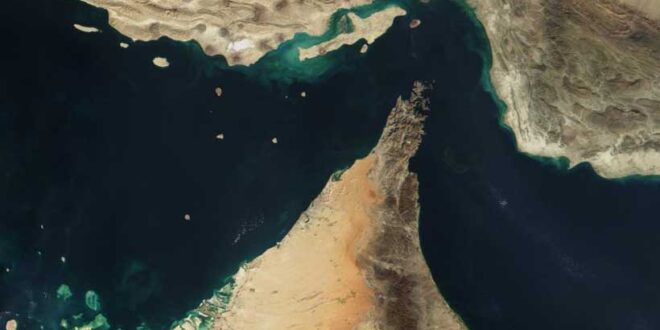

Iran’s new protocol for the Strait of Hormuz is not a normal maritime regulation. It is a wartime instrument being repackaged as a postwar order. The Reuters report on the ceasefire bargain, the Reuters report on Tehran’s preconditions, and the Reuters report on the Islamabad talks all point in the same direction: Tehran wants any ceasefire to leave behind a new political reality in which it manages access to the world’s most important energy chokepoint, claims a right to regulate passage, and keeps the Strait on the negotiating table as a source of leverage, revenue, and prestige. That is not peace in the traditional sense. It is coercive normalization.
Before the war, the Strait mattered because of volume; now it matters because of vulnerability. According to EIA data on 2024 oil flows, about 20 million barrels a day moved through Hormuz last year, equal to roughly 20 percent of global petroleum liquids consumption. According to EIA data on LNG flows, about 20 percent of global LNG trade also passed through it, including 9.3 billion cubic feet a day from Qatar alone. That is why the Reuters report on the first tankers through mattered so much: only three supertankers, each able to carry 2 million barrels, were enough to become global news. When a trickle becomes a headline, the system is still broken.
What Iran is really trying to establish
Publicly, the details are still murky. The AP report on the ceasefire and 10-point plan, the AP report on the Islamabad talks, and the Al Jazeera analysis of the current protocol debate suggest the protocol has three core elements: controlled passage, military coordination, and some form of payment or compensatory mechanism. In plain English, Iran is saying ships may pass, but only on terms set by Tehran. That distinction matters. It moves the strait from a route governed by international expectation to a route governed by Iranian permission. Even if the tariff numbers being discussed remain unconfirmed in public, the principle is already clear enough to alarm every major trading nation.
Practically, Iran appears to exercise de facto control over much of the traffic right now, but not uncontested control. The Guardian’s reporting on shipping disruption says Tehran is offering safe passage under armed-forces coordination and warning that unauthorized ships could be targeted. The Reuters report on shippers seeking clarity says vessels still need permission, while major operators remain wary. Meanwhile, the Reuters report on U.S. mine-clearing moves shows Washington is trying to build an alternative fact on the water: Iran may intimidate shipping, but the U.S. still intends to shape the security architecture. That means the present answer to “who controls Hormuz?” is awkward but honest: legally, no one gets exclusive control; militarily and operationally, Iran has the upper hand for now; strategically, the U.S. is trying to claw it back.
The law is narrower than Tehran wants.
Under UNCLOS Part III, straits used for international navigation are governed by transit passage. The treaty text says that right “shall not be impeded,” and it allows coastal states to regulate safety and maritime traffic only so long as those rules do not in practice deny, hamper, or impair transit. The UN Treaty Collection entry for UNCLOS reminds us that this is not an obscure academic instrument; it is the central legal framework for the seas. The Reuters report on the IMO warning is therefore devastating for Tehran’s legal case: the UN shipping agency has already warned that tolls for an international strait would set a dangerous precedent. Iran can argue for traffic management or temporary safety measures if there is a genuine threat. It has a far weaker case for turning passage itself into a taxable privilege.
That legal weakness is also why Tehran’s project may be self-defeating. The IEA assessment of bypass pipelinessays only Saudi Arabia and the UAE currently have meaningful operational crude routes that could bypass Hormuz, with perhaps 3.5 to 5.5 million barrels a day of spare capacity. The broader IEA overview of Middle East energy risks says around 25 percent of global seaborne oil trade transited the Strait in 2025, which shows just how hard it is to replace. Yet the Al Jazeera analysis of pipeline alternatives also underlines the obvious long-term consequence: every month Iran weaponizes Hormuz, every importer, exporter, insurer, and navy gets a stronger incentive to invest in routes, storage, escorts, and energy diversification that reduce Iran’s leverage later.
Will the world accept it?
As a permanent regime, no. The Reuters report on the UN vetoes and the AP report on the Security Council voteshow that the world is split over method, not over the basic principle that Hormuz cannot become a private gate. Even Russia and China, which blocked the Bahrain-backed resolution, did not thereby endorse a new Iranian right to tax the Strait. Western governments will reject it openly; Gulf states will reject it quietly but intensely; Asian importers will dislike it because they are the ones who pay most of the energy bill. And if Washington continues the military signaling described in the Reuters mine-clearing report, Tehran will face not acceptance but containment.
But as a temporary reality, parts of the world may comply without admitting they accept it. That is the uncomfortable truth. The Reuters report on shippers seeking clarity says 187 laden tankers holding 172 million barrels were still inside the Gulf earlier this week. The Guardian report on continuing disruption says roughly 2,000 ships and 20,000 seafarers have been trapped. Under that kind of pressure, some owners will take whatever corridor is offered and pay whatever “service” is demanded, because commercial logic often bends before sovereign principle. My view is simple: the world will not recognize Iran’s protocol as lawful, but some of it will submit to it for a while because markets fear delay more than they fear precedent. That is precisely why Tehran thinks this gamble might work.