 Geostrategic Media Political Commentary, Analysis, Security, Defense


By Hadi Elis
On March 31, 2024, Turkey held its municipal elections, marking a pivotal moment in the country’s political landscape. However, the outcome of these elections raises concerns about the erosion of democracy under President Erdogan’s rule.
Since assuming the presidency in 2014, Erdogan has consolidated power in unprecedented ways. He transformed the position of the president from a ceremonial role to one wielding substantial authority, effectively abolishing the position of the prime minister. This consolidation of power allowed him to impose a state of emergency, appoint top public officials, and interfere with the legal system.
Erdogan’s refusal to accept the loss of the Istanbul Mayorship to the Republican People’s Party (CHP) in March 2019 demonstrated his unwillingness to tolerate electoral defeat. Despite the election being renewed in May of the same year, the outcome remained the same, with Ekrem Imamoglu of the CHP winning the mayoral seat. And now, in the recent March 2024 elections, Imamoglu has been reelected as the Mayor of Istanbul.
During his tenure as the former Mayor of Istanbul, Erdogan established a corrupt system that favored AKP officials, allowing them to receive salaries without holding any official positions. However, as time has passed, many of these officials have been stripped of their privileges. Nevertheless, Erdogan has continued to target other municipalities, particularly those in Kurdish regions.
Erdogan has abused his presidential powers to dismiss elected officials in Kurdish regions and appoint caretakers to oversee these municipalities until the next election. Over 48 caretakers have been appointed in Kurdish regions, and numerous cases of their indulgence in luxurious lifestyles have been exposed in the Turkish media.
Why does Erdogan target elected representatives in Kurdish regions? Firstly, it helps keep these areas economically underdeveloped, encouraging mass migration and population engineering. Secondly, it aims to prevent Kurdish-majority voting for pro-Kurdish parties, thereby stifling their ability to demonstrate successful governance in Kurdish regions. This strategy aims to undermine the possibility of establishing a Kurdish Regional Government similar to that in Iraq, which Erdogan’s government vehemently opposes, as evidenced by their refusal to sign the Oslo Peace Agreement with the PKK.
To address this issue, the Erdogan regime is likely to focus on removing recently elected mayors and municipal officials from their posts, potentially within a year or longer, depending on external pressures and the state of the Turkish economy after the elections.
Instances of this power consolidation have already occurred in cities like Diyarbakir and Van. However, the Turkish Elections High Court reversed its decision to replace the elected mayors after facing massive public protests, ultimately granting the mayoral certificate to Abdullah Zeydan of the DEM Party.
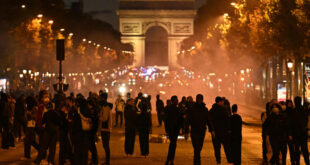
Presently, the Turkish government refuses to recognize election outcomes in several major cities and smaller towns, replacing opposition victors with AKP candidates. This has led to street protests escalating into clashes with military and police units, who have shown a disturbing tendency to target Kurdish civilians under various pretexts. Disturbing videos circulating on social media depict police officers kicking defenseless children who have fallen to the ground.
Erdogan’s government employs military and police aggression against Kurds for several reasons. Firstly, it perpetuates the narrative that Kurds are “terrorists,” denying their identity as non-Turkish citizens. Secondly, it enables the continuation of forced militarized assimilation policies, preventing a resolution to the Kurdish conflict.
It is disconcerting to think that these municipal elections may be the last before Erdogan further reforms the presidency and Turkish constitution, potentially transforming Turkey into a Sharia state and Islamic republic. Erdogan has previously stated that “hostility against Sharia is hostility against Islam” during the graduation ceremony of the Religious Affairs Academy. Moreover, he has repeatedly hinted that these elections could be his last, although he has made similar claims four times in the past.
While Western governments, including the United States and the European Union, adopt a wait-and-see approach, those closely observing Turkey understand the imminent threats to democracy. We are likely to witness a new wave of repressive measures aimed at dismantling the remaining democratic institutions that Kemalist Turkey once cherished. It is imperative that the international community takes notice and stands up for the preservation of democratic values in Turkey before it’s too late.