Geostrategic Media Political Commentary, Analysis, Security, Defense
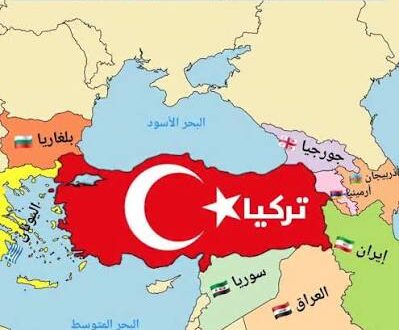

The cases of Türkiye, Iran and Israel show that possessing power does not necessarily mean possessing full strategic autonomy.
Türkiye is a NATO member with broad institutional and economic ties to Europe. At the same time it has built a domestic defence industry, deployed forces beyond its borders and kept relations with Russia and the Gulf states. This has allowed Ankara to pursue policies that do not always align with Washington or its European partners. After the fall of Bashar al-Assad’s government in December 2024, its position strengthened relative to Iran and Russia in Syria, and an analysis by the US Congressional Research Service described Türkiye as potentially the most influential external actor in post-Assad Syria. But that influence is constrained by Ankara’s relations with Syrian political and armed groups, its continuing disagreements with Washington over Kurdish forces, and further by economic vulnerabilities, NATO commitments and uncertainty over Syria’s political transition.
As for Iran and Israel, Assad’s fall removed an important link in Iran’s regional network connecting it to Lebanon and Hezbollah, and Israeli operations have damaged Iranian and allied capabilities. Even so, Iran retains missile forces and regional relationships through which it can impose costs on its adversaries. Israel has shown considerable ability to project force beyond its borders, including its June 2025 strikes on Iranian nuclear and military targets. But the ability to disrupt an adversary is not the ability to determine what follows, and Israel’s security relationship with the United States remains central to its strategic position.
The conclusion is that what we see is a change in capabilities and an uneven distribution of power, not a balance among equivalent poles.