Geostrategic Media Political Commentary, Analysis, Security, Defense

Key points
-
Traditional international institutions are struggling to respond to overlapping crises.
-
Regional powers are acquiring greater diplomatic and security responsibilities.
-
Middle powers can create practical coalitions across geopolitical divisions.
-
Multipolarity requires institutions and rules, not simply additional centres of power.
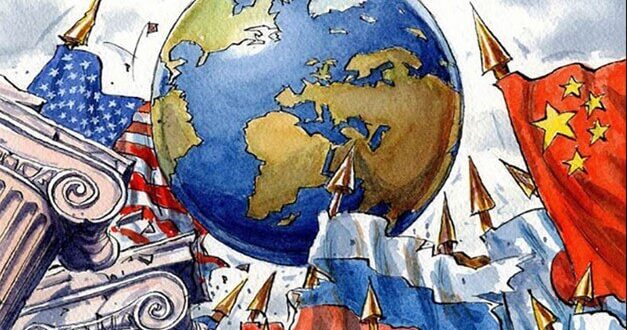
The international system is becoming more fragmented, but fragmentation should not be confused with the emergence of a stable multipolar order. The United States remains the world’s most influential military power, China continues to expand its economic and technological influence, and Russia retains the capacity to disrupt international security. Yet none of these powers has demonstrated an ability to impose a comprehensive political settlement across the major conflicts confronting the international community.
The result is an increasingly complicated geopolitical environment in which regional powers are assuming greater responsibilities. Countries such as Türkiye, Saudi Arabia, India, Brazil, Indonesia and the United Arab Emirates are seeking to expand their diplomatic influence while protecting their economic and security interests. Their growing role reflects not simply the decline of Western influence but also the increasing inability of traditional institutions to respond effectively to regional crises.
The United Nations remains indispensable, but its decision-making structures continue to reflect the distribution of power established after the Second World War. Rivalries among permanent Security Council members frequently prevent meaningful collective action. This institutional paralysis encourages governments to seek alternative diplomatic arrangements, regional partnerships and issue-specific coalitions.
Middle powers can make an important contribution. They often maintain working relationships with competing international actors, possess regional knowledge and have direct interests in preventing conflicts from spreading. Their diplomatic value lies in their ability to facilitate communication, mediate disputes and connect political negotiations with economic incentives.
However, multipolarity is not automatically more peaceful or more democratic. A world with several competing centres of power could become more unstable if regional ambitions are not constrained by credible institutions and international law. The multiplication of military alliances and competing spheres of influence could intensify insecurity rather than reduce it.
The challenge is therefore to build a more representative international system without abandoning the principles of sovereignty, territorial integrity and peaceful dispute resolution. Reforming global institutions, strengthening regional organisations and creating practical mechanisms for cooperation should become priorities.
The emerging world order will not be shaped exclusively in Washington, Beijing, Moscow or Brussels. It will increasingly be influenced by capitals that can connect different geopolitical camps and translate diplomatic access into tangible results.
The defining question of the coming decade is not whether the world will become multipolar. That process is already underway. It is whether its emerging centres of power can develop rules and institutions capable of preventing multipolarity from becoming permanent geopolitical disorder.