Geostrategic Media Political Commentary, Analysis, Security, Defense

Key points
-
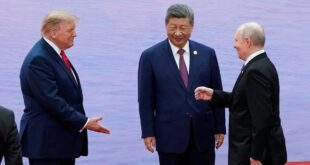
The Trump–Xi meetings demonstrate the importance of managing strategic competition.
-
Artificial intelligence, semiconductors and critical minerals are central to the rivalry.
-
Economic interdependence does not eliminate geopolitical confrontation.
-
Middle powers need diversified economic and technological partnerships.
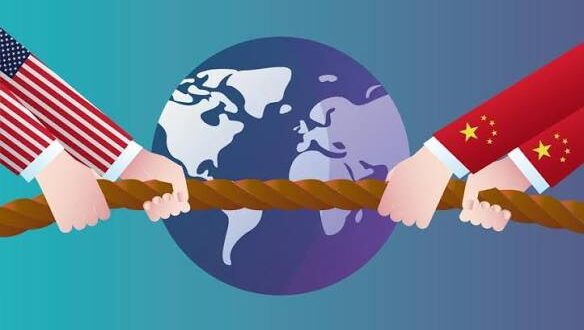
The most consequential relationship in international politics is increasingly defined by a paradox: Washington and Beijing need each other economically while preparing for a prolonged strategic rivalry. Their latest diplomatic engagement illustrates that neither side is ready to abandon competition, but both recognise the dangers of allowing it to become an uncontrolled confrontation.
The relationship has moved well beyond traditional trade disagreements. Artificial intelligence, advanced semiconductors, critical minerals, industrial supply chains, maritime security and technological standards are now central components of national power. Whoever controls the technologies and resources underpinning the next generation of economic growth will possess considerable influence over the international system.
The United States retains important advantages in advanced chip design, research institutions, financial markets and global security partnerships. China, however, has developed formidable manufacturing capabilities, extensive industrial supply chains and significant influence over the processing of critical minerals. These strengths make economic separation extremely difficult and potentially damaging to both economies.
Diplomatic summits can reduce uncertainty, establish communication channels and prevent misunderstandings from escalating into military crises. They cannot, however, eliminate the structural sources of competition. Taiwan remains a particularly dangerous flashpoint, while restrictions on advanced technologies and disputes over regional influence continue to complicate the relationship.
For countries outside the two major powers, this rivalry presents both risks and opportunities. Governments in Southeast Asia, the Middle East, Europe and Africa increasingly face pressure to align their economic and technological policies with competing geopolitical blocs. Yet excessive dependence on either Washington or Beijing can reduce their strategic autonomy.
The answer is not neutrality at any cost. It is diversification. Middle powers should strengthen domestic technological capabilities, expand trade relationships, secure alternative supply chains and cooperate with multiple partners on clearly defined interests.
The United States and China may be able to manage their competition for years. The more difficult question is whether the international system can adapt without becoming divided into hostile economic and technological spheres.
The future will not necessarily belong to the country that defeats its principal rival. It may belong to the power that manages competition without destroying the economic and diplomatic structures on which its own prosperity depends.