Geostrategic Media Political Commentary, Analysis, Security, Defense

Key points
-
Renewed US-mediated negotiations create an opportunity but not a guarantee of peace.
-
European security cannot be negotiated without meaningful European participation.
-
Ukraine requires credible guarantees, not merely temporary assurances.
-
A sustainable settlement must address sovereignty, deterrence and post-war reconstruction.
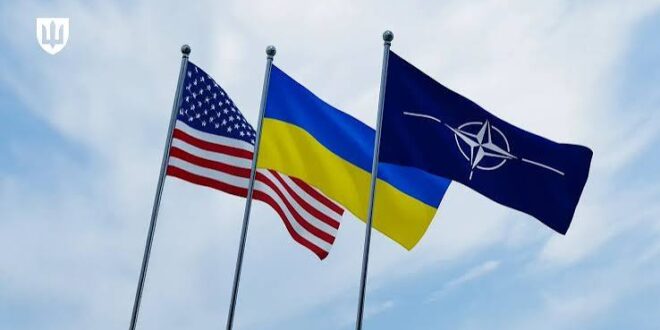
The search for a negotiated settlement in Ukraine is entering another consequential phase, but the central question remains unresolved: can diplomacy end the war without creating the conditions for another one? Renewed negotiations involving Washington, Moscow and Kyiv have reopened the possibility of political progress. Yet the history of European security demonstrates that an agreement reached under pressure is not necessarily an agreement capable of preserving peace.
The United States has considerable diplomatic leverage, particularly through its relationship with Ukraine and its ability to communicate directly with the Kremlin. However, the future of Ukraine cannot be separated from the security architecture of Europe. European governments will carry much of the economic, political and security burden of any eventual settlement. Excluding them from substantive negotiations would weaken the legitimacy and durability of the outcome.
For Kyiv, the distinction between a ceasefire and a peace settlement is fundamental. A ceasefire can stop the immediate killing, but it does not automatically resolve territorial disputes, security guarantees or the political conditions that produced the conflict. Without credible mechanisms to deter renewed aggression, a temporary cessation of hostilities could become an interval during which both sides prepare for another confrontation.
Moscow, for its part, seeks to transform the conflict into a broader negotiation about NATO, European security and the distribution of power across the continent. Western governments must recognise that these issues cannot be addressed through military calculations alone. Nevertheless, recognising Russia’s security concerns does not mean accepting the principle that a sovereign neighbour’s political choices can be determined through force.
Ukraine’s future must remain central to negotiations about Ukraine. Any settlement that treats the country as an object of bargaining rather than a sovereign participant would create a dangerous precedent. Equally important is the question of reconstruction. A politically independent Ukraine will require sustained investment in infrastructure, energy, industrial capacity and institutions.
Europe must therefore prepare for more than the signing of an agreement. It must develop a long-term security framework that combines deterrence, diplomatic engagement, reconstruction and political cooperation.
The real measure of diplomatic success will not be the announcement of a ceasefire. It will be whether the next generation of Europeans can live without fearing that the settlement of one war has simply prepared the ground for another.