Geostrategic Media Political Commentary, Analysis, Security, Defense

Key points
- Recent American diplomatic initiatives have revived the prospect of negotiations between Moscow and Kyiv.
- Disagreements over territory, security guarantees and Europe’s future role remain fundamental obstacles.
- A ceasefire would not necessarily constitute a sustainable peace settlement.
- Successful negotiations require verifiable security arrangements rather than a temporary political understanding.
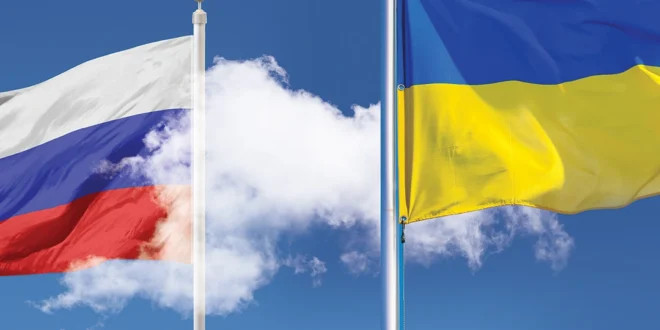
After years of war, military attrition and economic disruption, Ukraine has returned to the centre of international diplomacy through intensified negotiations involving the United States. Yet the central question is no longer whether the parties are prepared to sit at the negotiating table. It is whether they are willing to make concessions that affect the strategic objectives for which they have fought. Wars do not end simply because the parties become exhausted. They end when the calculations surrounding the costs of continued fighting and the prospects of achieving victory begin to change.
Recent diplomatic activity has brought renewed attention to the possibility of a negotiated settlement. American envoys have pursued contacts with Russian President Vladimir Putin in Moscow and Ukrainian President Volodymyr Zelenskyy in Dublin. These efforts followed discussions in Abu Dhabi that did not produce a major political breakthrough but resulted in progress on prisoner exchanges and plans for further engagement. The developments suggest that Washington is attempting to rebuild a direct negotiating process despite substantial differences between Moscow and Kyiv.
The fundamental obstacle is that Russia and Ukraine approach negotiations from fundamentally different strategic positions. Moscow seeks security guarantees concerning the European security architecture, rejects the deployment of NATO forces in Ukraine and maintains its claims over territories it has declared annexed. Kyiv, meanwhile, considers that any agreement lacking credible security guarantees could become little more than a temporary pause, allowing Russia to reorganise its forces and potentially resume military operations at a later stage.
This brings the European role into sharp focus. The war is being fought on European territory, and its security and economic consequences are felt directly across the continent. Yet Moscow appears unwilling to accept a substantial European role in shaping future security arrangements. European governments, in turn, recognise that excluding them from negotiations could leave them responsible for implementing an agreement they had little influence in designing, particularly if it involves troop deployments, defence guarantees or the future of sanctions.
The United States faces a dual challenge: how to end the war without creating the impression that territorial gains achieved through military force have been rewarded, while also preventing the conflict from becoming a prolonged confrontation that drains American resources and intensifies tensions with Russia. A ceasefire could represent a diplomatic achievement, but it would be insufficient without clear monitoring mechanisms, arrangements to prevent escalation and agreements covering prisoners, borders, infrastructure and energy.
The approach of winter adds another layer of urgency. Continued attacks on critical infrastructure and essential facilities increase the cost of reconstruction, deepen risks to energy and food security and reinforce Ukraine’s dependence on external support. Any reduction in Western assistance could also influence Kyiv’s negotiating calculations and weaken its ability to reject terms it considers unacceptable.
Diplomatic success should not be measured by the number of meetings held or the optimism of official statements. It should be measured by the ability to address the underlying causes of the war and prevent its recurrence. An agreement that halts the fighting without resolving the competing security concerns could postpone the crisis rather than settle it.
Peace in Ukraine will therefore be more than a document signed by Moscow and Kyiv under American auspices. It will be a test of the future of the entire European security architecture. Unless Europe participates meaningfully, Ukraine receives credible guarantees and Russia finds a framework that allows it to move beyond the war without perpetuating confrontation, the road to a durable settlement will remain long, even if the guns fall silent temporarily.