


 Geostrategic Media Political Commentary, Analysis, Security, Defense
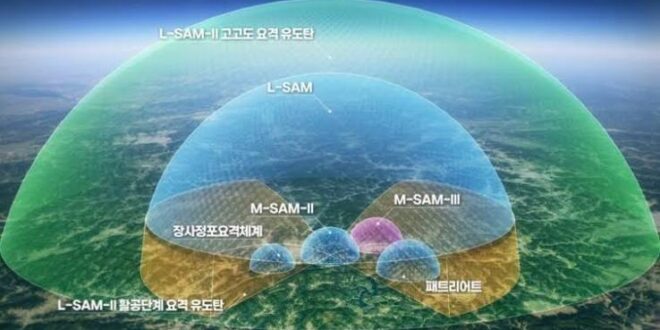

South Korea’s exclusion from Switzerland’s roughly $7 billion long-range air defense system procurement competition on October 29, 2026, presents an interesting paradox. Despite South Korea’s Cheongung-II (M-SAM II) missile defense system being successfully operated against Iranian attacks earlier this year, South Korea was unable to advance toward the final stages of the Swiss competition, which narrowed to France and Italy’s SAMP/T NG and Israel’s Barak MX.
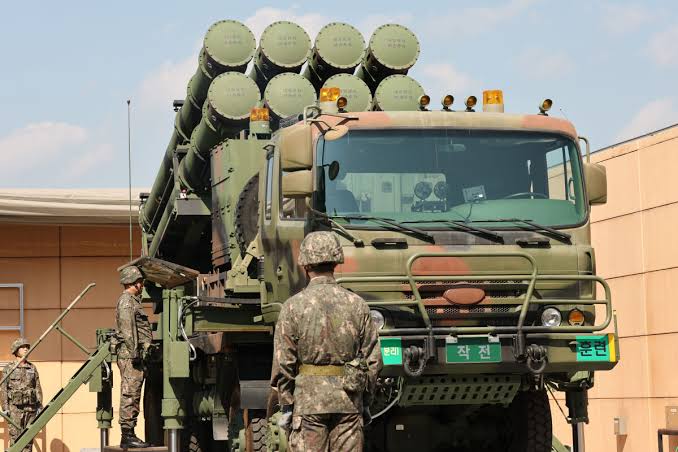
On the other hand, South Korea has secured contracts for Cheongung-II, which amount to approximately $9.5 billion, across the UAE, Saudi Arabia, and Iraq since 2022. Such a contrast illustrates that the Middle East could offer more advantageous conditions for South Korea’s export of missile defense systems.
These differences go beyond acquisition cost. The 2026 Iran war revealed the strategic vulnerabilities of the Gulf states: their dependence on America’s interceptor missile stockpiles, which need to support other regions, including Europe and the Indo-Pacific. In that context, South Korea’s opportunity does not merely rest on supplying missile defense systems but also on providing additional production capacity and wartime replenishment capabilities.
Why Switzerland Matters
Bern’s decision reflects how the introduction of missile defense systems factors into broader industrial and security considerations.
Following delays in American Patriot deliveries, Switzerland began evaluating a second long-range air defense system, preferably manufactured in Europe. The Swiss authorities underscored the importance of reducing their reliance on specific suppliers while expanding the coverage of their national air defense network.
Consequently, a series of elements—industrial participation, supply chain stability, delivery schedule, and political considerations—influenced the procurement process. Nonetheless, the fact that Israel’s Barak MX entered into the final round of competition demonstrates that the European market is not necessarily closed to non-European manufacturers. Meanwhile, Switzerland did not disclose the decisive reasons why South Korea’s proposal was excluded.
Nevertheless, European defense procurement is increasingly being conducted in an environment shaped by NATO interoperability, the European Sky Shield Initiative, and efforts to strengthen regional defense industrial capacity.
The Gulf states are faced with different operational pressures. Although industrial localization matters—particularly for the Saudis—their central task is to maintain missile defense operations during prolonged attacks.
The Iran War Exposed a Replenishment Problem
In this year’s Iran war, the Gulf states confronted ballistic missile and drone attacks, which placed considerable pressure on their air defense inventories.
According to the International Institute for Strategic Studies’ (IISS) analysis, American forces are estimated to have consumed approximately 1,060 to 1,430 rounds of Patriot interceptors during the first 39 days of military operations. This is equivalent to roughly 45 to 61 percent of the prewar US stockpiles.
This exposed a vulnerability that cannot be resolved simply by purchasing launchers. The overall effectiveness of missile defense depends on whether sufficient interceptor missile stocks are preserved throughout sustained operations.
To be sure, American Patriot and THAAD systems remain central to the Gulf region’s air defense architecture. However, replacement interceptor missiles must compete with the demands of the US and its allies in response to Russian, Iranian, and potentially Chinese threats.
By becoming an additional source of supply, South Korea could help the Middle Eastern countries reduce their dependence on a single country’s industrial production base. Yet South Korea’s interceptors cannot directly substitute for Patriot and THAAD missiles. South Korean interceptors require compatible launchers, radars, and fire control systems, making diversification a matter of integrating additional defense layers instead of securing interchangeable munitions.
Why Cheongung-II Changes the Calculation
South Korea’s Cheongung-II was used in combat during Iran’s attack against the UAE in March 2026. Two batteries were reportedly operational, and South Korean lawmaker Yu Yong-weon mentioned that the interception success rate was a stunning 96%.
Such combat experience differentiates Cheongung-II from other newly emerging missile defense systems. Moreover, the fact that it was operated in the UAE side by side with American missile interceptors demonstrates that South Korean equipment could complement existing Western-centric missile defense systems.
In terms of production cost, there exists another potential advantage. According to the Financial Times, the cost of a single Cheongung-II interceptor is around $1.1 million, compared with roughly $3.7 million for a Patriot missile—the PAC-3 version. Irrespective of their differences in engagement ability, cost per unit would become more crucial in a protracted conflict as interceptor depletion would heighten the cost of keeping up the fight.
In that sense, South Korea can support the Gulf countries in achieving additional engagement capacity without relinquishing American weapons systems.
Three Gulf Markets, Three Different Opportunities
In the case of the UAE, which signed a $3.5 billion Cheongung-II contract in 2022, the central task is operational sustainability. Based on its combat experience, Abu Dhabi could seek additional interceptor missiles, shorter delivery schedules, and the expansion of maintenance systems.
Saudi Arabia presents greater industrial opportunities. Its $3.2 billion agreement for ten Cheongung-II batteries coincides with Riyadh’s ambitious defense localization program. Saudi Arabia’s military expenditure localization reached 27.3% in 2025, against a target of reaching 50% by 2030. Under such circumstances, South Korean defense firms could opt for joint production of some components, interceptor stockpiling arrangements, and local maintenance facilities.
Iraq presents a different case. The $2.8 billion Cheongung-II agreement provides an opportunity for a relatively underdeveloped national air defense architecture, although infrastructure constraints and the requirements for system integration would complicate implementation.
Meanwhile, sensitivities surrounding Israeli defense exports in certain Arab countries could offer additional opportunities for South Korean defense companies, although Israeli weapons systems remain competitive in countries where arms imports from Jerusalem are politically acceptable.
South Korea Must Avoid Repeating the Swiss Experience
Despite the aforementioned strengths, South Korea is confronted with a serious constraint called production capacity.
The initial delivery of Cheongung-II to Saudi Arabia and Iraq is expected to be in 2028. Accelerating exports while meeting the South Korean military’s own needs would strain the production systems of LIG Nex1, Hanwha Systems, and Hanwha Aerospace unless they embark on an expansion of their manufacturing capacity.
Nor should South Korea assume that the successful outcome of Cheongung-II in combat automatically guarantees the opportunity for L-SAM exports. L-SAM has not yet accumulated comparative operational experience, with domestic deployment planned to start in the 2027-2028 period.
Therefore, South Korea should prioritize signing measurable replenishment commitments, expanding interceptor production, and establishing a regional logistics support system before advancing with an additional large-scale contract.
Ultimately, the Swiss setback and the growing opportunity in the Gulf region reflect the different approaches to missile defense system procurement. While Switzerland pursues supply chain stability within the fabric of Europe’s industrial system, the Gulf states have direct incentives to diversify their sources of defensive capacity after experiencing Iran’s massive attack.
Taken together, South Korea’s long-term competitiveness will depend more on ensuring interceptor supply when Middle Eastern customers need it dearly, and less on winning additional contracts.
Author’s Bio:
Dr. Ju Hyung Kim currently serves as a Nonresident Fellow with 38 North at the Stimson Center and as a Research Fellow at WARLAB NEXUS. He is also President of the Security Management Institute, a defense think tank affiliated with the South Korean National Assembly. He has been involved in numerous defense projects and has provided consultation to several key organizations, including the Republic of Korea Joint Chiefs of Staff, the Defense Acquisition Program Administration, the Ministry of National Defense, the Korea Institute for Defense Analysis, the Agency for Defense Development, and the Korea Research Institute for Defense Technology Planning and Advancement. He holds a doctoral degree in international relations from the National Graduate Institute for Policy Studies (GRIPS) in Japan, a master’s degree in conflict management from the Johns Hopkins University School of Advanced International Studies (SAIS), and a degree in public policy from Seoul National University’s Graduate School of Public Administration (GSPA). Dr. Kim has written extensively on international security, diplomacy, and alliance management. His work has appeared in a wide range of respected outlets, including the Lowy Institute, The Strategist, CIMSEC, Britain’s World, Geostrategic Media, The Diplomat, War on the Rocks, 38 North, Breaking Defense, Modern War Institute, Small Wars Journal, Geopolitical Monitor, The Geopolitics, Global Defense Insight, Global Taiwan Institute, RealClearDefense, Asia Times, Modern Diplomacy, Global Security Review, Central European Institute of Asian Studies, Visegrad Insight, Defense Opinion, SOF News, Irregular Warfare Initiative, WavellRoom, East Asia Forum, Pearls and Irritations, Institute for Security & Development Policy, Center for Maritime Strategy, Defense Daily, Fulcrum, The Washington Institute for Near East Policy, The Maritime Executive, International Policy Digest, NK News, Korea Pro, E International Relations, Euromaidan Press, Institute for Diplomacy and Economy, the Australian Centre for International Studies, the Times of Israel, the Australian Naval Institute, Parley Policy Initiative, European Guanxi, Eurasia Review, and the Institute for Peace & Diplomacy.



You must be logged in to post a comment.