Geostrategic Media Political Commentary, Analysis, Security, Defense

Geostrategic Media Desk Team
Key Points
- The confrontation involving Iran, Israel and the United States has become a central determinant of regional and international security.
- The Strait of Hormuz links military escalation directly to global energy, trade and maritime security.
- Gulf states face the challenge of protecting their sovereignty and infrastructure while avoiding a wider war.
- Diplomatic engagement remains essential, but any durable agreement will require credible guarantees and reciprocal commitments.
Iran, Israel and the United States: The Risk of a Wider Middle Eastern Confrontation
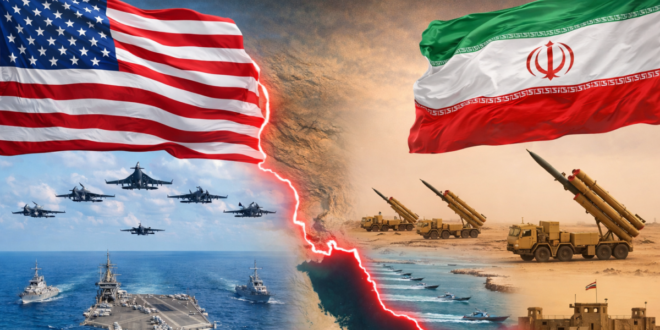
The confrontation involving Iran, Israel and the United States has placed the Middle East at the centre of international security calculations. What began as a conflict shaped by military operations, nuclear concerns and regional rivalries has developed into a wider strategic crisis with implications for maritime navigation, energy markets and the stability of neighbouring states. The most dangerous aspect of the current situation is not simply the possibility of renewed military strikes. It is the risk that a confrontation involving several actors could become increasingly difficult to contain once critical infrastructure, commercial shipping and regional security networks are drawn into the conflict.
The Strait of Hormuz is central to this equation. Its strategic importance means that military developments around the waterway can rapidly influence global markets and diplomatic calculations. Restrictions on shipping, threats against commercial vessels and rising insurance costs affect countries far beyond the Gulf. Energy-importing economies in Asia and Europe are particularly exposed, while producers and transit states face pressure to protect infrastructure and maintain export routes. Maritime security has therefore become inseparable from the wider question of regional stability.
The Gulf states occupy a particularly sensitive position. Saudi Arabia, the United Arab Emirates, Qatar, Kuwait, Bahrain and Oman have different relationships with Washington and Tehran, but all have an interest in avoiding a conflict that could threaten their economic development and national security. They must balance their security partnerships, domestic priorities and diplomatic relationships while resisting attempts to turn their territories or infrastructure into operational platforms for escalation. Their capacity to coordinate diplomatically could become a decisive factor in preventing the conflict from spreading.
Iran’s strategic calculations are also shaped by its relationship with the United States, Israel and regional actors. Tehran seeks to preserve deterrence, protect its national security interests and secure relief from economic pressure. Washington and its partners, meanwhile, seek limits on Iran’s nuclear capabilities and a reduction in threats to regional security and maritime navigation. These objectives remain difficult to reconcile, particularly when the parties distrust the durability of commitments made by their opponents. The challenge is to establish a negotiating framework in which security concerns are addressed through reciprocal and verifiable steps rather than unilateral demands.
Diplomatic channels have not disappeared. Messages transmitted through intermediaries and discussions involving regional governments demonstrate that political engagement remains possible, even when public rhetoric and military preparations suggest otherwise. The involvement of states such as Türkiye, Pakistan, Saudi Arabia, Egypt and Qatar could help create communication channels and provide political support for de-escalation. However, mediation will only be effective if the parties are prepared to make compromises and if any agreement includes mechanisms for implementation and monitoring.
A wider war would carry consequences extending far beyond the immediate battlefield. It could disrupt global energy markets, undermine commercial shipping, increase economic uncertainty and deepen divisions among major international powers. It could also weaken the capacity of regional governments to pursue economic diversification and development. The strategic choice facing the region is therefore clear: continued escalation would multiply risks without guaranteeing a decisive political outcome. A negotiated framework, supported by credible guarantees and regional participation, remains the more sustainable path towards security. The future of the Middle East will depend on whether its principal actors can recognise that military advantage and lasting political stability are not necessarily the same thing.