Geostrategic Media Political Commentary, Analysis, Security, Defense

By Geostrategic Media Desk Team
Published: 28 October 2026
Key Points
- US technology companies are competing to acquire Israeli semiconductor expertise as they seek to reduce the cost of artificial intelligence and strengthen America’s technological position against China.
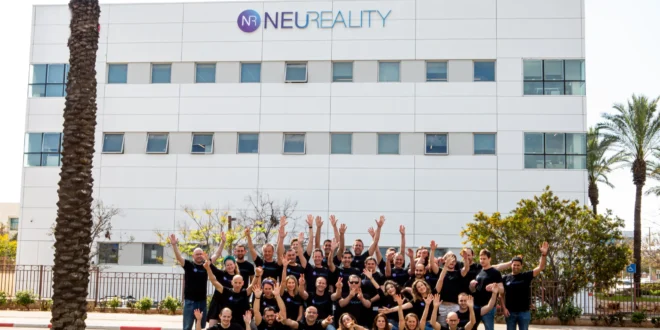
- On 26 October 2026, US company Unconventional AI agreed to acquire Israeli firm Neureality in a deal reportedly valued at $150 million–$200 million. The buyer is valued at $4.5 billion.
- Neureality’s investors include South Korean technology companies Samsung and SK Hynix, as well as American and Israeli investment funds. Varana Capital is identified as its largest shareholder.
- Neureality developed technologies designed to improve data movement and processor utilisation in AI data centres. The company has reported significant efficiency gains in selected tests, although independent testing is needed to establish the savings achievable in commercial use.
- The transaction reflects a broader strategic alignment between Washington and Israel in semiconductors, AI infrastructure and supply-chain security amid competition with China.
- The deal also raises questions about AI’s military and intelligence applications and the responsibilities of companies and investors involved in the sector.
US technology companies are racing to acquire Israeli expertise in semiconductor manufacturing as competition intensifies to lower the cost of artificial intelligence and strengthen America’s technological advantage over China.
The latest development in this race came on 26 October 2026, when US company Unconventional AI agreed to acquire Israeli firm Neureality in a deal valued at between $150 million and $200 million. The acquiring company is valued at $4.5 billion.
The transaction comes amid expanding technological cooperation between Washington and Tel Aviv and US efforts to build alliances that can secure American leadership in semiconductors and data centres. Acquisitions of Israeli companies are therefore becoming part of an economic and strategic competition that extends beyond the US domestic market.
Neureality’s story began in 2019, when three Israeli engineers—Moshe Tanach, Zvika Shmueli and Yossi Kasus—founded the company and established its headquarters in Caesarea, between Haifa and Tel Aviv. Before launching the venture, the founders had spent years working at semiconductor companies, including Intel, Marvell, Mellanox and Habana Labs.
They focused on developing technologies that would enable data centres to run AI applications at lower cost, entering a market preparing for a wave of major investment.
A year later, American AI engineer and entrepreneur Naveen Rao became one of the company’s early investors, when Neureality was valued at approximately $12 million, according to the Israeli business newspaper Globes.
In February 2021, Neureality announced that it had raised $8 million and that Rao, a former AI-products executive at US chipmaker Intel, had joined its board.
Rao had previously founded Nervana Systems, a company specialising in AI processors that Intel acquired in 2016 for more than $400 million.
He later co-founded MosaicML, which developed AI models. US data-analytics company Databricks acquired MosaicML in 2023 for approximately $1.3 billion. In 2025, Rao founded Unconventional AI to develop processors designed to consume less energy.
His new venture attracted substantial funding within months of its establishment. In December 2025, the company announced that it had raised $475 million in a funding round led by US technology investors Andreessen Horowitz and Lightspeed, with participation from Sequoia Capital, Amazon founder Jeff Bezos and other investors. The financing valued the company at $4.5 billion. Rao invested $10 million of his own money.
Neureality’s backers include global companies such as South Korea’s Samsung and SK Hynix, alongside American and Israeli investment funds. Varana Capital is identified as the company’s largest shareholder.
The fund is led by American investor Ezra Gardner, who also sits on Neureality’s board. Documents submitted to the US Securities and Exchange Commission in 2025 indicate that Varana focuses on investments in companies connected to Israel and participates in their management and in advising on mergers and acquisitions.
Neureality has raised approximately $105 million since its founding, according to Israeli business media. Globesestimated the current acquisition price at $150 million–$200 million, compared with a previous valuation of $220 million in 2023, which the newspaper attributed to the US financial-data provider PitchBook. This suggests that the company could be sold for less than one of its earlier valuations, despite the years of work and capital invested in developing its products.
The agreement includes a combination of cash and shares in the US company, giving shareholders the opportunity to benefit if the acquirer’s value rises in the future. Their returns will vary according to their ownership stakes and the terms of the sale. The transaction also gives them a route into an American venture with substantial financing and ambitions to enter a new processor market.
The most striking aspect of the deal, however, is that the US company, despite the substantial capital it has raised, needs the engineering expertise Neureality accumulated over seven years. In an announcement on 26 October, Rao explained that his company had initially expected to spend about three years on research and development and another five years bringing a commercial product to market. Progress, however, accelerated beyond expectations with the help of AI tools, leaving the company in need of engineers capable of turning designs into chips that could actually be manufactured and sold.
Rao said in the acquisition announcement that building a team capable of producing physical chips and developing the surrounding systems was one of the industry’s most difficult challenges. Bringing Neureality’s team into the company, he argued, would significantly accelerate its plans.
Approximately 40 Neureality employees are expected to join the American group, including the founders and members of the development teams. An engineering presence in Israel is expected to continue. The transaction is scheduled to close in the final quarter of 2026, subject to the fulfilment of closing conditions.
Why Are American Companies Competing for Chips?
The importance of the acquisition begins with the cost of running AI systems. Every request submitted to a model such as ChatGPT requires computing operations inside data centres equipped with advanced processors. As the number of users and applications grows, so do the costs of purchasing processors and supplying the electricity, cooling and networking infrastructure needed to operate them.
Figures from the International Energy Agency illustrate the scale of the challenge. On 16 April 2026, the agency indicated that data centres consumed approximately 485 terawatt-hours of electricity worldwide in 2025, with consumption projected to reach 950 terawatt-hours by 2030. Meanwhile, capital expenditure by five major technology companies exceeded $400 billion in 2025 and was expected to increase by approximately 75% in 2026.
Against this backdrop, companies are seeking ways to extract more computing work from the processors they already purchase. Some processing capacity can remain underused while systems wait for data or distribute workloads across different components, even as electricity and cooling continue to be consumed. Neureality’s technologies address this problem through chips and software designed to organise data movement and help processors handle more requests using the same resources.
In June 2024, Neureality announced test results indicating that its systems, when combined with processors from US company Qualcomm, could reduce the cost of running certain AI applications by an average of up to 90% compared with systems using Nvidia processors, one of the world’s largest chipmakers.
The tests were conducted on different configurations and under Neureality’s supervision. The results therefore depend on the applications and system components used, and broader independent testing would be necessary to determine the savings achievable in commercial deployments.
During product development, Neureality worked with international companies including US computing company IBM, British processor-design firm Arm and American chipmaker AMD. Taiwan Semiconductor Manufacturing Company (TSMC), the Taiwanese semiconductor manufacturer, produced the company’s first processor, allowing Neureality to move beyond design into testing systems intended for use in data centres.
Investment in developing the technology also extended to Brussels. Neureality received a €2.5 million grant from the European Innovation Council, an EU body, for a project running from July 2023 to June 2025. The objective was to complete development of its processor and test it before commercial launch. The Council’s fund subsequently participated in a $20 million investment round in the company in 2024.
Project documents published by the European Commission indicate that Neureality held 24 patent families at the end of the project, including six granted patents and 18 pending applications. These patents and applications concerned improvements in workload distribution and data transfer between processors. The documents also recorded tests showing that one large language model’s performance improved by more than 60% in a specific comparison.
Naveen Rao’s comments illustrate the economic stakes. On 24 October 2026, he warned that the rapid expansion of data centres could exhaust the United States’ available surplus electricity capacity within a few years. He also estimated that the market for running AI models after their training could reach $10 trillion over the coming decade.
Rao’s company aims to develop processors that could improve operating efficiency by a factor of 1,000 compared with conventional systems. This remains a research and development goal, with significant challenges still to be overcome in manufacturing and commercial production.
In December 2025, Andreessen Horowitz, one of the venture’s major backers, highlighted the technology’s potential to reduce energy consumption while also acknowledging the difficulties involved in scaling it. These challenges help explain why Neureality’s experience in producing chips is particularly valuable to the American company.
What Do the United States and Israel Gain?
The Neureality transaction follows several multibillion-dollar American acquisitions of Israeli semiconductor companies. One prominent example was Nvidia’s acquisition of Mellanox in 2020 for approximately $7 billion, giving Nvidia access to high-speed networking technology used to connect thousands of processors inside data centres. Intel acquired Israeli AI-chip specialist Habana Labs in 2019 for approximately $2 billion.
In 2024, Nvidia expanded its acquisitions in Israel to include Deci, a company developing technologies to improve AI-model performance. The Israeli business newspaper Calcalist valued that transaction at approximately $300 million. Nvidia subsequently acquired Run, a company specialising in processor-resource management, for approximately $700 million.
In September 2026, American semiconductor company Microchip Technology completed its acquisition of Israeli company Hailo, which develops AI processors for devices and industrial systems.
Together, these transactions cover complementary parts of the AI industry, from processors themselves to the networking and software systems that determine how efficiently they operate. American groups often retain Israeli development centres and engineering teams after completing acquisitions.
A joint report published in September 2025 by the Israel Innovation Authority and European platform Dealroom identified approximately 1,500 deep-tech companies in Israel. These companies had raised $28.6 billion in investment between 2019 and 2025.
These commercial interests intersect with US policy on AI. On 23 July 2025, President Donald Trump issued an executive order to expand exports of the American AI technology stack to allied countries. The policy covered chips, servers, software and data centres, with the stated aim of strengthening American technological leadership and reducing global markets’ dependence on competing countries’ technologies.
China stands at the centre of this competition. Washington uses advanced-chip export controls to limit Chinese companies’ access to certain computing capabilities while seeking to expand the reach of American technology among allied countries.
Control over processors and the systems surrounding them offers the United States economic and security advantages, particularly because companies in China and other countries depend on technologies and components subject to US licensing rules.
In a study published on 29 July 2026, Israel’s Institute for National Security Studies researcher Hadas Lorber argued that leadership in AI had become closely linked to control over the entire production chain, from chip design and manufacturing to energy and data centres. She called for Israel to strengthen its position within the US-led technology ecosystem and use the partnership to develop industrial capabilities serving both economic and security and military needs.
Cooperation between Washington and the Israeli government had also acquired a formal framework in the months preceding the acquisition. In December 2025, Israel joined the US-led Pax Silica initiative, which seeks to secure supply chains for semiconductors, minerals and energy among partner countries.
On 16 January 2026, the two governments signed a joint declaration in occupied Jerusalem launching a strategic partnership in AI, semiconductors, research and development. Israeli Foreign Minister Gideon Sa’ar described Israel as an important asset for US national-security interests.
The initiative extended into the Gulf when Qatar and the United Arab Emirates joined in January 2026, within a framework involving Israel and other industrial powers, including Japan, South Korea and the United Kingdom.
This development coincided with Israeli proposals to divide responsibilities in the AI industry among American technology, Israeli expertise, and Gulf capital and energy resources. Such an arrangement could expand Israel’s technological presence in regional projects, although the participating countries maintain different kinds of bilateral relationships.
Washington’s ability to influence these projects is also evident in its control over chip-export licences. On 19 November 2025, the US Commerce Department announced approval for exports equivalent to 35,000 advanced processors to each of two companies: UAE-based G42, which specialises in AI and cloud computing, and Saudi Arabia’s Humain, owned by the Public Investment Fund. The licences were subject to security and oversight conditions.
This policy gives the United States leverage over Gulf AI projects, which need American processors to operate new data centres as they compete with China for technology and markets.
In Gaza, the military applications of Israeli AI have raised more serious concerns. During its assault on the territory, the Israeli military used systems to analyse Palestinian data, classify individuals and generate target lists.
In a report published in September 2024, international human-rights organisation Human Rights Watch documented the use of digital tools, including Lavender to classify people as potential targets and Habsora to generate lists of buildings for attack. The organisation warned that reliance on data and assessments that may be flawed could put civilians at risk and violate international humanitarian law.
The use of these systems illustrates the growing role of technology in surveillance and targeting operations conducted by the Israeli military. It also raises questions about the responsibilities of companies and investors connected to the sector.
This environment prompts broader questions about responsibility for the end use of technology, particularly as investment expands in an industry where civilian applications overlap with military and intelligence capabilities.
Ultimately, the Neureality deal illustrates how the interests of American technology companies intersect with Israel’s economic and technological objectives. The American buyer gains engineering expertise developed over years to accelerate chip production, while Israel retains a place in global technology-development chains. At the same time, Washington is seeking to expand its influence through control over processors, energy and computing infrastructure—resources that have become central to the global competition over artificial intelligence.