Geostrategic Media Political Commentary, Analysis, Security, Defense
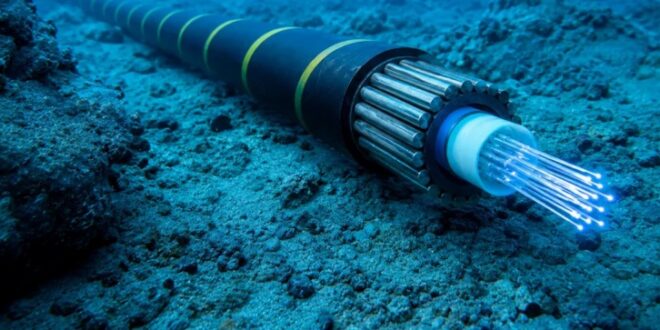

For decades, the Strait of Hormuz has meant one thing: oil. Tehran is now pointing the world’s attention below the surface. On 21 October, a senior Revolutionary Guards general warned that Iran could target internet cables, including seven major cables running under the strait, if the United States attacks Iranian civilian infrastructure. This is a new kind of leverage, and the world should treat it seriously.
omanobserver
It arrives against a dangerous backdrop. The strait has been a flashpoint since the US and Israel struck Iran in late February, and Iranian forces have stepped up attacks on tankers and cargo ships in recent weeks. Oil was the first lever. Data is the second.
omanobserver
omanobserver
The logic is easy to see. Tankers are visible, and an attack on them invites a naval response under the banner of freedom of navigation. The seabed is different. In narrow, shallow passages like Hormuz, cables can be threatened by anchors, drones, divers or small submarines. Such incidents leave room for denial, because proving who did it is slow and uncertain. The precedent exists: in 2024, three Red Sea cables were cut after a ship hit by Iran-aligned Houthi militants dragged its anchor across the seabed. Tehran has also floated a softer form of coercion. Its military spokesman said Iran would impose fees on internet cables, a claim that sits uneasily with Hormuz’s status as an international strait. Iran has signed but not ratified the UN Convention on the Law of the Sea and has long read transit rights narrowly.
The stakes should not be exaggerated, though. The popular image of Iran flipping a switch and darkening the planet is wrong. Analysts note that the strait carries only a fraction of global bandwidth, and that damaging its cables would not shut down the world’s internet. Cables there have been routed through Omani waters and mainly serve Gulf states, which means the first and worst victims would be Iran’s neighbours. Some traffic could be rerouted through backup capacity.
Even so, “limited” is not “harmless.” Operators have moved routes toward Oman, but the FALCON and Gulf Bridge International cables still run through Iranian territorial waters. Experts warn that damage could ripple through banking systems, stock exchanges, energy operations and cloud services across several continents. Repairs would be the real problem, because repair ships operating in the strait would be easy targets for missiles and drones. A cut that could be fixed in days elsewhere could last weeks here.
That is the strategic dilemma. How do you deter a state that can threaten the digital economy at little cost and with plausible deniability? Three answers stand out.
First, resilience. Gulf governments and cable consortia should add routes, landing points and spare capacity that bypass the strait. Redundancy is the cheapest deterrent, because it shrinks the payoff of an attack.
Second, protection and repair. Navies that guard the surface must also watch the seabed, and repair vessels need pre-agreed security so a fault does not become a hostage situation. This is costly, but far less costly than a prolonged outage.
Third, clear red lines. Any state that sabotages or taxes cables should know in advance that doing so will carry diplomatic and economic consequences, backed by a broad coalition rather than one capital.
There is also a case for restraint. If the cables are a reason for Western and Arab governments to urge caution against a wider war, that is not weakness. It is a recognition that modern conflict can reach far beyond the battlefield.
The security of the Gulf now depends on the glass fibres on its seabed as much as on the oil moving above them. We should plan accordingly, before a crisis forces our hand.