Geostrategic Media Political Commentary, Analysis, Security, Defense
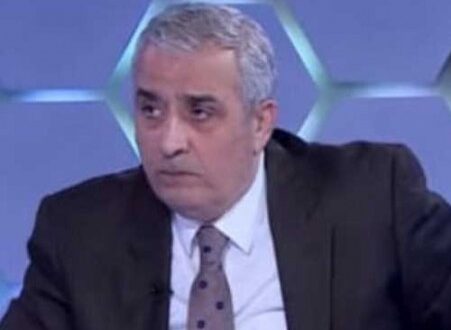

By Eng. Saleem Al-Batayneh
Anyone in the Arab world who still thinks and analyses for a living knows a particular kind of sadness. It is not despair over one country’s crisis. It is the sense of an intellectual darkness settling over the whole region, deeper in some places and lighter in others, but present everywhere.
I have spent a long time studying how political awareness is formed in the Arab world, and I keep returning to the same starting point: our crisis is first a crisis of thinking. I counted more than sixty books that dissect, critique and deconstruct Arab thought. Among the best known are the work of the Moroccan philosopher Mohammed Abed al-Jabri, the Algerian historian Mohammed Arkoun, the Syrian writer George Tarabishi and the Egyptian thinker Abdel Wahab El-Messiri. These scholars spent decades on the question, and although they differed, their conclusions overlap. A great deal of Arab thinking looks backward. It tends to judge by fixed standards rather than analyse, to reach for the emotional and the absolute, and to retreat to the past when the present gets uncomfortable. Their shared diagnosis was that the inherited culture became a source of crisis when it was treated as something to preserve rather than something to question.
The point I want to press is that this is a habit, not a destiny. Habits can be changed. But changing them means giving up the most comfortable explanation we have.
Consider how much political energy goes into assigning blame. In school lessons, on pulpits and in the media, many Arabs learn one tidy formula: our poverty, unemployment, corruption and decline all have an outside author. This is false, and it is dangerous, because it removes responsibility from everyone who holds it. Outside powers have certainly done harm in the region, and no honest account denies that. But a people that explains every failure by pointing elsewhere will never examine its own institutions, and never fix them.
The record of unfinished promises is a good test. The Arab states signed a joint defence agreement and endorsed a common market, ideas that were meant to give the region collective weight. Neither ever became a living reality. Meanwhile, other regions moved from deep poverty and devastation to prosperity and integration by building institutions and investing in people. Their lesson is not that some peoples are gifted and others are not. It is that governance, education and the habit of self-criticism produce results over time.
We also live with a painful contradiction. We read verses about unity and remain divided. We memorise sayings about justice and tolerate injustice. In too many places we have taught people to receive ideas through the ear rather than test them with the mind. A society that does this ends up outsourcing its judgment to whoever speaks most confidently.
So what is the way out? It begins with a serious, unsentimental project of critique. We need to re-read our history rather than recite it, define what we mean by identity and ideology, and study our inherited ideas in order to understand their place in how we think, not simply to defend or reject them. We should keep what is useful, discard what is not, and learn to look in the mirror and admit what we see.
Such a project will not be popular. Governments fear free inquiry, and audiences prefer flattery to analysis. But the alternative is to remain spectators to our own history, asking every few years where the Arabs went.
The question is not rhetorical. Until Arab thought is willing to examine itself, the answer will keep arriving in the form of new crises. The most urgent task for writers, teachers and citizens is to bring that reasoning back, so that it can again take an interest in our condition and our fate.
Eng. Saleem Al Batayneh was a member of the Jordanian Parliament.