Geostrategic Media Political Commentary, Analysis, Security, Defense

Amanda Lee
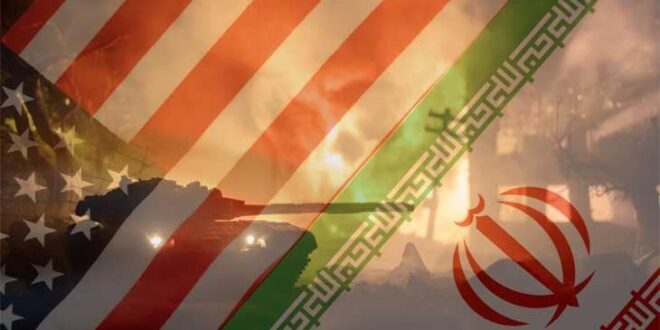
The Middle East has entered a dangerous phase in which military superiority no longer guarantees political victory, alliances offer diminishing assurances of protection, and the costs of regional confrontation are increasingly borne by Arab societies. What began as an effort by Benjamin Netanyahu’s government to reshape the regional order after the October 7, 2023, Hamas-led attacks has evolved into a much wider struggle over deterrence, strategic autonomy and the future balance of power. Gaza, Lebanon, Yemen, Syria and Iran have all become part of this contest, while the Gulf states and Jordan face the consequences of a conflict whose direction they cannot fully control.
The central lesson is stark: the destruction of military infrastructure and the elimination of political or military leaders do not necessarily produce surrender. Israel has demonstrated its ability to inflict devastating damage, but the strategic objective of translating battlefield superiority into a durable regional settlement remains elusive. Meanwhile, the United States has discovered once again that overwhelming firepower cannot guarantee a quick political outcome when its adversary is prepared to absorb extraordinary costs and retain the capacity to retaliate.
For the Arab world, the danger is not simply another war. It is the possibility that the region will emerge from the current confrontation with weaker states, more fragile economies and a security order shaped by external powers rather than by the countries that must live with its consequences.
The limits of military supremacy
In Gaza, Israel’s campaign has inflicted catastrophic destruction and civilian suffering. Hamas has lost senior commanders and much of its governing and military infrastructure, yet the Palestinian question has not disappeared. The refusal of Palestinians to abandon their national aspirations demonstrates the limits of a strategy that treats political resistance primarily as a military problem. Palestinian displacement, the destruction of civilian infrastructure and the absence of a credible political settlement risk deepening the conditions in which future confrontations emerge.
Lebanon offers a related lesson. Israel’s extensive campaign against Hezbollah, including the killing of senior leaders, dealt the organisation serious blows but did not eliminate its capacity to remain a factor in regional security calculations. In Yemen, repeated strikes against Houthi positions and infrastructure have likewise failed to produce a straightforward military resolution. These cases differ considerably in their political circumstances and military capabilities, but they point to the same strategic dilemma: degrading an adversary is not equivalent to resolving the conflict that sustains it.
Syria presents a different challenge. The collapse of the former government created a period of uncertainty in which Israel expanded its freedom of military action and struck Syrian military assets. Yet the destruction of weapons and facilities does not automatically translate into lasting political influence over Syria’s new authorities. A regional power may exploit a temporary vacuum, but consolidating a favourable order requires diplomacy, legitimacy and arrangements that can endure beyond the immediate aftermath of war.
Iran has become the most consequential test of this approach. The confrontation between Israel, Iran and the United States has demonstrated the capacity of a state with substantial missile and drone capabilities to impose costs on stronger opponents and threaten infrastructure far beyond the immediate battlefield. Even severe damage to military installations cannot guarantee the collapse of a political system or extinguish the capacity for retaliation.
This does not mean Iran is invulnerable, nor that its military strategy has been cost-free. Its infrastructure, economy and population are exposed to enormous risks. But the belief that sustained bombardment will inevitably force political capitulation is no more reliable than the assumption that endurance alone guarantees strategic victory.
The difference between military success and political success is the defining feature of this conflict.
Washington’s dilemma and Beijing’s opportunity
The United States has long relied on its ability to project overwhelming force, control escalation and compel adversaries to accept negotiated outcomes. That approach has produced important successes, but it becomes less reliable when an opponent can sustain resistance, disrupt critical trade routes and impose economic costs on a much wider international audience.
Iran’s geographic position gives it leverage that extends beyond the battlefield. The Strait of Hormuz is central to international energy markets, and prolonged disruption to shipping through the waterway would affect oil and gas supplies, insurance costs, transport and inflation. Threats to other maritime routes, including Bab al-Mandab, could compound the pressure. The consequences would reach far beyond the Gulf, affecting energy-importing economies, agricultural production and the cost of living.
The resulting dilemma for Washington is not merely whether it can destroy additional Iranian military assets. It is whether doing so would produce a political settlement favourable to American interests or prolong a conflict whose costs continue to rise. A military campaign can weaken an adversary while simultaneously increasing the economic burden on allies, unsettling markets and creating pressure at home.
Domestic politics matter, particularly as American leaders approach congressional elections. Higher energy prices, inflation and uncertainty over the duration of a conflict can narrow the political space for escalation. An administration seeking a decisive victory may therefore find itself caught between the desire to demonstrate strength and the need to prevent an open-ended war.
China, meanwhile, has an opportunity to benefit strategically from American difficulties without necessarily seeking a direct confrontation. A prolonged conflict can consume Washington’s military resources and diplomatic attention while reinforcing Beijing’s argument that the United States struggles to deliver lasting stability in the Middle East. China also has significant economic relationships with Gulf states, making regional stability and uninterrupted energy flows important to its own interests.
Claims that Beijing has supplied particular battlefield components, intelligence or satellite imagery should be assessed against independently verifiable evidence rather than assumed. Nevertheless, the broader strategic calculation is clear: China can pursue diplomatic and economic advantages while seeking to avoid being drawn into a direct military confrontation.
For Arab governments, this creates a complicated environment. They cannot assume that Washington will always be willing or able to protect them from the consequences of a conflict it helps shape. Nor should they assume that Beijing will provide a security alternative equivalent to the American military presence. The competition between the two powers creates opportunities for diversification, but it also exposes the limits of relying on either one as the ultimate guarantor of regional stability.
The Gulf states are paying the price
The Gulf monarchies face one of the most difficult strategic calculations. They depend on secure maritime routes, reliable energy exports, foreign investment and infrastructure that can sustain long-term economic transformation. A regional war threatens all four.
Attacks on energy installations, ports, airports, desalination plants or other critical infrastructure could impose costs that extend well beyond immediate physical damage. Desalination is especially significant in a region where reliable access to fresh water is a fundamental national security concern. Even limited disruption can create economic and humanitarian risks, while prolonged insecurity undermines investor confidence and raises the cost of protecting essential services.
The Gulf states also confront a political dilemma. Their security partnerships with Washington remain important, but they have little interest in becoming launchpads for a war whose consequences could fall directly on their own populations and economies. They may support efforts to contain Iranian threats while simultaneously opposing a campaign that risks triggering wider retaliation.
This tension exposes a central weakness in the region’s existing security arrangements. A military partnership does not necessarily give a state decisive influence over the decisions of its stronger ally. Nor does the presence of advanced American weapons guarantee that every attack can be prevented. Defence systems can intercept many threats, but no system offers absolute protection against missiles, drones, cyberattacks or attacks on vulnerable infrastructure.
The lesson is not that the Gulf should abandon its partnerships with the United States. It is that partnerships must be complemented by stronger regional diplomacy, diversified economic relationships and mechanisms that give Arab governments a meaningful voice in decisions that could expose them to war.
Jordan faces a different but related set of vulnerabilities. Its geographic position, limited resources and dependence on regional stability make it particularly sensitive to cross-border escalation, disruption to trade and energy markets, and the displacement of populations. For Amman, preventing a wider regional conflict is not an abstract diplomatic preference; it is a direct national security priority.
Why another war would be more dangerous
The possibility of renewed escalation must be taken seriously, but it should not be treated as inevitable. Military preparations, hostile rhetoric and unresolved disputes can increase the risk of another confrontation without proving that political leaders have already decided to resume war.
The danger lies in the interaction of several pressures: Iran’s incentive to rebuild and strengthen its deterrent capabilities; Israel’s desire to prevent Iran from restoring military assets it regards as threatening; Washington’s demand for an outcome it can present as a victory; and the competing regional ambitions of states that fear either Iranian dominance or an Israeli-led security order.
Each side may believe that additional pressure will improve its bargaining position. Yet the same logic can lead opponents to conclude that they must escalate before their position deteriorates. When both sides believe time is working against them, the space for compromise narrows and the risk of miscalculation increases.
The consequences of another major war would be particularly severe for Arab countries. A prolonged disruption of the Strait of Hormuz could destabilise energy markets, while threats to Bab al-Mandab could disrupt shipping between Asia and Europe. Higher oil and gas prices might benefit some exporters in the short term, but that advantage could be overwhelmed by attacks on infrastructure, interrupted production, rising insurance premiums and uncertainty over investment. Energy-importing Arab economies would face additional pressure from inflation and higher transport and food costs.
The most dangerous scenario would be a conflict that expands beyond conventional military operations. Speculation about the use of tactical nuclear weapons illustrates the stakes, but such a possibility must not be confused with evidence that their use has been decided or is imminent. Any nuclear escalation would carry catastrophic humanitarian, environmental and geopolitical consequences, with Arab countries potentially exposed to radioactive contamination, economic collapse and uncontrollable regional escalation.
A war of this magnitude would not guarantee victory for any participant. Even if one side emerged with a substantial military advantage, the destruction of infrastructure, disruption of trade and collapse of political trust could leave the entire region less secure.
The Arab world needs a strategy of its own
The most urgent task for Arab governments is to prevent the region from becoming the arena in which others settle their strategic rivalries. That requires a shift from reactive diplomacy to a coordinated regional strategy.
First, Arab states should intensify diplomatic efforts to secure a sustainable political settlement between Washington and Tehran, while working to prevent further escalation between Israel and Iran. This does not require agreement with Iran’s regional policies or the abandonment of legitimate security concerns. It requires recognising that a prolonged war would threaten Arab interests regardless of which side claimed victory.
Second, Gulf states and Jordan should strengthen regional mechanisms for crisis communication, maritime security and the protection of critical infrastructure. Cooperation on early warning, missile and drone defence, emergency planning and the resilience of energy and water systems would reduce vulnerabilities. These arrangements should complement, rather than replace, wider diplomatic efforts.
Third, Arab governments need a more coherent approach to strategic autonomy. Diversifying defence suppliers and international partnerships can reduce dependence on any single power, but genuine autonomy requires more than purchasing weapons. It depends on economic resilience, domestic technological capacity, secure supply chains and the ability to make foreign policy decisions without being drawn into conflicts against national interests.
Fourth, regional leaders must address the political conflicts that repeatedly undermine stability. The Palestinian question cannot be indefinitely subordinated to changing military calculations or postponed until a new regional order is established. A credible political process grounded in Palestinian rights and self-determination is essential to any lasting settlement. The same broader principle applies elsewhere: security arrangements cannot substitute for legitimate political institutions and negotiated solutions.
Finally, the Arab world needs a collective security concept that recognises the diversity of national interests while establishing common rules for managing disputes. The objective should not be to create an anti-Iran bloc or an anti-Israel alliance at any cost. It should be to prevent any regional or external power from unilaterally determining the security choices of Arab states.
That is a more difficult undertaking than signing defence agreements or convening diplomatic summits. It requires sustained coordination, compromise among Arab governments and a willingness to place long-term regional stability above short-term competition.
Peace is a strategic necessity
The war surrounding Iran has exposed the limits of military supremacy, the vulnerabilities of existing alliances and the economic interdependence that binds the Middle East to the wider world. It has also demonstrated that Arab states can be deeply affected by decisions over which they exercise limited control.
The choice facing the region is not between trusting Washington and trusting Tehran, nor between accepting Israeli dominance and endorsing Iranian ambitions. It is between allowing the Middle East to remain trapped in a cycle of competing hegemonies and building a regional framework that gives Arab states greater control over their own security.
A political settlement will require difficult compromises, credible guarantees and recognition that no country can obtain lasting security by imposing permanent insecurity on its neighbours. It will not erase regional rivalries or resolve every dispute. But it can prevent those rivalries from becoming an endless sequence of wars whose costs fall disproportionately on ordinary people.
The Arab world cannot afford to wait until the next escalation makes diplomacy impossible. It must act now to protect its populations, preserve its economic foundations and build the institutions needed to manage regional competition.
The strategic objective should be clear: not victory for one regional power over another, but an Arab security order in which war is no longer the principal instrument for deciding the future of the Middle East.