Geostrategic Media Political Commentary, Analysis, Security, Defense

Amelie Shawn
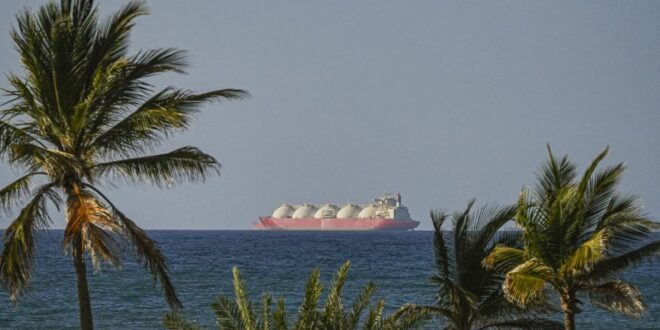
Some ships pass through the Strait of Hormuz after the ceasefire. April 8, 2026 (Shadi Al-Asaar/Anadolu)
The Strait of Hormuz will remain the world’s central energy artery and the essential outlet for global oil and gas exports. It is a critical maritime chokepoint through which more than 20% of global oil and liquefied natural gas flows. It is also the primary export corridor for Saudi Arabia, Qatar, the UAE, Kuwait, Iraq, Iran, and Bahrain, which rely on it to ship the bulk of their hydrocarbon exports. In parallel, it serves as a vital import route for food supplies, fuel derivatives, raw materials, intermediate goods, and industrial inputs that sustain the region’s economies.
However, this strategic landscape may be fundamentally reshaped in the aftermath of the war on Iran. Gulf states, which were severely affected by Iran’s closure of the Strait for nearly 40 days—losing billions of dollars and suffering damage to energy infrastructure—are now expected to seriously consider alternative export routes. This includes developing overland corridors and new maritime pathways to bypass Hormuz, even if such projects require massive capital investment running into billions of dollars. The urgency is amplified by the fact that Iran turned the Strait, during the recent war, into an effective instrument of military and economic pressure on Gulf states and global energy markets.
At the same time, Iran has come to view the Strait of Hormuz as a vital strategic lever in its confrontation with the United States and in managing broader geopolitical risks. Iranian officials have signaled that the Strait will not return to its previous status quo. Abbas Goudarzi, spokesperson for the Iranian Parliament’s presidium, recently stated that a new equation is emerging: the management of the Strait is effectively under Iranian military control, and no vessel will be allowed to pass without Iran’s authorization—an assertion that directly contradicts established principles of international maritime law. Iranian leadership figures have further emphasized that Tehran will defend this strategic position with full military capacity.
The Strait of Hormuz will remain the world’s central energy artery and the essential outlet for global oil and gas exports, carrying around 20% of global flows.
The likelihood is increasing that Gulf states will accelerate the development of alternative export infrastructure if Iran moves to monetize the Strait as a strategic economic asset—potentially by imposing transit fees reportedly reaching up to $2 million per vessel, with ambitions to generate as much as $64 billion annually. This scenario must be taken seriously, especially after U.S. President Donald Trump stated on Wednesday that he is considering a joint project with Iran to impose tariffs on Hormuz transit. In parallel, Iranian Parliament National Security Committee spokesperson Ebrahim Rezaei revealed that legislation is being drafted to regulate maritime navigation through the Strait, as Tehran seeks to establish a new governing framework for this critical chokepoint.
In response, Gulf states are expected to advance multiple “post-Hormuz” infrastructure projects to secure uninterrupted energy exports. These include the development of oil and gas pipelines through the Red Sea, the Arabian Gulf, and neighboring transit states—an approach that has already begun to emerge in recent days.
Iraq, the second-largest oil producer in OPEC, is increasingly relying on neighboring countries—most notably Turkey, Jordan, and Syria—to diversify its export routes and stabilize revenues amid recurring geopolitical risks linked to Hormuz. Following the outbreak of war, Iraq resumed oil exports from Kirkuk via the Kirkuk–Ceyhan pipeline to Turkey, with capacity ranging between 170,000 and 250,000 barrels per day. Iraq’s State Oil Marketing Organization (SOMO) has also signed contracts with international carriers and buyers to export crude via Jordan. In a further shift, Iraq has begun exporting oil overland through Syria for the first time in decades, following disruptions in Hormuz shipping routes.
Saudi Arabia, due to its pivotal role in global energy markets, is among the most affected countries and is actively seeking alternatives to bypass the Strait of Hormuz. Among the proposed options are the expansion of new oil and gas pipelines, increased reliance on Egypt’s SUMED pipeline system, and the further development of the East–West pipeline (Petroline), which transports crude from the eastern region to the Red Sea port of Yanbu with a capacity exceeding 5–7 million barrels per day, covering more than 40% of the kingdom’s exports. In the longer term, Saudi Arabia may also explore new export corridors through the Mediterranean Sea as part of a broader strategic diversification effort.