 Geostrategic Media Political Commentary, Analysis, Security, Defense

A Ceasefire Built on Shifting Ground
It is impossible to assert with confidence that the temporary ceasefire between Washington and Tehran will hold in the coming period, or that Israel’s claimed adherence to it will remain intact. The agreement itself is already contested in its interpretation, with conflicting narratives emerging over its scope and binding clauses, while rhetoric on all sides continues to escalate.
At the same time, Israel has intensified its military operations in Lebanon—a theater it does not recognize as included in any understanding linked to the ceasefire. This selective interpretation of the agreement underscores a broader reality: what is labeled as “ceasefire” is, in practice, a fragmented and conditional pause in a wider, unresolved war.
Compounding this volatility is the fact that Israel’s strategic objectives in Iran remain unmet. The gap between declared ambitions and actual outcomes continues to widen, creating incentives for escalation rather than restraint. Against this backdrop, Israeli decision-making circles—particularly around Prime Minister Benjamin Netanyahu—appear increasingly inclined to undermine the agreement itself, or at minimum, to reshape it through continued pressure and controlled escalation.
Netanyahu’s Calculus: Victory Narratives and Strategic Frustration
Despite mounting criticism from opposition figures and segments of Israeli security and political elites, Netanyahu has sought to frame the confrontation as a strategic success. Following the halt in hostilities, he described the outcome in unequivocal terms: Iran, he argued, has been significantly weakened, while Israel has emerged stronger than ever.
He further claimed that without the recent military campaign, Iran would have reached nuclear weapons capability and developed large-scale missile systems capable of threatening Israel’s existence. According to this narrative, Israeli strikes had set back Iran’s nuclear and military programs by years, destroying missile production facilities, petrochemical and steel infrastructure, weapons factories, transport networks, and elements of Iran’s military command structure.
Yet behind this confident rhetoric lies a more complex reality. Even within Israel’s own strategic community, there is growing acknowledgment that operational achievements have not translated into decisive strategic outcomes. The declared objectives—regime destabilization, elimination of Iran’s nuclear program, and neutralization of its missile capabilities—remain unfulfilled.
The Hidden Costs of Escalation
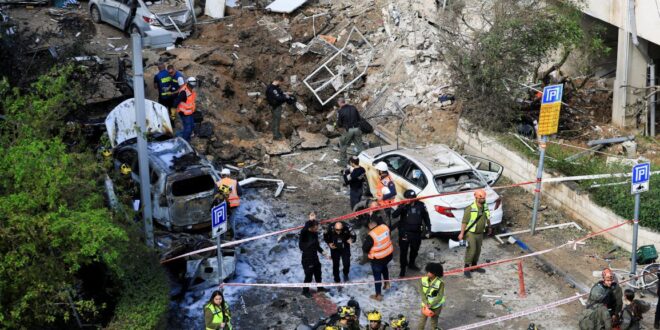
While Israel emphasizes the effectiveness of its air defense systems—claiming interception rates exceeding 90 percent—the domestic consequences of the war have been substantial. Iranian and Lebanese missile fire penetrated multiple layers of defense, including cluster munitions that expanded the geographic spread of impact zones.
Beyond physical damage, the Israeli home front has endured sustained psychological and economic disruption: repeated alerts, mass displacement into shelters, paralysis of daily life, widespread disruption to education and commerce, and measurable casualties. The war, in this sense, has not been contained at the battlefield level—it has been internalized by society itself.
Strategic Claims vs. Strategic Reality
The Israeli military establishment maintains that the campaign against Iran achieved its operational objectives through coordinated strikes involving both Israeli and U.S. air power. These strikes targeted missile infrastructure, weapons production sites, nuclear-related facilities, logistics networks, and military leadership figures.
However, a widening analytical gap has emerged between these tactical gains and the strategic end-state originally envisioned. Iranian institutions, while damaged, were not dismantled. Missile capabilities were reduced but not eliminated. Nuclear stockpiles remain intact at levels that could, according to multiple assessments, allow rapid breakout capability.
More significantly, Iran’s political structure survived the confrontation intact—and in the view of several Israeli analysts, emerged more hardened and cohesive under pressure.
Iran’s Post-War Position: Resilience Without Concession
From an Israeli analytical perspective, Iran exited the confrontation with a paradoxical advantage: it absorbed significant military pressure while preserving its core strategic assets and political continuity.
No substantive concessions were made in the ceasefire framework—neither on uranium enrichment, missile development, nor regional proxy networks. Instead, Tehran has continued to signal firmness on all three fronts, while simultaneously raising demands for compensation and sanctions relief.
Some within Israel’s strategic discourse now argue that rather than weakening Iran, the conflict may have reinforced its international standing, providing it with renewed diplomatic leverage and accelerating its long-term military and technological programs.
Structural Failure in Decision-Making
The campaign has also exposed deeper dysfunctions in Israeli strategic planning. Operational assumptions were built on overly optimistic projections regarding the speed of Iranian collapse, the effectiveness of targeted strikes, and the likelihood of rapid regime destabilization.
Even post-conflict scenarios—ranging from internal political change in Tehran to restructuring of Iranian leadership—were reportedly treated as realistic planning assumptions rather than speculative outcomes. These expectations failed to materialize, leaving Israel in a strategically ambiguous position while simultaneously straining its relationship with Washington.
Increasingly, Israeli commentary acknowledges that the country struggles to convert battlefield achievements into political settlements—a pattern observed not only in Iran, but also in Gaza and Lebanon.
Lebanon: The Expanding Front
Parallel to the Iranian theater, Israel finds itself increasingly entangled in Lebanon. Despite sustained military pressure on Hezbollah, cross-border fire and operational resilience continue to challenge Israeli objectives in the north.
Israeli forces remain engaged in extensive ground and aerial operations without a clearly achievable end-state such as full disarmament of Hezbollah. Meanwhile, Israel continues to insist on separating the Lebanese front from the Iranian file, rejecting any strategic linkage between the two theaters.
In practice, however, both fronts are increasingly interconnected within a regional escalation cycle that defies compartmentalization.
The Limits of Technological Deterrence
A growing strand of Israeli analysis now questions a long-held assumption: that technological superiority guarantees strategic dominance.
The war has demonstrated that even highly advanced missile defense systems and air superiority do not necessarily translate into decisive victory against ideologically driven adversaries willing to sustain prolonged attrition. Iran’s ability to continue launching missiles despite sustained strikes has challenged core assumptions about deterrence.
In this reading, technology alone is insufficient when confronting actors prepared to absorb destruction as part of their strategic calculus.
A Pause or a Preparation Phase?
The ceasefire, rather than signaling de-escalation, may function as a temporary operational window. Some Israeli assessments suggest it could allow for intensified strikes in Lebanon, renewed pressure on Hezbollah, and strategic reorganization of air capabilities ahead of a possible future confrontation with Iran.
Reports within Israeli media indicate a recalibration of military priorities, with increased focus on Lebanon and a relative pause in direct Iranian targeting. This shift is interpreted less as de-escalation and more as redistribution of operational energy across multiple fronts.
The Battle Over Narrative
Beyond the battlefield, a parallel conflict is unfolding over perception. The United States has framed the ceasefire as a diplomatic breakthrough. Iran presents it as proof of resilience and continued deterrent capability. Israel, meanwhile, is attempting to balance claims of tactical success with the absence of strategic resolution.
Yet increasingly, Israel faces difficulty in shaping international perception. Competing narratives—from regional actors, Western media leaks, and intelligence assessments—portray a more ambiguous picture: a war initiated by Israel, expanded with U.S. involvement, but concluded without decisive outcomes.
Conclusion: A Fragile Equilibrium Without Resolution
The central paradox remains unresolved: the war has not ended—it has been redistributed.
Israel asserts victory without strategic closure. Iran claims resilience without full victory. The United States promotes de-escalation while remaining structurally entangled. And Lebanon continues to function as an active secondary front.
In this environment, the ceasefire is less a conclusion than a suspension of active confrontation—a temporary equilibrium in a system still fundamentally in motion.
Ultimately, the region remains trapped in a harsh strategic irony:
peace is declared while war continues,
and war is conducted in the language of peace.
And in such a system, conflict is no longer a failure of diplomacy—
it becomes its operating logic.