

 Geostrategic Media Political Commentary, Analysis, Security, Defense
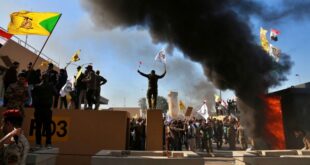
Dana Ennab Washington’s renewed warning against travel to Iraq is more than a routine security advisory. It comes amid a regional crisis in which confrontation with Iran, attacks affecting Gulf states and concerns over threats to American personnel and interests are becoming increasingly interconnected. For Baghdad, the message …
October, 2026
-
25 October
The Next Hostage Lies Beneath the Waves

For decades, the Strait of Hormuz has meant one thing: oil. Tehran is now pointing the world’s attention below the surface. On 21 October, a senior Revolutionary Guards general warned that Iran could target internet cables, including seven major cables running under the strait, if the United States …
-
25 October
The War on Iran Could Produce the Opposite of What Washington and Tel Aviv Intended
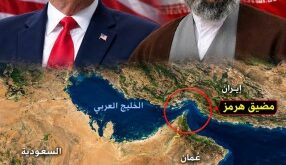
Rania Al Horani The most consequential outcome of the US-Israeli war against Iran may not be decided on the battlefield. It may emerge instead from the diplomatic calculations of the Gulf states, which are increasingly confronted with a difficult question: is the greater threat to their security Iran …
-
25 October
Jordan’s Test of Unity: The Attack in Karak and the Defence of National Cohesion
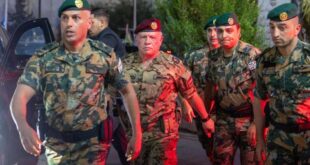
By Shehab Al-Makahleh The reported shooting attack in Jordan’s southern city of Karak has raised urgent questions about public security, religious coexistence and the resilience of the country’s social fabric. According to the initial report published by Rai Al-Youm on October 23, seven people were killed and dozens …
-
24 October
The War in the Arab World: Caught Between Washington, Tehran and Tel Aviv
Amanda Lee The Middle East has entered a dangerous phase in which military superiority no longer guarantees political victory, alliances offer diminishing assurances of protection, and the costs of regional confrontation are increasingly borne by Arab societies. What began as an effort by Benjamin Netanyahu’s government to reshape …
-
24 October
How Should the Arab World Respond to Israel’s New Security Doctrine?
Dr. Shehab Al-Makahleh On October 18, Benjamin Netanyahu unveiled the outlines of a new Israeli security doctrine built around military superiority, pre-emptive action and the principle of striking perceived threats before they mature. Five days later, an attack in Hebron that killed two Israeli soldiers and wounded three …
-
24 October
The Will to Fight: What Military Power Cannot Guarantee

By Roya Bagher A proposal to forgive student debt in exchange for enlistment in a potential US ground force against Iran raises a fundamental question about the relationship between military power and public willingness to fight. If such a proposal gains traction, it would suggest that the challenge …
-
2 October
When AI Becomes the Strategist, War Becomes a Data Problem It Cannot Solve

Hadi Elis The United States entered its war with Iran possessing something few militaries in history have had at comparable scale: extraordinary technological superiority, an enormous intelligence architecture and increasingly sophisticated artificial-intelligence systems capable of processing information at speeds no human organization could match. Artificial intelligence has become …
-
2 October
Why the Trump Cabinet Opted for Existential AI Risks

By Dan Steinbock Thanks to some AI executives, the Trump administration had an opportunity to foster global AI cooperation. By contrast, it gave green light to existential risks. On September 29, 2026, President Trump convened the chief executives of several of the world’s most powerful technology companies at …
