Geostrategic Media Political Commentary, Analysis, Security, Defense

The end of the United Nations peacekeeping mission in Western Sahara marks a turning point in one of North Africa’s longest-running territorial disputes. After more than three decades of international involvement, the termination of MINURSO raises a fundamental question: what happens when an international mechanism designed to preserve peace disappears without resolving the conflict it was established to manage?
The mission, created in 1991 following a ceasefire between Morocco and the Polisario Front, was originally intended to support a political process that included a referendum on self-determination. That objective remained unrealised because the parties never reached agreement on the electorate and the conditions under which such a vote could take place. Over time, the mission became an instrument for maintaining a fragile status quo rather than delivering a definitive political settlement.
Its termination following the failure of the United Nations Security Council to agree on renewing its mandate exposes the growing difficulty of resolving territorial disputes through multilateral institutions. The disagreement between Washington and Moscow reflects more than competing diplomatic preferences. It illustrates how major-power rivalry increasingly influences the capacity of the United Nations to manage regional conflicts.
For Morocco, the development may reinforce confidence in its autonomy proposal, which offers self-government under Moroccan sovereignty. Rabat has long argued that its proposal represents a realistic political solution. The Polisario Front, however, continues to insist on the right of the Sahrawi people to determine their political future, while Algeria remains a central regional actor supporting the Polisario position.
The most immediate concern is not necessarily a return to large-scale warfare, but the erosion of mechanisms that have helped prevent military miscalculation. The withdrawal of peacekeepers and the weakening of international monitoring could create opportunities for local incidents to escalate, particularly in a region where political mistrust and military competition remain deeply entrenched.
The dispute also has implications for relations between Morocco and Algeria. Their diplomatic relations have been severed since 2021, and tensions surrounding Western Sahara continue to shape their respective regional strategies. Without a credible diplomatic framework, the territorial dispute risks becoming a more permanent feature of North African strategic competition.
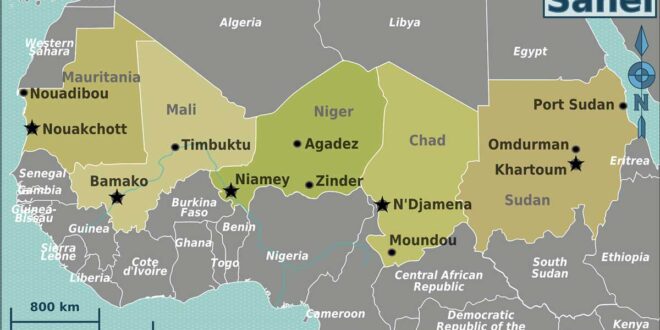
Europe should pay particular attention. The region is connected to European interests through migration, energy cooperation, counterterrorism, trade and maritime security. Instability in the western Mediterranean and the Sahel could create consequences extending far beyond the immediate parties to the dispute.
The United Nations must therefore avoid allowing the end of MINURSO to become synonymous with the end of international responsibility. A new diplomatic mechanism, supported by regional and international partners, should preserve communication channels, encourage confidence-building measures and prevent renewed hostilities.
The future of Western Sahara cannot be determined by diplomatic victories in New York or political declarations in regional capitals alone. A sustainable settlement must address the legitimate political aspirations of the Sahrawi population while recognising the security concerns of neighbouring states.
The disappearance of a peacekeeping mission does not eliminate the conflict. It removes one of the instruments available to contain it. The challenge now is to prevent a diplomatic failure from becoming a regional security crisis.