Geostrategic Media Political Commentary, Analysis, Security, Defense

James Sullivan
Key Points
- The regional conflict has exposed the limits of relying exclusively on external security guarantees.
- Saudi Arabia, Türkiye and Pakistan are developing a more structured defence relationship.
- The UAE and other Gulf states are increasingly balancing military preparedness with diplomatic engagement.
- Iran remains a central regional actor whose security concerns cannot be separated from the future of the Gulf.
- The emerging order will depend on regional cooperation rather than another externally imposed security architecture.
Full Op-Ed
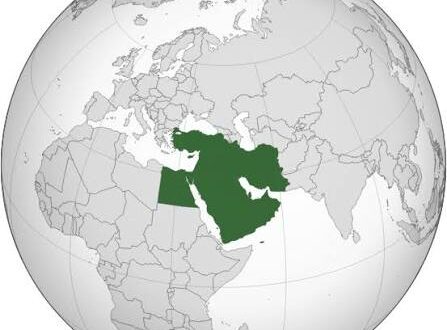
The Middle East is approaching a strategic turning point. The latest confrontation involving Iran, the United States and Israel has demonstrated that military superiority does not necessarily translate into political stability. Missiles can be intercepted, infrastructure can be defended and military capabilities can be degraded, but none of these achievements alone creates a durable regional order. What is emerging is a more complicated Middle East in which governments are reassessing their alliances, diversifying their security relationships and questioning the assumptions that have governed regional politics for decades.
For much of the post-Cold War period, Gulf security rested heavily on American military protection. Washington provided advanced weapons, intelligence cooperation, naval capabilities and an extensive military presence. Yet recent developments have exposed the vulnerability of this arrangement. Hosting foreign military installations does not necessarily insulate a country from retaliation. In certain circumstances, it can make its territory part of a wider confrontation.
This reality is encouraging a reconsideration of regional defence arrangements. The emerging Saudi-Turkish-Pakistani defence partnership represents an important development in this direction. Its collective-defence provisions, intelligence cooperation and defence-industrial ambitions suggest that regional governments are increasingly interested in building security mechanisms that complement, rather than simply depend upon, external guarantees. Its effectiveness, however, will depend on political coordination, military interoperability and the willingness of its members to define their obligations clearly.
The UAE’s position illustrates another dimension of this transformation. Abu Dhabi has developed a foreign policy that combines strong defence capabilities with economic diversification and active diplomatic engagement. Its emphasis on preventing another regional escalation reflects an understanding that the costs of prolonged confrontation extend far beyond the battlefield. Energy exports, maritime trade, investment flows and the confidence of international markets are all exposed when the Gulf becomes an arena for military competition.
Saudi Arabia faces a similarly complex challenge. Its ambition to transform its economy and strengthen its international position requires a stable strategic environment. Yet the security of its eastern and western infrastructure, its Red Sea export routes and its relations with neighbouring countries remain vulnerable to regional instability. The diversification of defence partnerships is therefore not simply a military decision; it is an economic and geopolitical necessity.
Türkiye is also positioning itself as a central regional power. Its military-industrial capabilities, geographical position and diplomatic relationships provide Ankara with leverage across the Middle East, the Black Sea and the Mediterranean. Cooperation with Saudi Arabia and Pakistan could deepen this role, although Türkiye must balance its new commitments with its NATO obligations and its own regional priorities.
Iran, meanwhile, cannot be excluded from any sustainable regional framework. Its relationship with neighbouring states is shaped by historical mistrust, strategic competition and unresolved security concerns. A policy that treats Iran exclusively as a military problem risks reproducing the conditions for another confrontation. Equally, regional governments cannot be expected to accept coercive policies or threats to their sovereignty and infrastructure. A viable settlement must address both Iranian security concerns and the legitimate security requirements of its neighbours.
The most important lesson of the current crisis is that the Middle East cannot indefinitely outsource its security. External powers will remain influential, but regional governments increasingly understand that their long-term stability requires stronger mechanisms for communication, crisis management and collective defence.
The next regional order will not necessarily be defined by the disappearance of American influence or the emergence of a single dominant power. It will be shaped by the ability of regional states to manage competition without allowing it to become permanent conflict. The real strategic test is whether the Middle East can move from a system of competing security dependencies towards a framework of shared responsibility.