Geostrategic Media Political Commentary, Analysis, Security, Defense

By Shehab Al-Makahleh
The reported shooting attack in Jordan’s southern city of Karak has raised urgent questions about public security, religious coexistence and the resilience of the country’s social fabric. According to the initial report published by Rai Al-Youm on October 23, seven people were killed and dozens injured when gunmen opened fire during a funeral gathering associated with a local church. The figures reported in the initial coverage varied, and the circumstances, motives and identities of those responsible remained under investigation.
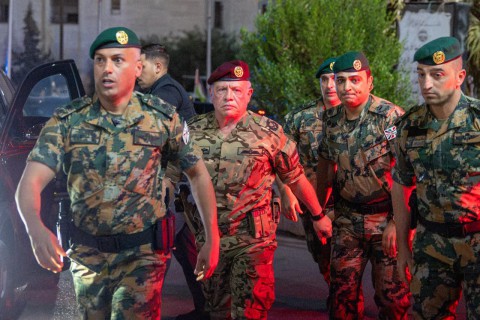
King Abdullah II’s visit to Karak, where he went to check on the injured and follow the response, carried significance beyond the immediate security operation. His public message stressed that violence would not divide Jordanians and that the country would respond firmly to those responsible. At a moment of grief and uncertainty, the central challenge for Jordan is not only to identify and bring the perpetrators to justice, but also to prevent the attack from damaging the trust that binds its communities together.
The reported targeting of a gathering connected to a church is particularly troubling because it touches a fundamental principle of Jordanian national life: citizens must be able to practise their faith, attend funerals and gather with their families without fear of violence. If the attack was deliberately directed at a religious community, it would represent an assault not only on its immediate victims but also on the principle of equal citizenship.
Security and accountability
The reported response—including heightened security measures, searches for suspects and the use of helicopters in the search operation—reflects the seriousness with which authorities treated the incident. Such measures may be necessary to locate those responsible and prevent further violence. But operational urgency must go hand in hand with accurate information, due process and a transparent investigation.
The public deserves clear answers about what happened, how the perpetrators carried out the attack and whether there were warning signs that could have been detected. Investigators will need to establish the motive, determine whether the gunmen acted alone or had assistance, and assess whether the incident was connected to a wider criminal or extremist network. Until evidence establishes those links, speculation should not be allowed to substitute for findings.
The distinction matters. An attack of this nature can generate rumours, accusations and fear before investigators have established the facts. Responsible communication by officials and the media is therefore part of the security response itself. Accurate updates can reassure the public; unsupported claims can inflame tensions and complicate the work of investigators.
Firm law enforcement is essential, but it must be directed by evidence and the rule of law. Accountability should reach everyone involved in planning, enabling or carrying out the crime, while protecting innocent people from collective suspicion.
The meaning of national unity
Jordan’s social cohesion is not an abstract slogan. It is a practical foundation of national security in a region where conflict, displacement and political instability have repeatedly placed pressure on states and communities. Jordanian Muslims and Christians are part of the country’s national history and public life. Their security and dignity cannot be separated from the security and dignity of the nation as a whole.
An attack on a church, if confirmed as deliberate, would seek to exploit the vulnerability that violence creates: fear among one community, anger among another and suspicion between neighbours. The most important response is to deny violence that opportunity. The victims must be remembered as citizens and human beings, not reduced to symbols in a sectarian narrative.
That responsibility extends beyond the government and security services. Religious leaders, community organisations, schools, journalists and local officials all have a role in preventing misinformation and supporting affected families. Public solidarity should be expressed through practical assistance to the injured and bereaved, respect for the investigation and a clear rejection of attempts to blame entire communities for the actions of individuals.
National unity, however, should not be used to avoid legitimate questions about public safety. Solidarity and accountability are complementary, not competing, principles. Jordanians can stand together while demanding a thorough explanation of how the attack occurred and what measures will prevent similar incidents.
A broader regional context
The incident also highlights the pressures facing Jordan as it navigates an unsettled regional environment. Wars and political crises across the Middle East have heightened concerns about the movement of weapons, the spread of extremist narratives and the potential for regional instability to affect domestic security. These risks make vigilance necessary, but they do not establish the motive behind any particular crime.
Jordan’s response must therefore be grounded in its own evidence and circumstances. Authorities should investigate all credible leads without prematurely attributing the attack to a political organisation, religious ideology or external actor. If investigators uncover wider links, those findings should be communicated clearly and supported by evidence.
The country’s security institutions also face the challenge of balancing rapid action with public confidence. Visible deployments may help secure an area during an emergency, but lasting confidence depends on professional investigations, effective prevention, coordination among agencies and the ability to explain decisions to the public.
For a country that has placed considerable emphasis on stability amid regional turmoil, the credibility of the response will matter almost as much as the immediate pursuit of suspects. Preventing further violence requires both operational capability and public trust.
Justice without division
King Abdullah’s visit and his message of solidarity placed national unity at the centre of the public response. The next test is to translate that message into a credible process: establish the facts, hold those responsible accountable, support the victims and their families, and communicate the findings without fuelling rumours or prejudice.
The investigation must also examine whether there were preventable security failures and whether additional safeguards are warranted for public gatherings. Such questions should be answered on the basis of evidence, not speculation or political pressure.
For the families who lost loved ones, national statements alone cannot ease the pain. They need compassion, practical support and confidence that the justice system will pursue the case fully. The injured need sustained care, while the wider community needs reassurance grounded in facts rather than rhetoric.
Karak has long formed part of Jordan’s diverse social and historical landscape. The reported attack should not be allowed to redefine the city through violence or to turn a tragedy into a source of communal suspicion. The appropriate response is to protect every citizen, investigate without prejudice and uphold the principle that no religious community should ever have to fear for its safety because of its identity.
Jordan’s resilience will be measured not simply by how swiftly the suspects are found, but by whether justice is delivered without sacrificing the rule of law or the unity of its people. The message must be unmistakable: violence will be investigated and prosecuted, victims will not be forgotten, and the bonds between Jordanian communities will not be surrendered to fear.