Geostrategic Media Political Commentary, Analysis, Security, Defense
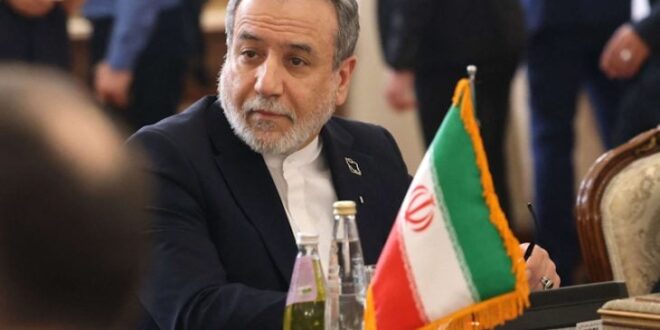

The Financial Times has published an article by Iranian Foreign Minister Abbas Araghchi in which he warned of the dangers of false assumptions about Iran. He stressed that progress would only be possible if the United States acknowledged that there is no military solution to the current situation.
He began by saying that his conversations with numerous foreign ministers at last month’s United Nations General Assembly may have varied, but the message had remained consistent and unchanged: Iran is willing to reach a fair and dignified agreement with the United States.
To achieve this outcome, the White House must demonstrate seriousness and a genuine willingness to end its aggression permanently.
He added that his country is firmly committed to achieving a peaceful and dignified resolution to the conflict, but is equally prepared to defend itself.
President Donald Trump, he said, entered this war based on false assumptions about Iran’s ability to withstand pressure.
“It seems he is still receiving misinformation suggesting that our armed forces are unprepared to defend our homeland, despite all the evidence proving otherwise,” Araghchi wrote. “Instead, our brave military has learned valuable lessons from the acts of aggression committed by Israel and America since 2025.”
He continued:
“To state the obvious, we have absolutely no confidence in the sincerity of the American administration’s declared desire to achieve peace with Iran. The evidence is there for everyone to see: in June 2025 and February 2026, they bombed us while we were actively engaged in negotiations. In June of this year, shortly after President Masoud Pezeshkian and President Trump signed the agreement, we were attacked for a third time. How can we trust an American president again?”
Araghchi added that the White House had shown no willingness to reach an understanding on the way forward and continued to threaten further violence, leading Iranians to expect no progress in the immediate future.
He said the latest escalation across the region demonstrated how quickly the conflict could spread and how far-reaching its consequences could be. This, he argued, was evidence of the grave threat to international peace and security.
“Despite all this, as a professional diplomat, I am compelled to do everything in my power to give diplomacy a chance, even when the prospects of success are slim.”
He noted that, during the United Nations General Assembly, he had presented the United States, through intermediaries, with a seven-day plan outlining what both sides would need to do to end the war and reopen the Strait of Hormuz.
More importantly, under this proposal, the United States would not be expected to do anything it had not already agreed to. The specific steps outlined in the framework agreement were clear, as was the intended outcome: the strait would reopen on the sixth day, while negotiations toward a final agreement would resume on the seventh. If the plan were implemented, life across the region would begin returning to normal.
Araghchi commented that the White House refused to acknowledge the mounting costs of the war for ordinary Americans.
“There is no need to take my word for it. After eight months of yet another optional American war abroad, even Moody’s says that the aggression against Iran has cost American consumers an estimated $265 billion this year, or approximately $2,000 per household.”
He added that rising energy prices accounted for nearly half of that amount, a figure that did not include the much greater losses borne by the global economy more broadly.
When the damage to the numerous American military bases across the region and the substantial losses of equipment were also taken into account, he argued, the disastrous consequences of the war for US interests were unmistakable.
Araghchi stated that, by virtue of its geographical position, Iran would always enjoy unparalleled influence over maritime traffic through the Strait of Hormuz.
More importantly, despite the attention given to alternative routes, he said the waterway remained indispensable to both the region and the global economy. Iran intended to fulfill its historic role as a protector of the strait and of those who passed through it lawfully, which he described as good news.
Araghchi argued that a path forward existed, but it would only become possible when the US administration fully acknowledged that it had no military options available to it.
This, he said, should have become clear after nearly eight months of war, during which none of the stated objectives against Iran had been achieved.
He added:
“As we once again find ourselves at a dangerous crossroads, I feel compelled to warn that any further escalation around the Strait of Hormuz or anywhere else in the region will place civilian lives, the well-being of all countries in the region, and the global economy at grave risk.
“This is what past experience has taught us, and it will certainly be true in the future. If the United States once again chooses military action at the expense of diplomacy, I am absolutely certain that it will lead to an even greater strategic failure. Iran, an ancient and enduring civilization, will submit to no power.”
At the same time, he said, Iran was “prepared to give diplomacy another chance if we see compelling evidence of a genuine willingness on the part of the United States to reach a fair and dignified settlement that brings this conflict to a definitive end.”
“President Trump made mistakes about Iran when he entered this war, and repeating that mistake now will lead only to grave and countless consequences.”