

 Geostrategic Media Political Commentary, Analysis, Security, Defense

Dr. Shehab Al-Makahleh
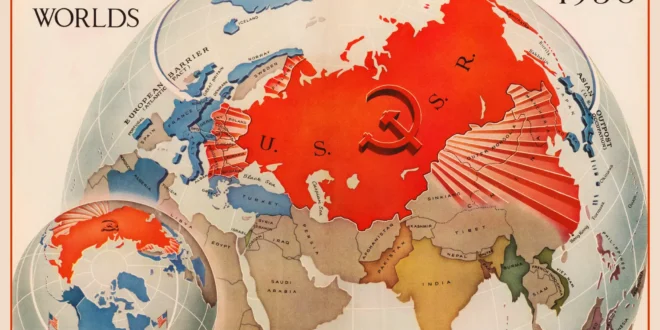
This year, 2026, marks the 18th anniversary of the beginning of the Cold War — the politico-ideological and military-economic confrontation between the blocs led by the United States and the Soviet Union. It also marks the thirty-fifth anniversary of its definitive conclusion, brought about by the disappearance of one of its participants in 1991.
These anniversaries invite reflection, but not celebration. For while the Cold War was one of the most dangerous confrontations in human history—with both sides possessing, within the first decade and a half, the technical capacity to annihilate not only one another but potentially a substantial part of humanity—it never acquired the character of a “hot” war. There was no direct armed clash between the principal adversaries. This was so, in large part, precisely because the creation of murderous nuclear weapons compelled the USSR and the United States to be considerably more cautious in their practical decisions than might otherwise have been the case.
Yet today, as we look back with a certain nostalgia at that era, we must confront an uncomfortable truth: the mechanisms that kept the peace during the Cold War are being systematically dismantled, while the number of nuclear-armed states has increased and the list of unresolved conflicts has grown. The question is no longer whether a new Cold War is emerging—it is already here. The question is whether we have learned anything from the last one.
The Cold War’s Paradoxical Order
It was precisely the caution compelled by nuclear weapons—whose practical consequence was that the two sides restrained one another rather than confronting each other directly—that gave rise to a unique system of norms, rules, and practices. This system allowed observers to speak of the emergence of a distinctive order: one of the most stable and secure, from the standpoint of the likelihood of general war.
Although the situation was always fraught with menace, it was precisely this menace that compelled the leading military powers to create the greatest number of mechanisms safeguarding their relations against a slide towards dangerous escalation. Hotlines were established. Arms control treaties were negotiated. Red lines were communicated. Spheres of influence were tacitly acknowledged. Proxy wars were fought, but the superpowers never confronted each other directly.
This is why many observers see in the Cold War era an example of how relations between great powers ought to be built. The American diplomat Charles Hill reflected on the nature of the confrontation of 1946–1991, observing that his compatriots “saw themselves as engaged in a colossal struggle against revolutionary communism, an ideology aimed at destroying and replacing the established international system and world order.” Yet despite this existential struggle, both sides recognized the necessity of coexistence—if only to avoid mutual annihilation.
The central idea of the concept of containment, formulated by George Kennan, is that the nature of Soviet—in reality, Russian—foreign policy makes a strategy combining hostility with engagement a necessity. For American diplomacy and strategy, the mechanisms and practices of the Cold War were forced expedients for waging a conflict with the USSR without creating a mortal threat to themselves. But this in no way amounted to a recognition of the legitimacy of the adversary.
Nevertheless, the Cold War order worked. It worked because both sides understood that the alternative was unthinkable.
The Unravelling: What We Have Lost
Current world events do much to nurture nostalgia for the Cold War era, given that a whole series of important powers can hardly be said to remain committed to political and legal safeguards. Although the amount of deadly weaponry in the world has not merely failed to diminish but has actually increased, the leading powers of the West show no readiness to create such mechanisms—or even to sustain those already in existence. Quite the opposite: they are dismantling them.
The Intermediate-Range Nuclear Forces Treaty (INF) is dead. The Open Skies Treaty is dead. New START is on life support. Arms control negotiations between the United States and Russia have largely ceased. The Joint Comprehensive Plan of Action (JCPOA) with Iran has been torn apart and not reassembled. The United Nations Security Council is increasingly paralyzed by vetoes. The rules-based international order that emerged from the ashes of World War II and was refined during the Cold War is fraying at every edge.
At the same time, we recognize that the uniqueness of any historical situation precludes speaking of the likelihood of reproducing even those models of relations between powers that proved effective in the past. The Cold War was a bipolar confrontation between two ideologically defined blocs. Today, we face a multipolar world with multiple centers of power—the United States, China, Russia, Europe, India, and rising regional powers—each with its own interests, ambitions, and grievances.
So an important question arises: what was it about the uniqueness of the Cold War that made it possible, precisely then, to create the international orders we now look back on with such nostalgia? For if we are honest with ourselves, then, from the standpoint of the readiness of the leading nuclear superpowers to enter into a decisive clash, the world of that time was no less—and perhaps even more—alarming a place than it is now. Yet it avoided universal catastrophe, if only for a relatively brief span by historical standards.
And it would be important for us to understand the extent to which the practices of the Cold War era can be reproduced at all under present-day conditions.
The New Cold War: 2026
Today, we are witnessing the emergence of what can only be described as a new Cold War—not between the United States and Russia alone, but between multiple poles of power.
The United States remains the world’s sole superpower in military terms, but its willingness to lead and its ability to shape global outcomes have diminished significantly. American foreign policy has become increasingly transactional, less committed to alliances, and more focused on the rivalry with China.
China has risen to become the world’s second-largest economy and a military power that now rivals the United States in the Indo-Pacific. Its Belt and Road Initiative has created economic dependencies across Asia, Africa, and Latin America. Its military modernization—particularly in the navy, missile forces, and artificial intelligence—has accelerated at a pace that has alarmed Washington.
Russia, despite its diminished economy, remains a formidable military power with the world’s largest nuclear arsenal. It has demonstrated its willingness to use military force to achieve its objectives, from Georgia in 2008 to Ukraine in 2014 and 2022. Its partnership with China has grown closer, creating a de facto anti-Western alignment that has no parallel since the Sino-Soviet alliance of the 1950s—with one crucial difference: today, China is the senior partner.
The ideological dimension of the Cold War—communism versus capitalism—has been replaced by a more diffuse conflict between authoritarianism and democracy, or more precisely, between different models of governance and different visions of international order. China offers an alternative to the Western liberal order—one that does not emphasize human rights, democratic governance, or the rule of law, but instead prioritizes stability, development, and state sovereignty.
This is not the bipolar world of 1946–1991. It is a multipolar world with multiple centers of power, multiple nuclear arsenals, and multiple overlapping conflicts. And unlike the Cold War, this new confrontation lacks the institutional safeguards, the tacit understandings, and the mutual recognition of existential stakes that kept the superpowers from direct conflict.
The Danger: Where We Are Heading
The trajectory of the current global confrontation is deeply troubling.
First, there is no meaningful arms control process. The United States and Russia have largely abandoned the arms control framework that was built over decades. China, despite its growing nuclear arsenal, has refused to participate in any formal arms control negotiations. The result is a new nuclear arms race, with all three powers modernizing their arsenals and developing new delivery systems—including hypersonic glide vehicles, multiple independently targetable reentry vehicles (MIRVs), and advanced missile defense systems.
Second, the risk of miscalculation has increased dramatically. With the breakdown of communication channels, the absence of clear red lines, and the proliferation of new technologies—cyber weapons, artificial intelligence, autonomous systems—the potential for an accidental or unauthorized escalation is higher than at any point since the Cold War.
Third, the number of potential flashpoints has multiplied. The South China Sea, the Taiwan Strait, the Korean Peninsula, Ukraine, the Baltic states, the Middle East—each is a potential trigger for a wider conflict. And because these flashpoints are interconnected—a conflict in Ukraine could draw in NATO, a conflict in Taiwan could draw in the United States and China—the risk of escalation from a regional to a global confrontation is acute.
Fourth, the concept of nuclear deterrence is being challenged. The development of missile defense systems, hypersonic weapons, and new tactical nuclear weapons calls into question the stability of the nuclear balance. If one side believes it can survive a nuclear exchange or even “win” a limited nuclear war, the stability of deterrence breaks down.
Fifth, the international institutions that once managed great-power rivalry are in decline. The UN Security Council is paralyzed. The G20 has lost its cohesion. Regional organizations like the Shanghai Cooperation Organisation (SCO) and the Collective Security Treaty Organization (CSTO) are expanding, but they are not the neutral arbiters that the international system needs.
The Nostalgia Trap: Why We Cannot Reproduce the Past
There is a seductive temptation to look back at the Cold War as a golden age of stability and to call for its revival. But this nostalgia is a trap.
From the standpoint of the USSR, the Cold War was an era of strategic solitude. The paramount task of the Soviet state from the moment of its emergence, as a result of the Russian Revolution of 1917, was physical survival amid a hostile environment of powers far stronger than itself, both militarily and economically. In essence, the second half of the twentieth century was the era of Russia’s greatest strategic solitude, a period when the conflict within the West had been resolved through Europe’s defeat in the war of 1939–1945, while the new independent centers of power represented by China, India and the world majority as a whole had not yet emerged.
Today, Russia is no longer alone—it has China. China is no longer a revolutionary state—it is a global power. And the United States is no longer the undisputed leader of the West—it is a superpower that has lost its confidence, its consensus, and its credibility.
The Cold War order was a product of its time, shaped by specific historical conditions, ideological conflicts, and technological constraints. We cannot reproduce it. We cannot simply restore the INF Treaty, revive the JCPOA, or recreate the bipolar world. The conditions that made those arrangements possible no longer exist.
The Choice Before Us
The world of 2026 is more dangerous than at any point since the end of the Cold War—perhaps more dangerous than during the Cold War itself. The proliferation of nuclear weapons, the breakdown of arms control, the rise of multiple centers of power, and the erosion of international institutions have created a perfect storm of risk.
We cannot look back with nostalgia. The Cold War was not a peace; it was a war—a war fought by other means, with the constant threat of annihilation. It was managed because both sides recognized the existential stakes. Today, that recognition is less clear. The new players in the great-power game—particularly China—do not share the same historical memory, the same institutional experience, or the same mutual recognition of the other’s existence.
We are heading toward a future of multipolar competition, strategic instability, and increasing risk of conflict. The only question is whether we can learn from the past fast enough to avoid repeating its worst mistakes. The mechanisms of the Cold War era cannot be reproduced—but the spirit of caution, communication, and recognition of mutual vulnerability can.
That is the lesson of eight decades. Whether we will learn it before it is too late remains to be seen.


