 Geostrategic Media Political Commentary, Analysis, Security, Defense
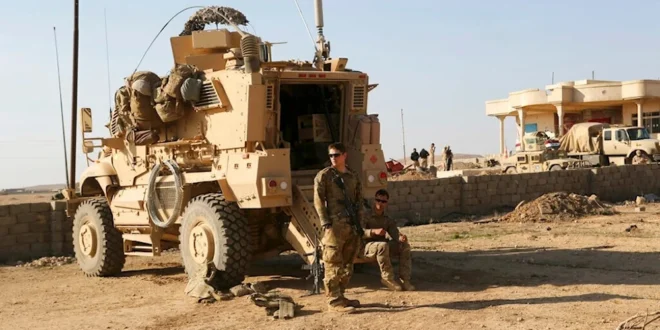

The United States is on track to withdraw its remaining forces from Iraq by September 30, according to US and Iraqi officials who spoke with the Associated Press, marking the latest and potentially final stage of a military intervention that began with Washington’s 2003 invasion and occupation of the country.
Iraqi Prime Minister Ali al-Zaidi reaffirmed September 30 as the “fixed and final date for ending the military mission of the Global Coalition to Defeat ISIS in Iraq and completing the departure of its forces” after meeting with US Central Command chief Adm. Brad Cooper on Wednesday.
A US official also confirmed to AP that Washington expects to complete the withdrawal by the deadline, although the official declined to disclose how many US troops remain in Iraq or where they would be redeployed.
The withdrawal comes after more than two decades of US military intervention in Iraq, during which Washington invaded and occupied the country, withdrew its combat forces in 2011, and returned militarily in 2014.
The September 30 deadline follows the 2024 agreement between Baghdad and Washington to wind down the US-led coalition’s military mission in Iraq.
Most US forces withdrew from bases across Iraq last year, while a remaining contingent stayed in the Kurdistan Region. Two Iraqi Kurdish officials told AP that the drawdown of US troops and military equipment from Erbil began approximately three weeks ago.
The departure would represent a major reduction in the US military footprint in a country where Washington deployed more than 170,000 troops at the height of its counterinsurgency operations in 2007.
While Washington describes the current withdrawal as the conclusion of its military mission against ISIS, the broader history is inseparable from the 2003 invasion and the subsequent occupation of Iraq.
Two decades of US intervention in Iraq
The US invasion in 2003 toppled Saddam Hussein’s government and initiated an occupation that profoundly reshaped Iraq and the wider region.
Washington’s military presence reached more than 170,000 troops during the 2007 counterinsurgency campaign. The final US combat troops withdrew in December 2011, but the departure proved temporary.
In 2014, US forces returned to Iraq after ISIS seized large areas of the country and Syria. Washington presented the deployment as part of the campaign against ISIS and maintained approximately 2,500 troops after the group lost its territorial control, officially for training and counter-ISIS operations.
For Iraq’s Resistance, however, the continued presence of US troops represented an extension of foreign military intervention and a violation of Iraq’s sovereignty.
In June 2025, Kataib Hezbollah warned of severe consequences should US forces fail to withdraw from Iraqi bases, including Ain al-Asad and Camp Victoria.
Washington’s military presence amid regional escalation
The remaining US presence in northern Iraq has also become entangled with the wider regional confrontation.
US bases in the Iraqi Kurdistan Region have faced repeated attacks since the launch of the US-Israeli war on Iran on February 28, according to the source material.
The latest withdrawal preparations come as Washington’s regional military posture faces growing pressure, taking place against a broader backdrop in which US military intervention has faced increasing resistance and strategic setbacks across West Asia.