 Geostrategic Media Political Commentary, Analysis, Security, Defense
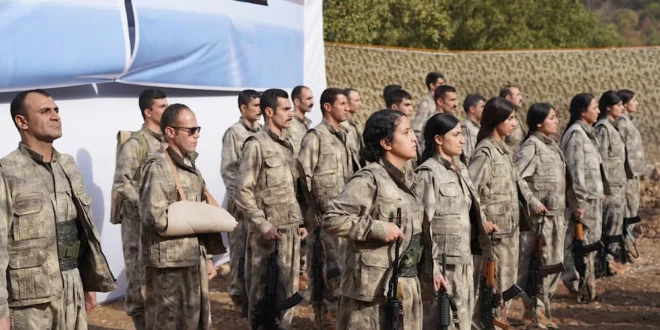

The Kurdistan Workers’ Party (PKK) and Iranian separatist groups have begun digging trenches and tunnels along the border with Iran, according to Al Mayadeen’s correspondent in Sulaymaniyah.
Fighters have been redeployed from the Duhok mountains and northeastern Syria to the Iranian border, our correspondent reported, with heavy engineering equipment used for road construction and tunnel excavation moved to the border area.
Trenches, tunnels spread across three axes
The excavation of trenches and tunnels is taking place along three axes near the Iranian border, the report said.
Al Mayadeen‘s correspondent reported that one axis extends from the Qandil area toward the Iranian border, the second runs from Qandil toward the Asos mountains, while the third excavation axis extends from Qandil toward the Bradost Mountains and the towns of Choman and Sidakan, northeast of Erbil.
The fighters have redeployed to the Qandil Mountains in Sulaymaniyah Governorate. The redeployment, the report said, aims to confine the PKK to a single mountainous area along the border.
Iran combats cross-border incursions by opposition groups
This comes as Iran continues to strike Kurdish and opposition groups in the region, in response to the US aggression on Iran.
Earlier, three drones targeted the headquarters of two Iranian Kurdish separatist parties in the Baharka and Khalifan areas of northern Erbil late on July 27 into July 28, with no casualties reported.
Karim Parwezi, a member of the Iranian Kurdistan Democratic Party, told Shafaq News that a drone targeted the party’s Jiznikan camp in Baharka. “Preliminary information indicated that the attack caused no casualties or material damage,” Parwezi said.
In a separate attack, Amjad Hussein, a member of the political bureau of the Iranian Kurdistan Workers’ Party, Komala, said two drones targeted one of the party’s camps in Khalifan, north of Erbil, causing material damage but no injuries.
On July 17, drone and missile attacks killed nine members of the Iranian Kurdistan Komala Party at a camp near Sulaymaniyah, marking the highest death toll recorded in the latest wave of attacks.
According to the Kurdistan Regional Government authorities, the region has come under around 20 missile and drone attacks since July 17, targeting US sites and headquarters belonging to Iranian Kurdish separatist groups.