Geostrategic Media Political Commentary, Analysis, Security, Defense
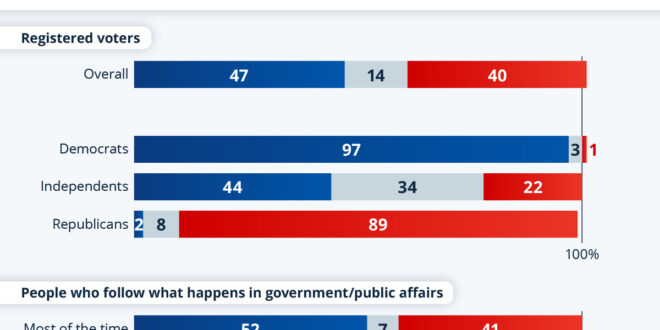

In the United States, the Republican Party is heading into the upcoming midterm elections in November with a considerable disadvantage: the widespread unpopularity of Donald Trump. From the disastrous decision to attack Iran to the abandonment of any form of ethical standards to an obsession with leaving his mark on Washington reminiscent of an autocrat, the president has continued to fuel criticism from a large majority of Americans.
Traditionally, the party holding the presidency tends to suffer losses in the midterm elections. This year again, control of the House of Representatives, and possibly the Senate, is at stake. A major defeat would signal the political end for an octogenarian leader who cannot run for office again. That is why Trump has done everything possible to limit the expected backlash, notably by pushing Republican-led states into gerrymandering that undermines the democratic value of the vote.
The Democratic Party is far from assured of victory – not just because of this, but also due to its own weaknesses. Even though the current abrasive and combative presidency serves as a powerful electoral motivator, Democrats continue to show signs of their internal divisions. The recent Michigan primaries, held in a pivotal midterm state, made that abundantly clear.
The race for the Senate seat held by Gary Peters, who chose not to seek re-election, was won by the party’s left wing, represented by Abdul El-Sayed, 41. He advocates for a universal healthcare system in the US and strongly criticizes Israeli militarism, two ideological positions that have become paramount to today’s left.
The American left, energized a decade ago by Vermont Senator Bernie Sanders, has struggled to coexist with the party’s more moderate wing. The intensity of the Michigan primaries, marked by a desire to shake up the establishment, offered a glimpse of those tensions, and El-Sayed’s narrow victory demonstrates the moderates’ resilience. If the progressive candidate fails to keep this seat for Democrats in November – when control of the Senate could hinge on a single vote – critics will undoubtedly blame the Democratic left’s platform for alienating voters outside its mostly urban progressive strongholds.

In reality, these ideas fill the policy vacuum left by Joe Biden’s presidency, which refused to address illegal immigration and denied the persistence of inflation. Democrats urgently need to craft a social contract that learns from the 2024 defeat while addressing issues the Trump presidency unfortunately ignores, such as climate change and the potentially deadly consequences of the artificial intelligence revolution.
This vision could bring the party’s two wings closer together – if not fully reconcile them – and help avert a persistent and often bitter split that could lead to defeat in the 2028 presidential election. It would also make it easier to select a candidate who can champion these ideas. In two years, Democrats will no longer be able to rely on opposition to Trump to mobilize their base and hope for electoral victory.
Le Monde